
Close Menu
  • News
  • Industry
  • Solar Panels
  • Commercial
  • Residential
  • Finance
  • Technology
  • Carbon Credit
  • More
    • Policy
    • Energy Storage
    • Utility
    • Cummunity
What's Hot

A deep learning model tracks the status of the EV battery with high precision

March 6, 2026

Mitsubishi Electric Trane announces new heat pump line for hydronic heating – SPE

March 6, 2026

Origis is developing a 413 MW solar portfolio in West Texas

March 6, 2026
Facebook X (Twitter) Instagram
Solar Energy News
Friday, March 6
  • News
  • Industry
  • Solar Panels
  • Commercial
  • Residential
  • Finance
  • Technology
  • Carbon Credit
  • More
    • Policy
    • Energy Storage
    • Utility
    • Cummunity
Solar Energy News
Home - News - How efficiently solar cells can be made with non-toxic processes
News

How efficiently solar cells can be made with non-toxic processes

solarenergyBy solarenergyDecember 5, 2024No Comments3 Mins Read
Facebook Twitter Pinterest LinkedIn Tumblr Email
Share
Facebook Twitter LinkedIn Pinterest Email


How efficiently solar cells can be made with non-toxic processes


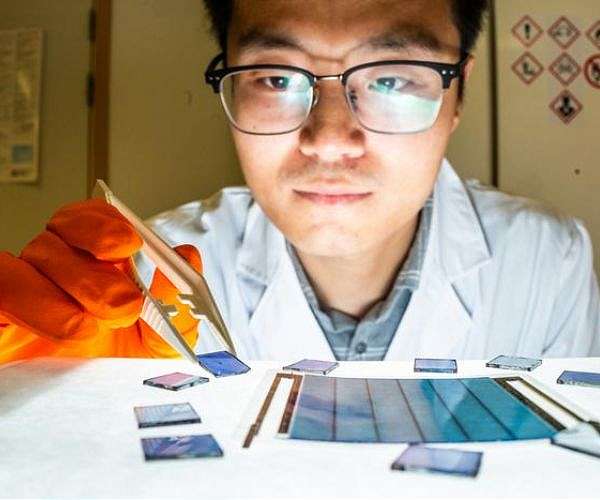
Efforts to produce environmentally friendly and efficient solar cells have taken a significant step forward thanks to a new design principle developed by researchers at Linkoping University in Sweden. This approach, detailed in a study published in Nature Energy, investigates how the shapes and interactions of molecules influence the performance of organic solar cells.

“With electrification and the development of AI, we are likely to see a significant increase in the world’s energy needs. That electricity must come from environmentally sustainable sources if we are to simultaneously slow climate change,” says Professor Feng Gao. of optoelectronics at Linköping University.

Promoting organic solar cells

Organic solar cells, which use electrically conductive plastics, are emerging as a promising alternative to traditional silicon-based solar cells. These solar cells are not only light and flexible, but also relatively cheap to manufacture. Their unique properties make them suitable for a variety of applications, from portable electronics to integration into windows or interior surfaces.

Currently, organic solar cells reach an efficiency level of almost 20%, comparable to traditional solar technologies. This advancement comes from extensive research into the molecular interactions of the materials and their influence on performance, known as morphology. However, the manufacturing process is still highly dependent on toxic solvents, which poses challenges in terms of scalability and environmental safety.

Groundbreaking non-toxic production

To address these concerns, Feng Gao’s research team, in collaboration with experts from China and the United States, has developed a method to produce organic solar cells using environmentally friendly solvents. These advances pave the way for safer, large-scale production techniques, such as printing.

See also  PVH is launching the foundation system for solar installations on complex site

“To achieve mass production of organic solar cells, for example with printed technologies, on a large scale, we need to find methods that do not use toxins. Otherwise it is not good for the environment and for those who work in the factories.” Feng Gao explained.

Using advanced synchrotron X-ray and neutron techniques, the researchers mapped the molecular interactions between the materials and solvents used in production. This allowed them to establish a design principle compatible with various harmless solvents, and they are optimistic that even water could serve as a solvent in the future.

Towards sustainable solar energy technologies

The study highlighted the complexity of organic solar cell manufacturing, especially the relationship between morphology and performance. The team investigated the ultrafast electron movements and interactions at the nanoscale that underlie charge transport in the material. Understanding these processes marks a crucial step toward environmentally sustainable solar energy technologies.

“Thanks to a toxic-free production method, we now have a much greater chance of commercializing the technology on a larger scale,” Feng Gao concluded.

Research report:Equally high efficiency of organic solar cells processed from different solvents reveals key factors for morphology control


Source link

cells efficiently nontoxic processes solar
Share. Facebook Twitter Pinterest LinkedIn Tumblr Email
solarenergy
  • Website

Related Posts

A deep learning model tracks the status of the EV battery with high precision

March 6, 2026

Origis is developing a 413 MW solar portfolio in West Texas

March 6, 2026

New Jersey expands state community solar program by 3 GW

March 6, 2026
Leave A Reply Cancel Reply

Don't Miss
Commercial & Industrial

Infinity Rack engineers watertight, modular solar canopy

By solarenergyApril 25, 20240

Infinity Rack, an American producer of solar canopy structures based in North Carolina, has developed…

Trina plans a large 2,640 MWh battery for Western Australia – SPE

September 25, 2024

Field Survey Protocol For Monitoring PV – Achter breakdown – PV Magazine International

March 21, 2025

Why independent network companies are the key to the development of strategic schedule

September 11, 2025
Stay In Touch
  • Facebook
  • Twitter
  • Pinterest
  • Instagram
  • YouTube
  • Vimeo
Our Picks

A deep learning model tracks the status of the EV battery with high precision

March 6, 2026

Mitsubishi Electric Trane announces new heat pump line for hydronic heating – SPE

March 6, 2026

Origis is developing a 413 MW solar portfolio in West Texas

March 6, 2026

New Jersey expands state community solar program by 3 GW

March 6, 2026
Our Picks

A deep learning model tracks the status of the EV battery with high precision

March 6, 2026

Mitsubishi Electric Trane announces new heat pump line for hydronic heating – SPE

March 6, 2026

Origis is developing a 413 MW solar portfolio in West Texas

March 6, 2026
About
About

Stay updated with the latest in solar energy. Discover innovations, trends, policies, and market insights driving the future of sustainable power worldwide.

Subscribe to Updates

Get the latest creative news and updates about Solar industry directly in your inbox!

Facebook X (Twitter) Instagram Pinterest
  • Contact
  • Privacy Policy
  • Terms & Conditions
© 2026 Tsolarenergynews.co - All rights reserved.

Type above and press Enter to search. Press Esc to cancel.