

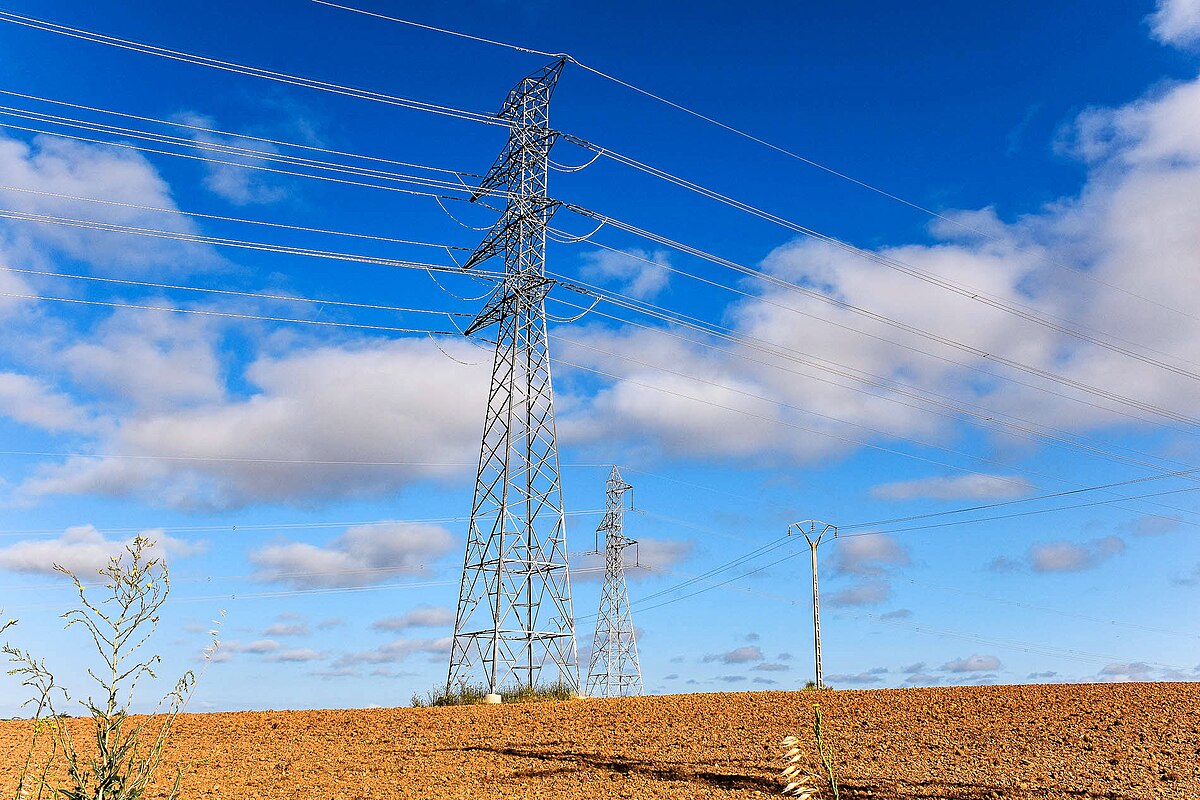
Although Colombia added 13 new solar farms in the first quarter of 2025, the National Raster operator XM Compañía warns the Expertos that delays of the transmission infrastructure threaten the use of the expected solar capacity.
The first quarter of 2025 brought the entry of 13 PV projects into the National Interconnected System (SIN) and the addition of 16 MW of new solar capacity, according to official data from the national raster operator XM Compañía the Expertos of Colombia. By March 2025, the total capacity was 1,348 MW operational and 699 MW in testing, but insufficient transmission infrastructure prevents many of these projects from formally coming in the system.
XM has reported that 55% of the transmission projects – both in national and regional systems – are on the back of the schedule. This compromises the timely connection of PV installations, in particular those linked to recent company energy auctions, where solar parks represent the majority.
The situation, XM adds, is exacerbated in the context of the Firm Energy Obligation (ECHE) auctions, in which most of a granted projects are solar energy. In the round of 2027-2028, 30 parks under construction are photovoltaic, in addition to various in operation. The office of the Comptroller has expressed his concern that more than 60% of the factories awarded will not be built on time, mainly due to the absence of storage plans.
The reduction in actual intake is clear: in the last five years only 28% of the planned projects have been connected to the system. In 2024, only 1,447 MW of the planned 5,720 MW came in the system (25%) and in the first months of 2025, only 50 MW of the planned 3,517 MW were added (1.4%).
XM insists that without accelerated grid expansion, the deployment of new solar projects will further slow down. There are currently 143 projects in the 2025 pipeline that requires transmission connection, with a combined capacity of 10.2 GW. Of these, 16 projects have fixed technical obligations for 2.5 GW capacity.
XM proposes actions, such as improving the resilience of the system, strengthening supervision, updating security systems and the progress when installing the automatic load-shelter schedule, in addition to the definition of new services such as the contribution of slowness and short-circuit current. The report also points to challenges that arise from the integration of solar and wind generation, including decreasing slowness, increasing short-term levels, reduced grid operations and dynamic performance of inverters-connected equipment.
If there is delays, the expansion of retaining solar generation risks, influencing energy goals that are sustained in auctions and obligations. Although testing capacity 2 GW is approaching, the actual availability depends on improvements in transmission infrastructure and factory -dependent and connecting mechanisms.
This content is protected by copyright and may not be reused. If you want to work with us and reuse part of our content, please contact: editors@pv-magazine.com.
