

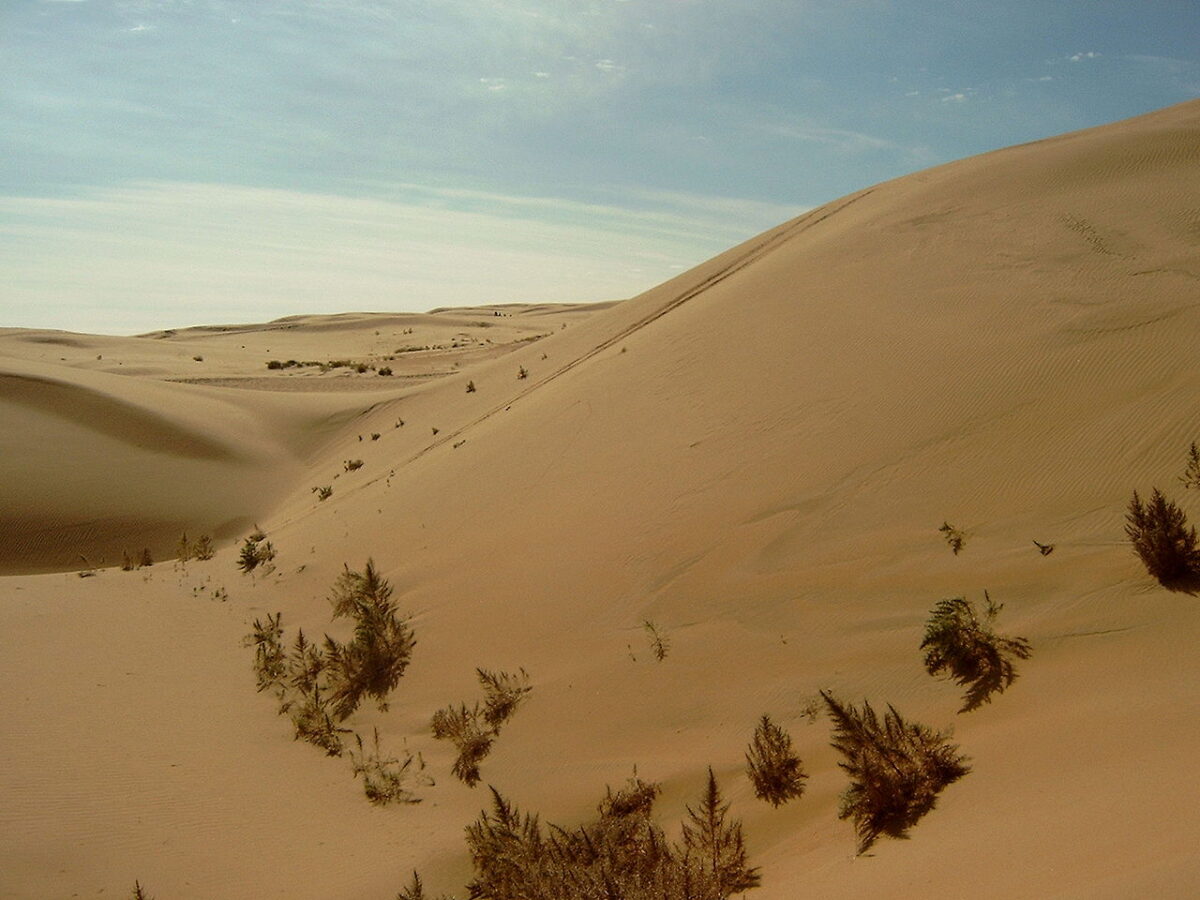
China is planning to install 253 GW solar capacity and to restore more than 670,000 hectares of demolished land by 2030 under a large-scale Desert PV program in the northern and northwestern regions. It aims to curb desert formation and to expand the implementation of renewable energy.
China has approved a new plan to tap its enormous desert solar potential and at the same time tackle the relegation of the country.
The photovoltaic desert control plan (2025-30)-released by the National Forestry and Grasland Administration, the National Development and Reform Commission (NDRC) and the National Energy Administration (NEA) -Wil 253 GW of Solar Capacity Install and 1.66 million Acres (673.670..
The initiative focuses on the “Three North” region – North, Northeast and Northwest -China – which include eight large deserts and four sandy regions that span more than 100 million hectares. These areas receive part of the highest solar radiation in China, but are confronted with extreme ecological vulnerability, with limited water, scarce vegetation and high windenerosion.
Authorities said that the use of solar energy must follow ‘ecological priority and coordinated development’. The plan divides the region into three climate zones and five priority development areas, including the edge of the Taklimakan and Tengger Designs. It calls for pilot projects that integrate solar energy with land rehabilitation and includes guarantees for site selection, construction and activities to limit the ecological impact.
Although the economic benefits are clear – desert solar farms offer low land costs, high irradiation and favorable electricity prices – the plan also focuses on lower afforestation. Conventional tree planting can cost up to CNY 12,000 ($ 1,650) per hectare, while solar approaches can lower to CNY 1,800 to CNY 3,000, due to the turnover of electricity generation.
Extra income can come from carbon credits, government subsidies for land recovery and co-located agriculture or cattle. For example, the Kubuqi project in Inner Mongolia combines 2 GW solar sun with tomato and desert herb growing, which generates 1 billion a year over CNY. Battery storage and water dusting facilities further increase the economic and energy value of the projects.
Challenges remain. Raster infrastructure in remote areas is often insufficient to handle extra generation, and some developers focus on capacity instead of ecological integration.
To tackle this, Beijing has commissioned local authorities to adopt integrated planning, to involve farmers and communities and encourage innovation. If successful, the plan could serve as a model for sustainable development in fragile environments.
As with other important infrastructure projects in China, the rollout of the plan is led by detailed actions in the context of the next 15th five -year plan. Large energy companies of the State are expected to lead the implementation, which may offer strong support for the Solar Supply Chain from China.
This content is protected by copyright and may not be reused. If you want to work with us and reuse part of our content, please contact: editors@pv-magazine.com.
