

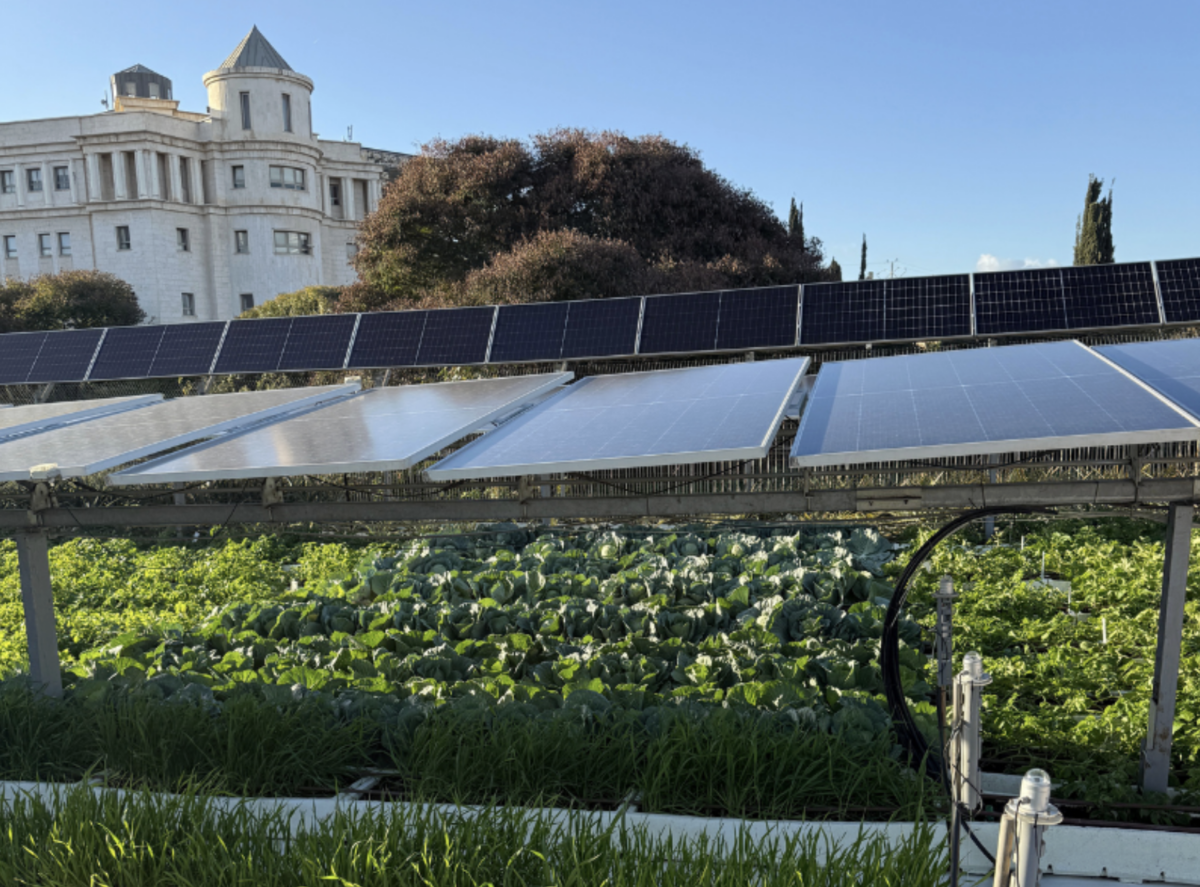
An agrivoltaic energy zoning plan in Israel specifies that solar panel coverage should not exceed 30% of the built-up area. The bottom edge of panels should be a minimum of 1.5 meters above the ground for field crops, increasing to 4.5 meters for orchards and other crops.
Israel’s National Planning and Construction Council has approved an outline plan for agricultural voltaics.
The plan, prepared under the guidance of Israel’s Planning Administration and the Ministry of Energy and Infrastructure, represents the country’s first attempt to define rules that comprehensively regulate agricultural installations.
It specifies that solar panel coverage should not exceed 30% of a cultivated area, although exceptions may be granted by the Ministry of Agriculture. The bottom edge of solar panels should be at least 1.5 m above the ground for field crops, to allow unhindered access of agricultural machinery, and 4.5 m for orchards and non-field crops.
Agrivoltaic projects in nature reserves, national parks, forests, beaches and streams are prohibited. Existing ecological corridors must be preserved, while damage to natural vegetation must be avoided.
Come to the on March 5 Double harvest, double problems: addressing EPC barriers in agrivoltaic system design pv magazine session in English at KEY – The Energy Transition Expo in Rimini.
Experts will share insights on current agricultural voltaic technologies, key design choices and key barriers to standardized, scalable dual-use projects in Europe and Italy, including region-specific EPC issues.
The plan also provides two main approval pathways for agrivoltaic energy, depending on the size and nature of the installation.
For small, local installations, an expedited permit will allow an agrivoltaic installation of up to 10 dunams (1 hectare) within the first plot of a farm. This approval process covers a maximum of 80 dunams in a place with an agricultural quota, or a maximum of 150 dunams if there is no quota.
For larger scale projects, covering up to 1,000 dunams (100 hectares), a detailed plan must be submitted for approval. If the project area exceeds 300 dunams, it will be mandatory to allocate a special research plot, with a size of at least 15 dunams, for continuous data collection for the Ministry of Agriculture.
The ministry will be responsible for ensuring that agricultural voltaic installations meet a series of conditions during operation. At least 85% of the land occupied by the facility must remain in use for agricultural cultivation, while agricultural production under the solar panels must not fall below 75% of the regional standard of the harvest.
Some projects will also need to allocate a control plot without solar panels, adjacent to the agrivoltaic energy supply, of approximately 2% of the project area, for a comparative evaluation of irrigation and yield data.
The plan also allows for energy storage facilities next to an agrivoltaic site. Approvals for storage up to 50 m2/MWh can be granted provided the total storage structures do not exceed 200 m2, but this requires approval from the relevant planning authority.
The Israeli Ministry of Agriculture will also be charged with monitoring compliance with planning requirements. If an agrivoltaic site does not maintain optimal cultivation for a continuous period of two years, its permit may be revoked, requiring the developer to remove the solar panels.
Rafi Elmaleh, director general of the Israel Planning Administration, said the approval of the zoning plan was an important milestone. “In an era of climate change and increasing energy needs, agro-voltaic technology makes it possible to preserve open areas and prevent them from becoming mere infrastructure facilities,” Elmaleh said.
This content is copyrighted and may not be reused. If you would like to collaborate with us and reuse some of our content, please contact: editors@pv-magazine.com.
Popular content
