

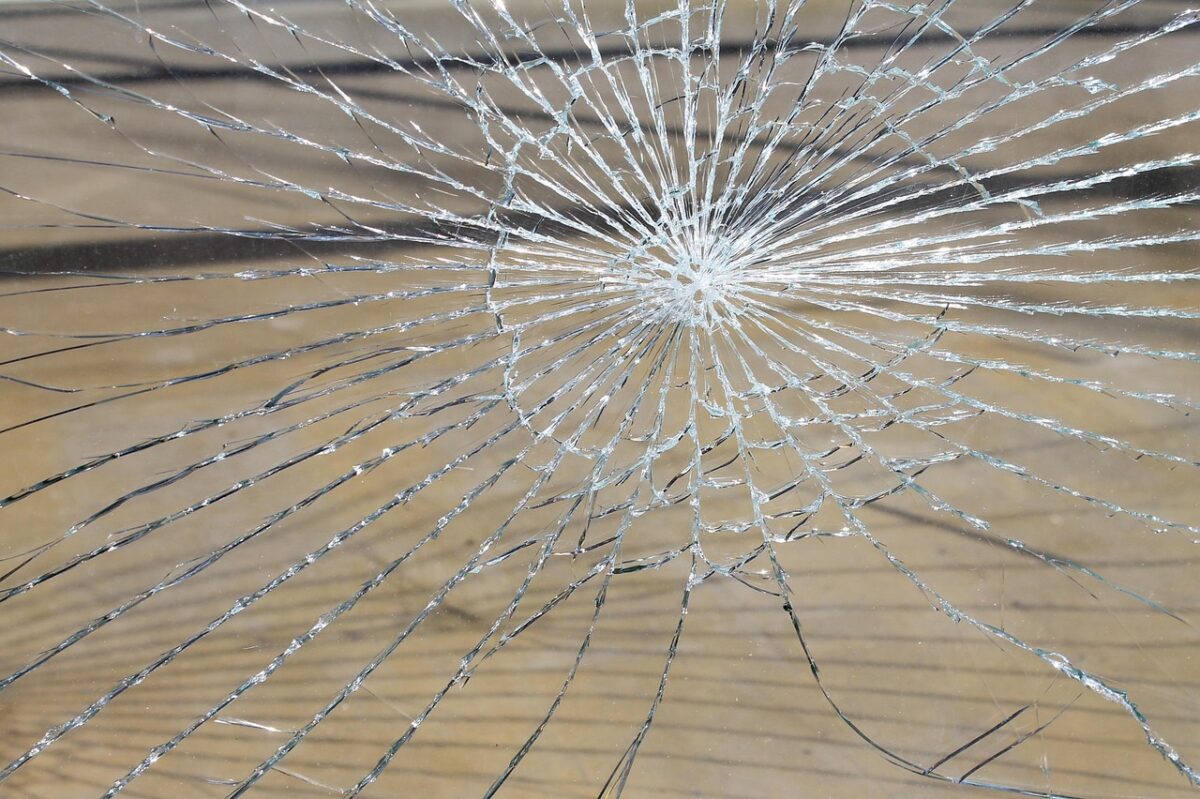
Solar modules are getting bigger, thinner and more powerful. But from Texas to Thailand the same problem appears: broken glass. Not from hail or wrong then, but from cracks that spider of frame edges, splinter near clamps and web about modules. In cases seen by Jörg Althaus, director of Engineering and Quality Assurance at Clean Energy Associates (CEA), it starts with a few panels – then dozens, hundreds, even thousands.
From PV Magazine 6/25
Clean Energy Associates has investigated glass fractions on solar sites on the utility scale on three continents. It has discovered that there is no root cause, but a perfect storm: thinner glass combined with design shortcuts, evolving materials and vithernities that further simulated stress modules than what was simulated in the lab.
For years the industry relied on modules with one glass made with sturdy, fully tempered glass of 3.2 mm. But the push in the direction of bifacial modules, combined with the attraction of lower material costs and slimmer profiles, led many manufacturers to adopt 2.0 mm double glass designs using heat-reinforced but not fully tempered glass on both sides.
Two sheets of 2 mm glass must match the strength of one thicker window, on paper. In practice, modules are now more vulnerable. These thinner sheets do not bend alone, they bend and bend like diving plates when they are subjected to wind loads and tracker movement. They are more sensitive to where and how they are clamped. Push too hard, too close to the edge, and the stress builds up invisibly. The greater the module format, the more these problems become pronounced. More surface means more deflection, more vibrations and more potential for small weaknesses to transform into full fractures.
In the field
The same red flags continue to appear when CEA sites inspects widespread fracture. Cracks usually start near clamping points, corners or edges where the frame exerts pressure on non -supported spans.
Modules often do not show no sign of external impact, only a sudden, sharp fracture that runs over the glass. Some modules are stressed in advance. We have seen glass curvature before the panel even leaves the crate, probably introduced during lamining or framing. Large modules vibrate in the wind. On long trackers with flexible seacaps we have measured subtle but stubbornly shaking that structural fatigue reinforces over time.
In one case, glass fragments literally came from a module during routine maintenance weeks after the first break. The cause? A combination of internal tension and poor edge grinding, without external power to blame.
Laboratory report
CEA has recreated and confirmed this break in controlled tests that even modules that are certified to make the industrial module test standard IEC 61215 succeed can fail under Real-World stress.
Dynamic mechanical load (DML) tests, which simulates gusts of wind and movement, has unveiled mistakes that do not catch static loading tests. When mounted on field-realistic setups, including the lower layer zlins, some modules slipped out of their clamps during testing or cracked after repeated bending as a result of deflecting substerances.
Fractography points to clamping zones such as the stress epicenter, especially when clamping distance is tight or torque settings are eliminated. The back glass measured as thin as 1.9 mm in some samples, still in spec but hardly any. Marginal tolerances leave little room for site-specific peculiarities.
Certification gap
The current standards are designed for yesterday’s modules. Although dynamic tests were added to IEC 61215 in 2021, it is still not used on a large scale. If this is the case, it often does not replicate real-life assembly figurations that use projects in the field.
CEA has seen cases in which clamping positions in laboratory tests differ from the field, which leads to stress concentrations in completely different areas.
Substructure flexibility, especially in long-term, tracker-mounted systems, introduces torsion that certification tests do not take into account. Couple settings during the installation also vary considerably in the field and can create non-replacement stress in clamping zones.
As a result, modules that succeed for IEC 61215 tests can still fail in the actual implementation, not because they are defective, but because the certification regime does not fully reflect the mechanical reality of the current solar systems.
Even if everything else looks good, hidden defects can give the balance. In various studies we have found small air bubbles or strange particles that are embedded in the glass. These micro-chaings are invisible at a glance, but can work as a time bomber-stress concentrators that weaken the glass just enough to have a fracture propagated.
For hardened or heat-reinforced glass, surface stress is normal. However, we have seen variation in this surface tension, indicating that not all the glass is made in the same way. Heat strengthening processes can also vary. Without serial traceability for the glass itself, following these problems back to a specific batch, line or shift is almost impossible. That makes systemic prevention more difficult than it should be.
Stress cocktail
The collection meals is that glass fracture is not caused by one thing, it is caused by five or six things that happen in one go: a somewhat curved module, somewhat crossed clamps, somewhat supported spans, somewhat thinner glass, somewhat flexible stretching.
Each of these can be survived in itself, but in combination with added temperature, wind and hail stress it can be too much for the glass to withstand.
This is no longer mystery. The next step is to apply that knowledge in the industry. Tackling these risks requires coordinated effort from designers and manufacturers to EPCs and assets owners.
CEA recommends:
- Make testing more realistic. Use project -specific confirmation configurations. Take dynamic drawers. Measure deflection and couples tolerances in context. Some errors in testing require that standards are updated. Torsion stress, for example, is not included and can be resolved by added procedures that are not yet standardized.
- Clamp smarter. Harmonize clamp design and distance with the actual glass and frame features of modern modules.
- Dring on better traceability. Glass deserves the same research as cells and waffles, including batch tracking and process transparency.
- Watch out for micro defects. Whether it is about finishing, inclusions or laminating stress, these must be systematically screened. Take the trimming of glass edge and grinding and framing inspections in your quality assurance programs, because small impurities in framework components can be the death of glass edges.
- Treat assembly as part of the design. It’s not just about the module, it’s about the system in which it lives.
The promise of double glass modules is real. Better lifespan, better moisture protection, higher energy yields. But those benefits will not come true if we continue to underestimate the mechanical reality of large, thin-glass panels on flexible structures.
Solar scales up quickly and the systems that are being implemented today will be 30 years or more. Let’s make sure that the glass can last so long.
About the author
Jörg Althaus is director of Engineering and Quality Assurance Services at Clean Energy Associates (CEA). An electrical engineer through training has spent more than 20 years with the supervision of the inspections of solar equipment in deserts, typhoon zones and factory lines on four continents. His current work focuses on identifying systemic risks in the modern PV module design – especially those that hide in sight until the glass is sealed.
This content is protected by copyright and may not be reused. If you want to work with us and reuse part of our content, please contact: editors@pv-magazine.com.
Popular content

