In the final article of a new series on solar energy production facilities around the world, pv magazine presents Belga Solar’s solar energy production facility in Wallonia, Belgium.
Belga Solar, formerly Evocells, started as an installation company in 2007 before deciding to invest in its own production unit in 2012. The company transitioned to the Belga Solar brand in 2022 and secured a €3 million ($3.51 million) capital increase in 2024 to help accelerate the technological transition. The company’s current financial structure includes the public financial institution Wallonie Entreprendre, private investors and the company’s general managers, Frédéric Conrads and Sébastien Mahieu.
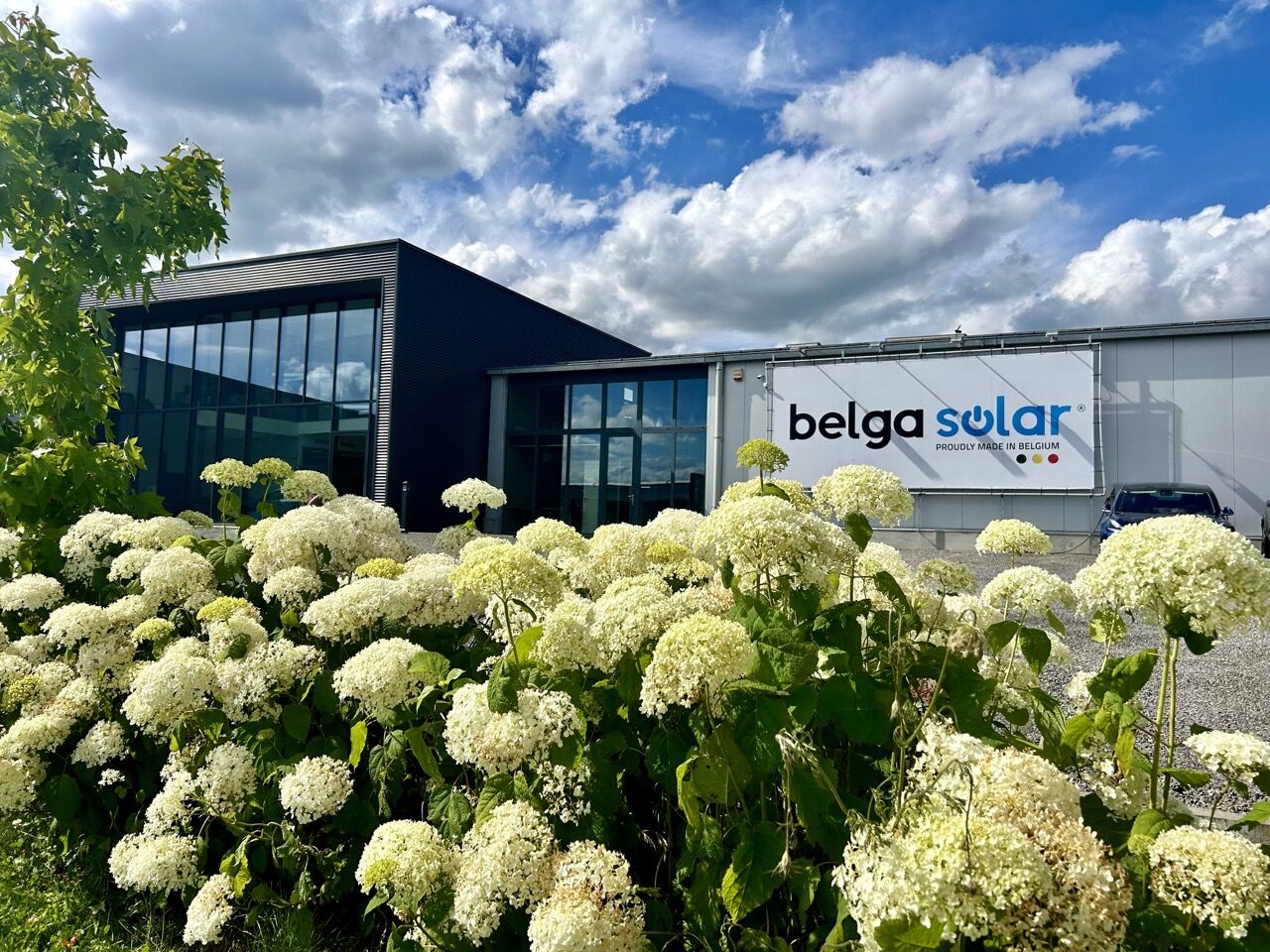
Today, all of the company’s solar panels are designed and produced at Belga Solar’s production facility, located in Baillonville, central Wallonia. The facility has an annual capacity of 100 MW, equivalent to approximately 200,000 modules.
Belga Solar calls itself a mission-driven company whose core ambition is ‘to be the best for the world, and not just the best in the world.’ It says that this mission is defined by three strategic axes of the European energy transition, Belgian reindustrialization and European PV sovereignty.
The production line, designed as an integrated vertical model, uses equipment from Italian PV equipment manufacturer EcoProgetti. Mahieu told pv magazine that the company chose to purchase EcoProgretti machines as it expanded factory capacity to align with its goal of supporting the European PV industry. “We believe that there is no point in having only Chinese panels on our roofs,” he explains. “We also need European workers and we also need European prosperity.”
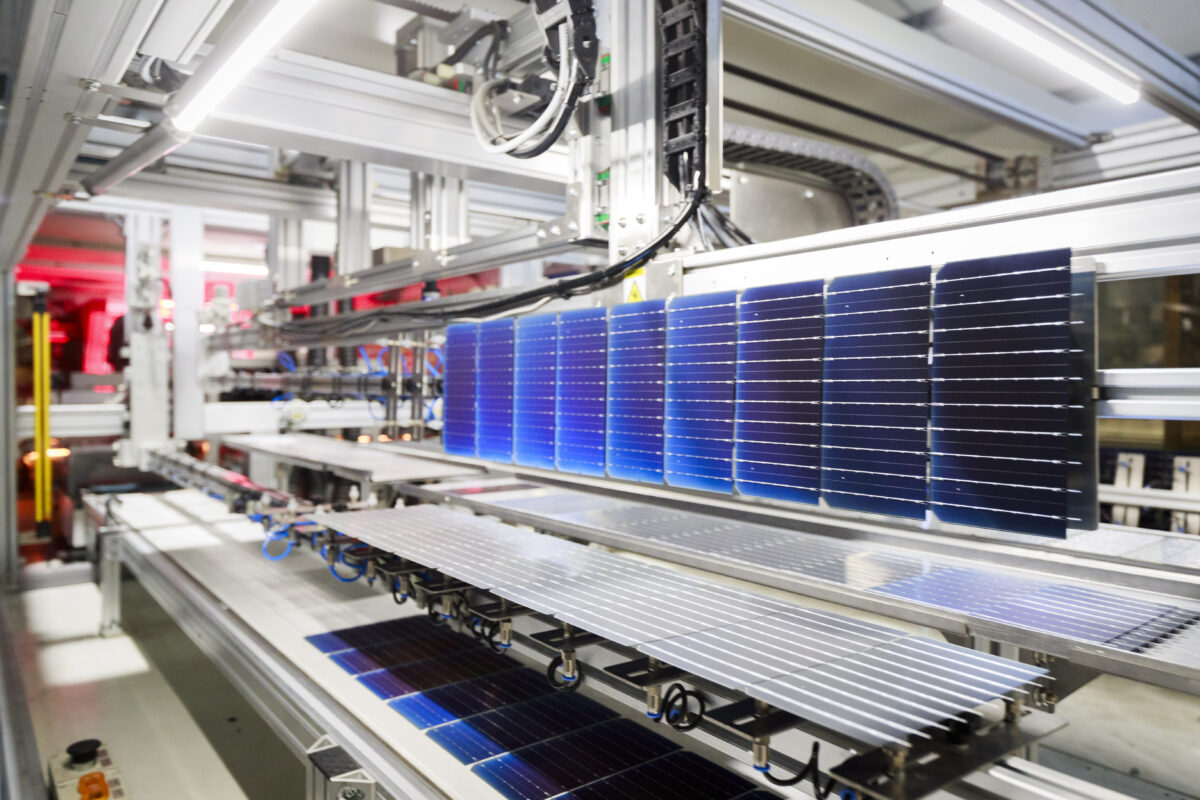
Work on Belga Solar’s production line starts with high-precision soldering of cells, followed by automated cell positioning and circuit assembly. The production line also completes electroluminescence testing, lamination testing, framing and finishing. Each panel undergoes a total of six stages of verification testing before being released to market, providing a 25-year performance and product warranty.
Image: Geoffroy Libert/Belga Solar
Belga Solar has completely switched its production line from PERC technology (passive emitter and rear cell) to TOPCon technology (tunnel oxide passivated contact). The core products include the Design range of black solar panels from 425-430 Wc, aimed at residential and architectural projects, in addition to the Performance range of panels for agricultural, commercial and industrial customers with a capacity of 450 Wc. Both series feature half-cut M10 cells and a 35mm black aluminum frame.
The company also produces a number of specialty modules at its factory, including agricultural voltaic panels and building-integrated photovoltaics. Belga Solar is also responsible for the local manufacturer of Wattway modules, a patented PV road surface technology developed by French transport infrastructure company Colas in collaboration with the National Institute of Solar Energy (INES), which is installed directly on existing road surfaces.
Belga Solar’s production line also produces the company’s SkySafe modules, a new innovation that Mahieu says the company has started with the first orders and deliveries this year. SkySafe is an anti-reflective black panel of 490 Wc that has been specially designed for airport environments and has already been deployed at Brussels International Airport.
Mahieu told pv magazine that it was important to maintain flexibility in the production line as this allowed the company to work on its diverse product range.
“We didn’t want a fully automatic production line, because when you have a production line like that, you still need the same number of people working on the line, but they only change small things and robots do the work, and they can start to lose their knowledge. It’s better to let them actively work on the product to maintain their knowledge,” explains Mahieu. “The flexibility also allows us to produce specific products, such as the Wattway. It is very specific, for example, it contains no glass.”
Belga Solar focuses on the residential as well as commercial and industrial market segments, Mahieu added, emphasizing the local supply chain it offers to its customers in both market segments. Although Belga Solar is mainly active in the Belgian market, it is also expanding its European and international footprint, with partnerships in France and an installation in Ecuador’s Universidad Estatal Amazónica that was inaugurated last year. “That was one of the major projects in Ecuador last year, and we want to continue growing there too,” says Mahieu.
Belga Solar became the world’s first B-Corp certified solar panel manufacturer, a distinction awarded for meeting a range of social, environmental and accountability standards for its customers. The company has committed to reducing the carbon footprint of all its operations through a range of methods, including a 70% reduction in cardboard packaging through eco-friendly packaging and the use of fluorine-free backing sheets and frames without screws or silicone to facilitate recycling. Up to 95% of the panels are recyclable, with each panel installed on a private home funding the planting of four trees through a partnership with Belgian NGO Graine de Vie.
The first article in pv magazineThe new series on solar energy manufacturing facilities around the world featured United Solar’s polysilicon plant in Oman.
This content is copyrighted and may not be reused. If you would like to collaborate with us and reuse some of our content, please contact: editors@pv-magazine.com.
Popular content