Researchers have collected data from solar sensor-equipped vehicles, which mainly achieve more than a million km in the Benelux and the German region, in order to be able to make efficiency more accurately and to provide predictions. The research project is part of a continuous three -year European assessment of VIPV.
Researchers from the Dutch Organization for Applied Scientific Research (TNO) and Fraunhofer Institute for Solar Energy Systems (Fraunhofer Isee) and three integrated PV (VIPV) manufacturer-Sono Solar (Previously Sono Motors), Lightyear-Laag and IM-Efficiency, both based in the Netherlands, collaborated in the Netherlands to measure the potential for integrated Solar PV vehicles on the road in a data-intensive study of nine months.
The measurements were taken on highway, urban and rural roads. The work is part of a 3-year European project to assess the efficiency of the vehicle-integrated PV And verify real-world performance that started in 2023.
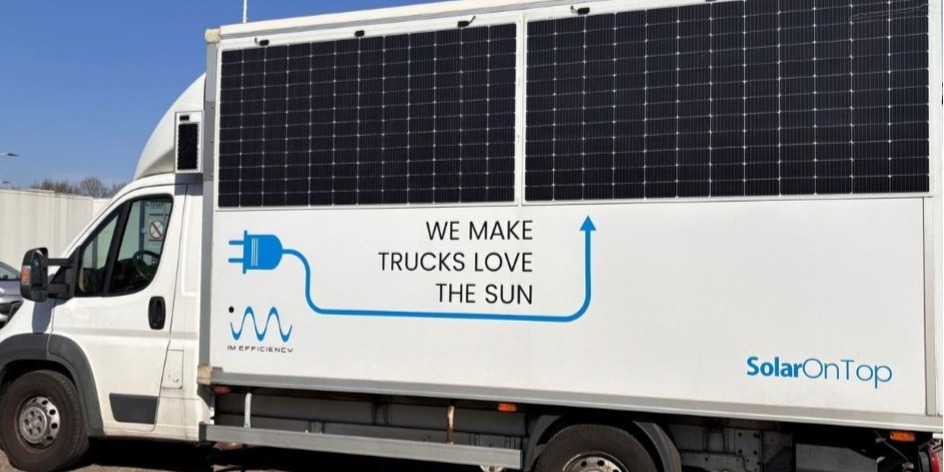
The measurements of the solar radiation were started in March 2024 with 18 vehicles. Battery-driven sensor systems devised by team members were installed on the sides and roofs of five transport cars, two buses, four vans with local deliveries and seven passenger cars.
“The results of the measurements confirm that solar panels on vehicles can be a valuable, mobile source of renewable energy for the transport sector,” the researchers said in an announcement about their 70-page interim report, “”Solarmoves: Real-Life Measurements of radiation and energy consumption for solar mobility. “
The work confirmed that satellite and meteorological data help to refine the shadow caused by buildings, trees and other vehicles to offer a shadow factor for use in models, but to get realistic energy yield assessments, including “route location-specific data” and “usage-specific behavior”.
The report contains data and discussions about performance with regard to trucks for tractor trailer, electric vans, electric passenger cars, VIPV fleets and charging infrastructure.
It said that parking situations present particularly challenging shadow conditions, reduce the proceeds, indicating the need for “strategic parking solutions or additional loading methods.”
It was also noted that about 50% less radiation than PV panels on the roof received during drive cycli in the Netherlands and northern Germany. More specifically, PV has an average of 2.8 kWh/m2 per day and, when it is mounted, it is 1.3 kWh/m2 per day.
The radiation measurement campaign followed earlier predictive modeling by the Research Consortium, which indicated that VIPV in southern Europe up to 50 % of the energy requirement for communal passenger vehicles with a low annual mileage (between 4000-5000 km) and 35 % in Central Europe could contribute. “There are, however, further seasonal data from the spring and summer-to-need to attach long-term trends for the three types of vehicles,” said it.
The researchers are expanding the measuring campaign to South and Eastern Europe with a final report planned for 2026. It will include updated findings and give recommendations for optimizing VIPV implementation in vehicle types and regions.
Image: TNO
This content is protected by copyright and may not be reused. If you want to work with us and reuse part of our content, please contact: editors@pv-magazine.com.
Popular content