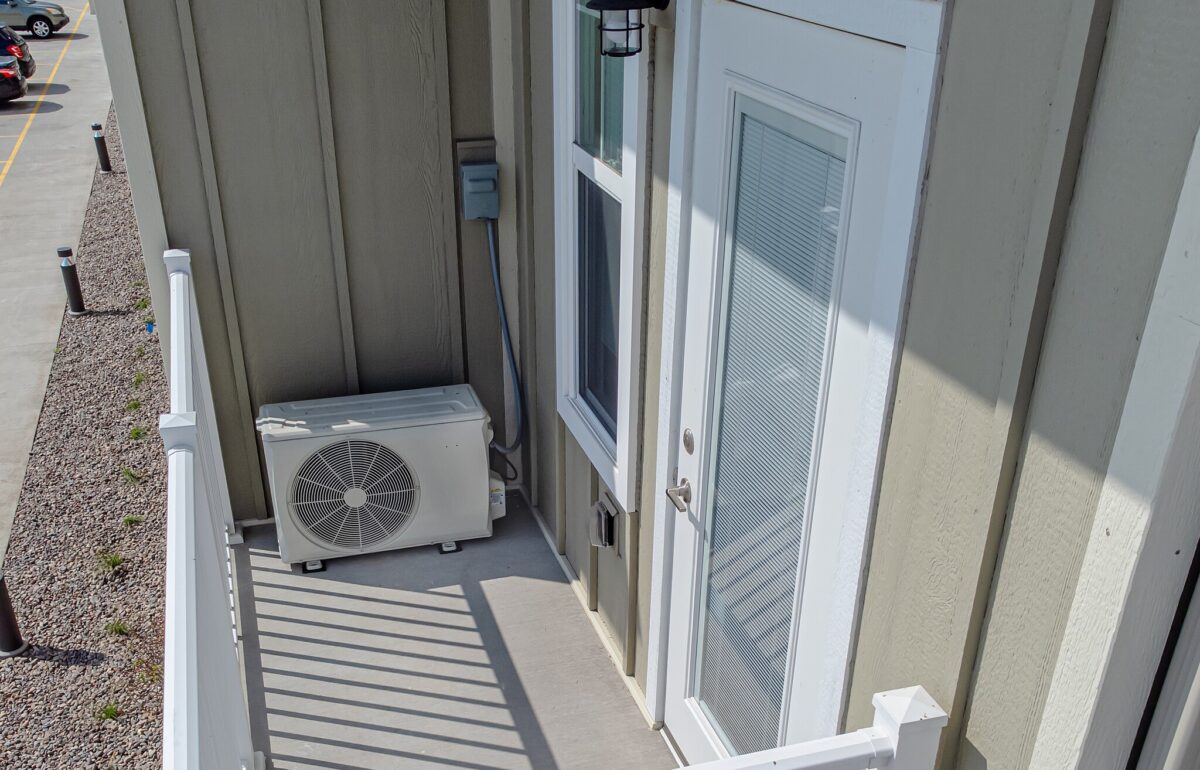
A questionnaire and focus group study of households in the British city of Bristol showed that residents lack technical and ‘common sense’ information about the transition to heat pumps. Able to pay residents more willing to invest when they learned about technology.
A researcher located at the University of Bristol of the United Kingdom has investigated the drivers and obstacles for the acceptance of heat pump among households.
In the newspaper Consider barriers to the acceptance of heat pump with households that can payAvailable in the magazine Energy policy, Researcher Ruzanna Chitchyan spread questionnaires under selected places in Bristol identified by their zip codes. The study defined to pay residents like that with a median or above the median household -disposable income.
The questionnaires contain 25 questions that residents asked about the current state of their home, their consideration in relation to home improvement in the coming years and thoughts about improvements in the field of energy efficiency. Further questions concern the consciousness and knowledge of heat pumps, perceived expected financial obligations and perceptions of scale practices. Data collection stopped as soon as 100 households gave valid answers.
After distribution of the questionnaires, Chitchyan, in collaboration with local energy and sustainability groups and the local city council, organized focus groups. A total of 27 people were arranged in four groups based on their knowledge level of energy efficiency measures and their willingness to install a heat pump. In each group there was a discussion of 1.5 hours around drivers for installation of heat pump installation and planned financing measures.
According to the results, 49% of respondents considered changing their heating technology, 45% considered one or two improvements in the field of energy efficiency and 21% had no considerations. In total, 29 respondents considered a heat pump installation within one to two years, while the heat pump installation considered ten to five years within three to five years.
Chitchyan discovered that the recent rise in electricity prices compared to the gas price means that some of the participants doubt doubts, with 69% not certain whether they would install a heat pump in the coming five years.
Image: University of Bristol, Energy Policy, CC by 4.0
“Based on the answers from this study, we see that 64% of house residents know little about the heat pumps, 18% think they are not at all informed, 15% consider themselves well -informed and 3% is not interested in learning about heat pumps,” says the research paper. “When asked how certain they were when installing heat pumps, 43% of the respondents said that they were not very confident and 21% were not confident at all, while 30% were reasonably confident.”
Of the respondents who are interested in installing a heat pump in the next two years, 95% said they wanted a website with a list of links and subsidy information and a one -stop -Shop. These respondents also wanted a ‘checklist of important points to consider for specific improvements’.
About a quarter of the respondents were willing to finance the heat pump stock themselves, priced at £ 6000 ($ 8,109) or installation priced at £ 7000, while another quarter was not sure whether they needed no heat pumps at all, or how they would finance them. More than a third (37%) said that they would only perform heat pump installations if the government grants were available.
When asked what percentage of the costs of a government should cover to stimulate a heat pump installation, two respondents between 20% and 25% said for the supply and installation, while another two respondents asked for 50% of these costs, and an early 75% of the costs of heat pump.
While the study was conducted in one area of Bristol, Chitchyan said it might have wider implications for the UK. “Similar worries can be relevant to others able to pay residents and communities inside and in the UK,” she said.
Chitchyan concluded that the residents surveyed experience significant barriers in the use of relevant technical and ‘common sense’ about the transition to heat pumps, the financing and adulthood of technology.
She added that these challenges could be tackled by a series of policy changes and recommendations, with regard to creating value, providing information and increasing confidence in retrofitting practices for residents.
This content is protected by copyright and may not be reused. If you want to work with us and reuse part of our content, please contact: editors@pv-magazine.com.
Popular content