

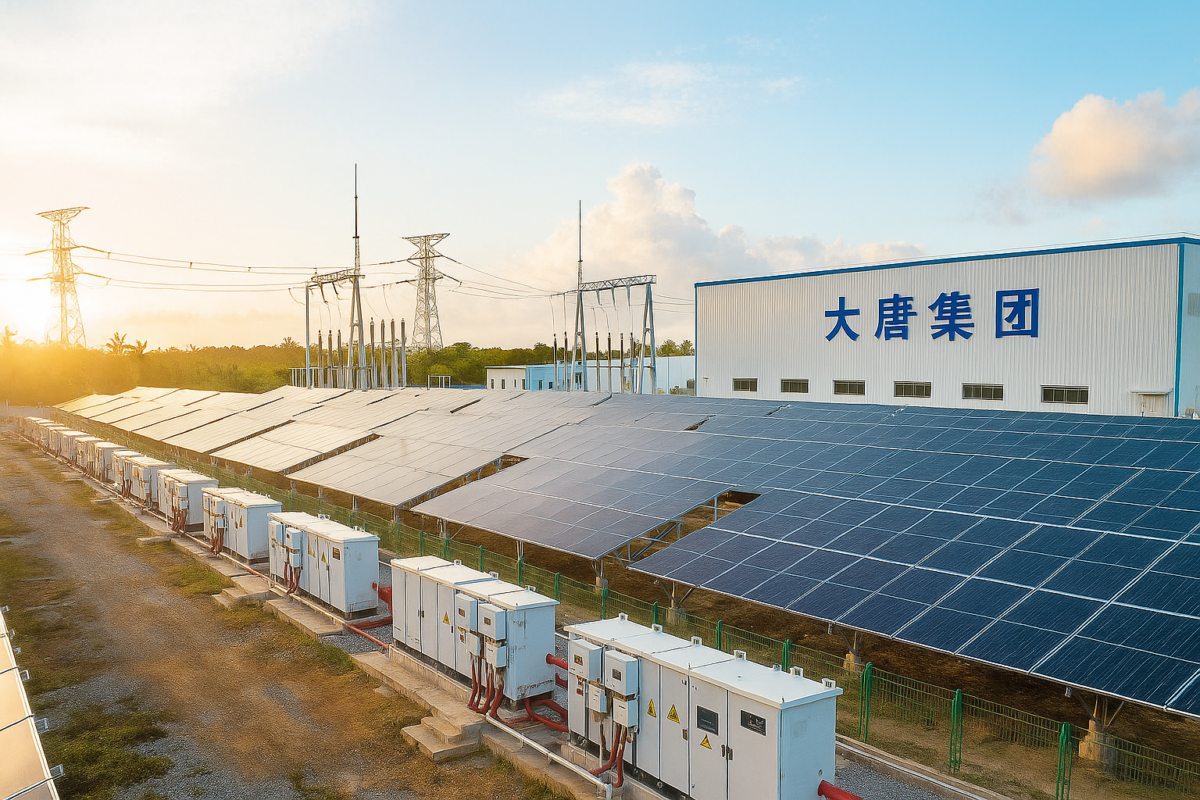
China Datang Corp. says that his 2,000 V-Sonne test base in the Chinese province of Hainan will validate high-voltage modules under tropical coastal conditions.
China Datang Corp. Through his subsidiary Datang Hainan Energy Development has unveiled the first 2,000 V photovoltaic validation and certification base in the world in Wenchang, the province of Hainan in China.
The facility, which is intended to validate the next generation of high-voltage PV systems under tropical coastal conditions, is intended to bridge the laboratory theory and Real-World performance in high temperature, high-huminity and salt vessels and salt vessels and salt.
The Wencang -Basis is structured to tackle three core mittens: empirical verification of 2,000 V systems by monitoring more than 20 critical variables, including the ability, cell temperature and radiation under uniform test conditions; Comparative performance assessment of 2,000 V versus conventional 1,500 V systems, in particular with cable reduction and profit of the costs of electricity; and standardization efforts, collaboration with industrial authorities to build important test protocols and hardware compatibility standards for high-voltage PV platforms.
The wet, tropical place in the vicinity of the South Chinese Sea experiences the entire year through humidity of the entire year greater than 80%, an average temperature of 23.9 ° C and an annual rainfall of 1,721.6 mm. Such circumstances are serious corrosion and environmental stress for PV systems. This setting makes the ideal for stress tests and reliability validation of the next generation equipment.
Datang Hainan is the developer of the project under China Datang. The basis is being developed in collaboration with China Quality Certification Center (CQC), UL Solutions and other certifications from third parties to guarantee credibility and methodological strictness data. The platform is also physically connected to Datang’s adjacent 100 MW Agrivoltaic-Plus-Storage demonstration station in Wenshang, making real-time validation in operational institutions possible.
A central challenge lies in verifying the durability of the device under combined tensions: high -voltage insulation, infringement of humidity, salt corrosion and thermal cycles. The project assesses how 2,000 V modules and inverters deal with these circumstances, their incoming aging, solder-Joint corrosion and electrical insulation stability.
Another important area is system compatibility: test how 2,000 V -Arrays interface with existing grid protection, measurement and operating systems. The basis also investigates co-control of 2,000 V PV-Plus storage, research into dynamic shipping strategies under high-voltage processing.
To simulate extreme climate conditions, the base is equipped with environmental rooms that replicate 60 ° C heat, 95% relative humidity and 5% NaCl salt mist. In combination with a Slim IoT monitoring platform, it registers data on multiple parameters at minute level and builds health models for predictive maintenance. The site has also drawn up initial test protocols, such as “outdoor validation of 2000 V PV systems”, which can deliver to industrial standards.
The Wenshang base has already been referred to as a demonstration at national level and included in the Green-Tech Innovation Project list of China, earning central budget support and recording in the “New Power System Development Blue Book” as a reference guest. The authoritative outdoor performance data is expected to produce equipment selection, system design, technological iteration and investment decisions.
Datang said it is planning to start a second-phase extension by 2026 (100 MW) and is intended to set up a “tropical PV International Laboratory” in collaboration with Southeast Asian energy agencies. In the long term, the facility can become a regional hub for R&D, testing, certification and technology export, which positions the Wencang -based as a crucial junction in China’s Clean Energy Ambition and Global Photovoltaic Innovation Network.
This content is protected by copyright and may not be reused. If you want to work with us and reuse part of our content, please contact: editors@pv-magazine.com.
