

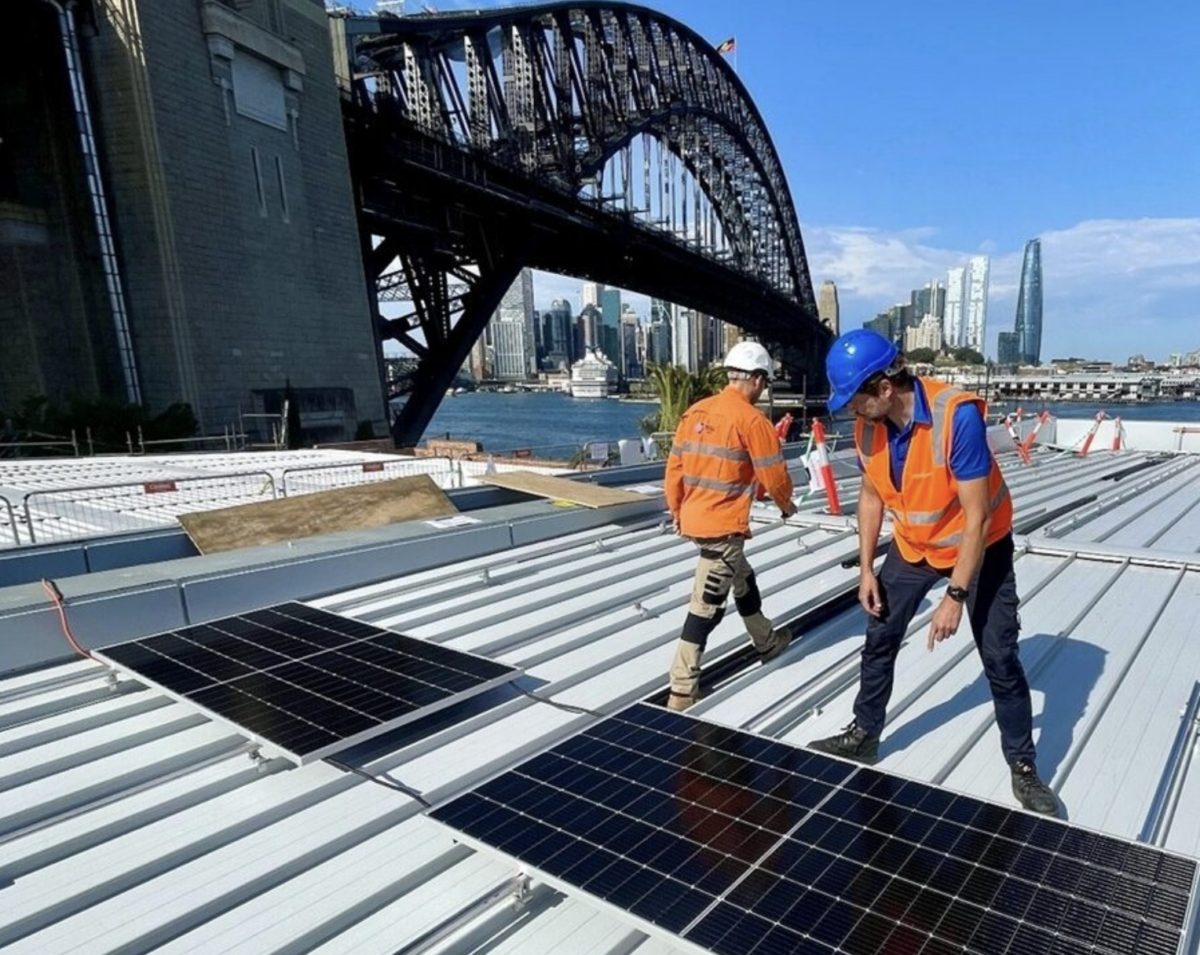
Coolsheet has begun a commercial pilot of its Australian-made photovoltaic thermal (PVT) system at the North Sydney Olympic Pool, converting standard solar panels into hybrid units that generate both electricity and heat.
Sydney-based climate technology startup Coolsheet has launched a commercial-scale pilot of its Australian-made PVT system, a patented aluminum heat exchange panel that converts standard solar panels into hybrid units for both new and retrofit projects.
The pilot is underway at the North Sydney Olympic Pool, designed to maximize on-site renewable generation from limited roof space by attaching Coolsheet heat exchange panels to the back of 206 550W PV modules. According to the company, the system delivers 114 kWe of electricity and roughly two to three times as much thermal energy with the same footprint.
The PVT array contributes to an all-electric pool heating system that maintains the temperature for more than 3 million liters of water in five pools year-round.
Coolsheet Chief Technology Officer Tom Hoole said the project represents a complex construction effort.
“As the site now nears completion, it is clear that it will be a world-class facility that demonstrates how sustainable heat can be built into public infrastructure,” said Hoole.
In line with North Sydney Council’s target to be carbon neutral by 2035, the Coolsheet system is carbon neutral and produces enough additional power from panel cooling to offset the load on the circulation pump, Hoole added.
The system is aimed at commercial users requiring low-level process heat between 60°C and 90°C, including food processors, beverage manufacturers, dairies, greenhouses, industrial laundries, hotels, resorts and aquatic centers.
The PVT system is certified as Australian made and sources key components domestically, including polymer tubing, pipework and aluminium.
Coolsheet spent five years working with the University of New South Wales to validate the design and test the components in the roof laboratories. The technology captures waste heat from panels, which typically lose 75% of absorbed solar energy as heat, using a lightweight water jacket to store energy in hot water tanks or heat pump preheating loops.
The system also cools solar cells, increasing electrical output by up to 4% for every 10 C drop in cell temperature. In Australian conditions, where module temperatures can exceed 65C, Coolsheet says the system can improve efficiency by up to 15%, reduce thermal stress and extend panel life.
Coolsheet chairman Doug Smith said the system provides a viable alternative to gas for water heating.
“Our prices are about 35% lower than our European competitors based on our 5MW pilot line in Sydney, but that is pre-automation, so we see a competitive future with scale even as new entrants enter the market,” he said.
Coolsheet, backed by $1.3 million in founder capital and grants, is now seeking investment to expand its team and scale up local production.
This content is copyrighted and may not be reused. If you would like to collaborate with us and reuse some of our content, please contact: editors@pv-magazine.com.
