Cameroon and Zambia are implementing government programs that bring solar mini-grids to communities without stable access to electricity. Cameroon recently deployed two solar power plants to power two villages, while Zambia deployed four solar mini-grids in the country’s Central Province.
Cameroon and Zambia are among African countries that have recently deployed solar mini-grids in rural communities.
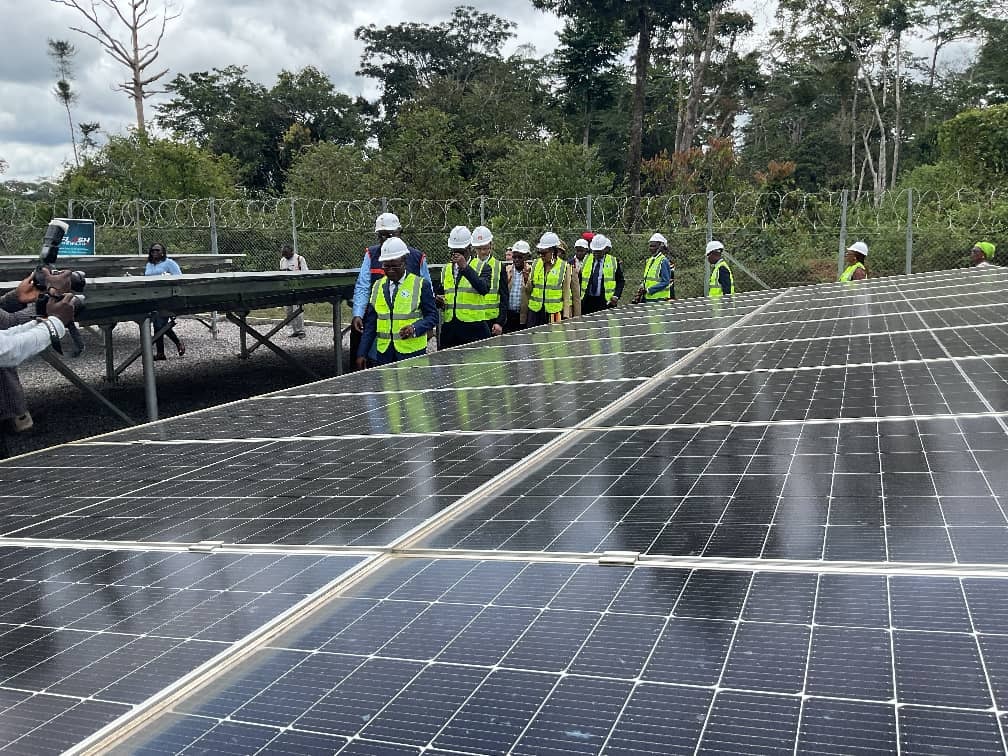
Cameroon’s Ministry of Water and Energy last week inaugurated two solar power plants in the villages of Songmambias and Nkelassi in Mefou-et-Akono, a department in the country’s Central Province.
The two installations each cover more than 900 m2, are each equipped with 161.3 kWh lithium batteries and have a power network of 4.4 km. Together they will give 270 households access to reliable energy, 135 per village.
The solar panels are part of a broader electrification program to provide energy to 1,000 rural towns in Cameroon. The country’s electrification rate was around 72% in 2023, but lags further behind in rural areas, with access at around 25% according to statistics from the same year.
Ministry figures show that the electrification program has already built 350 solar power plants, giving 27,500 households access to electricity. An ongoing third phase of the project will see a further 87 solar power plants commissioned with a capacity between 21.6 kW and 183.6 kW.
A statement from the ministry said that in addition to providing access to energy, these projects will also transform people’s lives, improve healthcare and education, create income-generating activities and revitalize the local economy.
According to figures from the Africa Solar Industry Association (AFSIA), Cameroon currently has 70 MW of operational solar capacity, of which 14.1 MW are solar mini-grids.
In Zambia, the government commissioned four solar mini-grids in Kapiri Mposhi district in the country’s Central Province at the end of September.
According to a social media post by the United Party for National Development (UPND), the four mini-grids provide electricity to more than 2,600 households, schools, health centers and small businesses in the region.
The project was implemented through Zambia’s Rural Electrification Authority (REA) and is part of wider government plans to install 1,000 mini-grids across the country. According to UPND data, 55 sites had been completed by September thanks to a combination of public and private support.
Just over half of the Zambian population had access to electricity in 2023. In the same year, figures from global economic data platform CEIC showed that access to rural electricity in the country stood at 17.6%.
Speaking at the launch of the four mini-grids, REA Acting Chief Executive Officer Alex Mbumba said the initiative is transforming livelihoods, with dairy farmers in the district now able to purify and store milk in bulk thanks to reliable solar energy.
According to AFSIA’s project database, Zambia has 391 MW of operational solar energy, of which 19.2 MW consists of solar mini-grids and solar home systems.
A recent report from the The International Energy Agency has found that sub-Saharan Africa now accounts for eight in ten people worldwide without access to electricity.
This content is copyrighted and may not be reused. If you would like to collaborate with us and reuse some of our content, please contact: editors@pv-magazine.com.
Popular content