

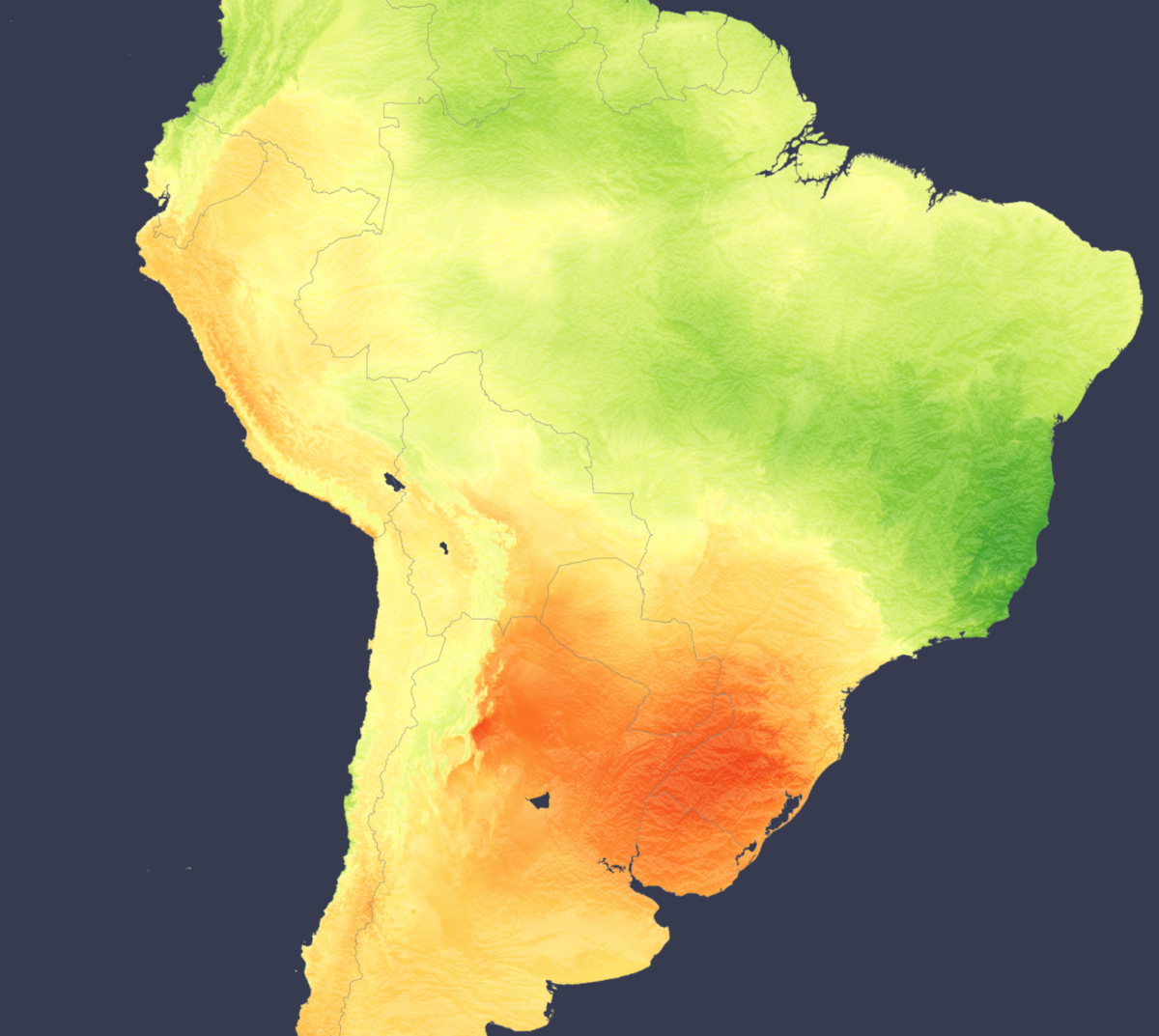
In a new weekly update for pv magazineSolcast, a DNV company, reports that the emergence of a weak La Niña in the tropical Pacific is expected to strengthen sunny conditions in southern parts of the continent, including Chile, Argentina and southern Brazil.
According to an analysis using the Solcast API. The emergence of a weak La Niña in the tropical Pacific is expected to strengthen sunny conditions in southern parts of the continent, including Chile, Argentina and southern Brazil. Although La Niña typically brings cloudy weather to the tropics, seasonal forecasts suggest that insolation will continue across much of Brazil. This deviation from historical norms reflects longer-term regional climate change, especially as recently observed in the Amazon Basin.
La Niña conditions, characterized by cooler-than-normal sea surface temperatures in the tropical Pacific Ocean, are currently developing and are expected to culminate in a weak event by late 2025. This pattern generally reduces cloud formation over the southern half of South America and along the west coast, mainly due to increased cold water upwelling off the west coast and a more stable, declining air mass.
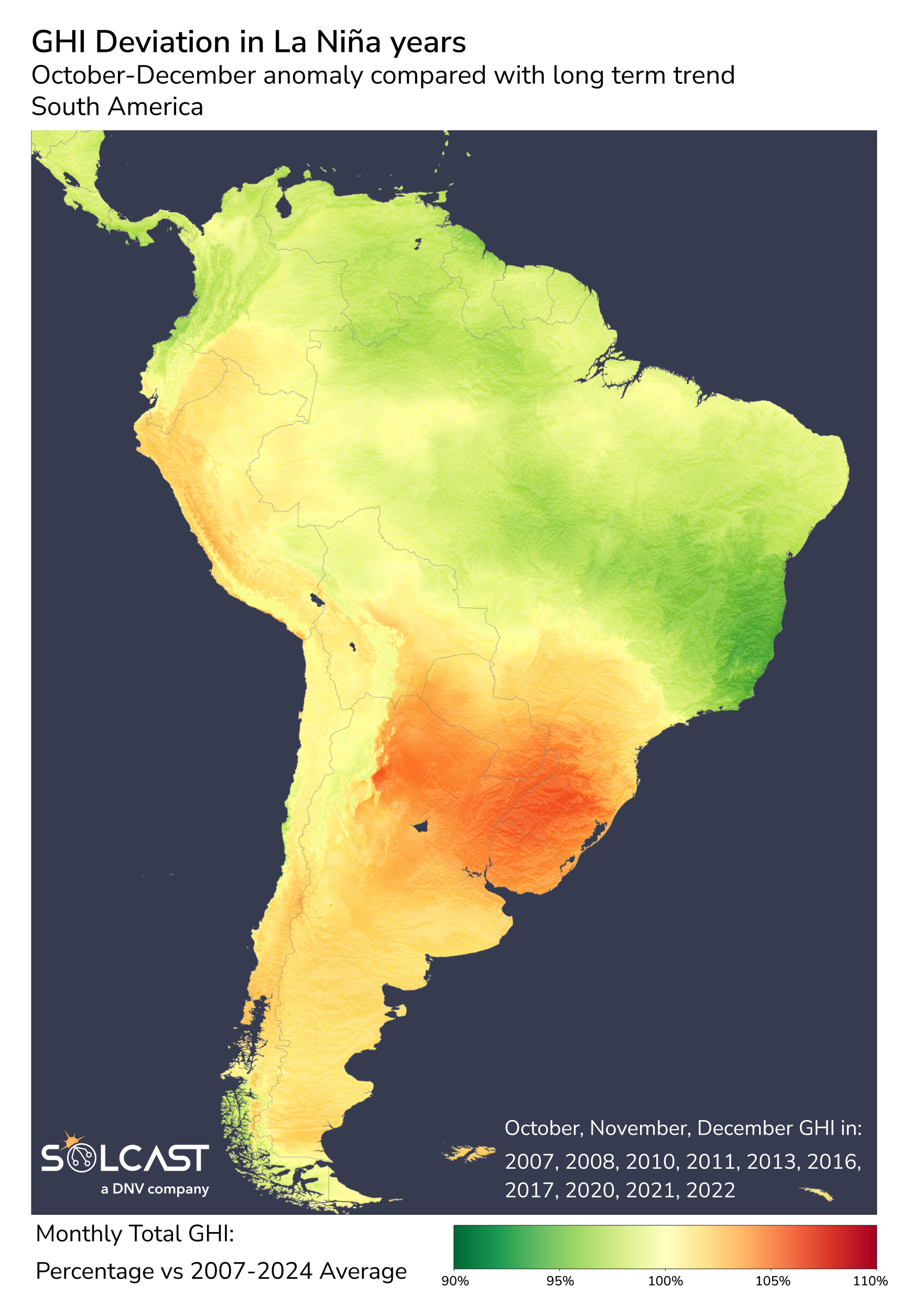
Solcast analysis of previous La Niña years shows that insolation from October to December in Argentina, Chile, Peru and southern Brazil is often up to 5% above climatological averages. This outlook is consistent with current seasonal guidance from dynamic models such as the ECMWF, which projects above-average insolation in southern South America for November and December.

This forecast continues the trend observed in September 2025, when radiance anomalies exceeded 15% in some parts of Argentina and Paraguay. These sunny conditions supported strong PV performance and are expected to continue into the Southern Hemisphere summer, providing favorable conditions for solar operators across the region.
The seasonal forecasts for Brazil defy typical La Niña expectations and point to continued increased insolation through the end of the year. Dynamic models predict sunnier than average conditions for November and December, following September when insolation was up to 5% above normal. This anomaly is thought to be related not only to La Niña, but also to long-term drying trends influenced by Amazon deforestation and broader climate change. Historically, La Niña has brought more cloud cover to Brazil in the last quarter of the year. The current deviation from that pattern shows how historical trends can diverge from future behavior in a changing climate.
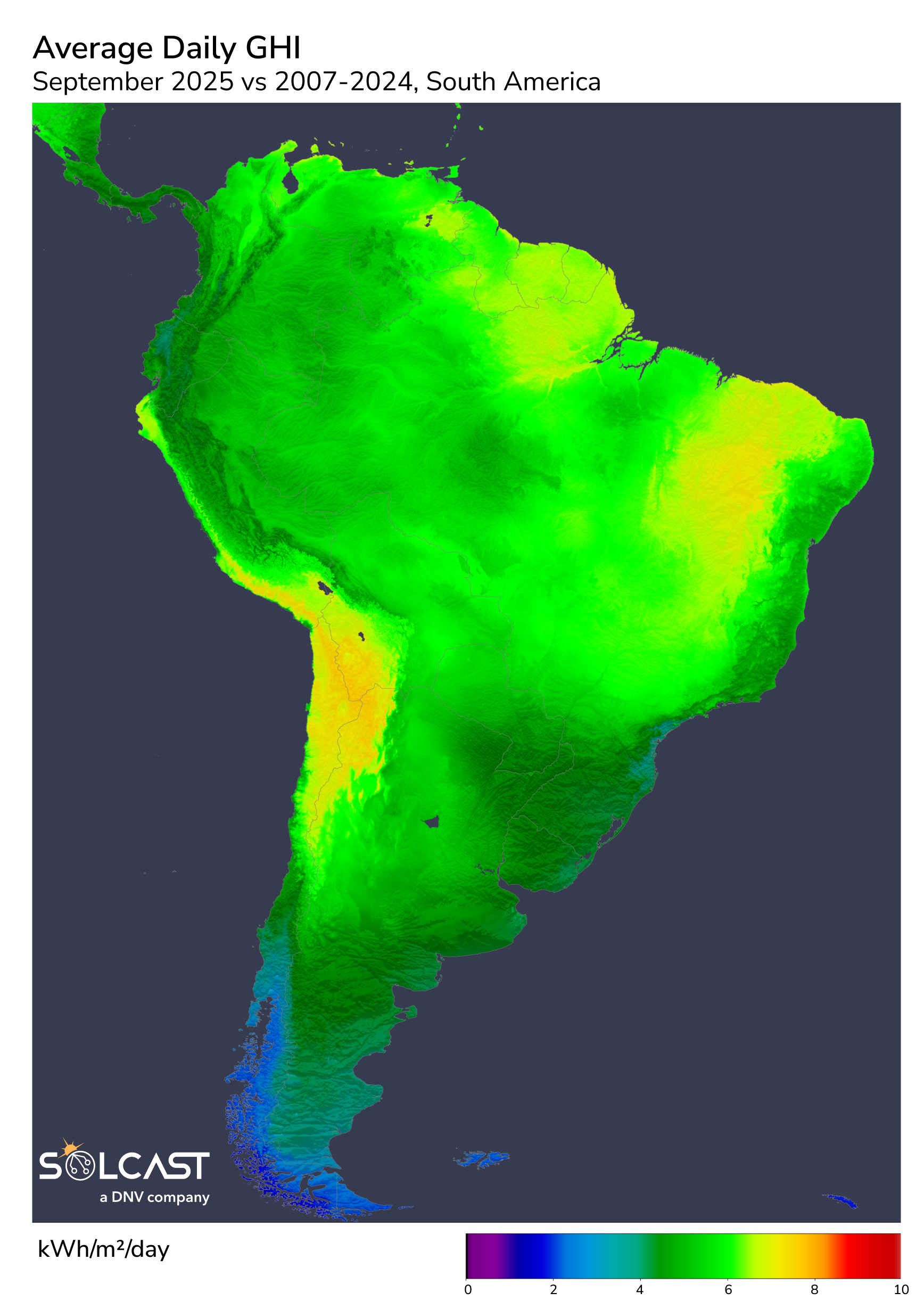
Meanwhile, Peru experienced below-average insolation in September and is expected to experience persistently cloudier than normal conditions through December. This contrasts with the typical La Niña influence and may indicate a more complex interplay of regional weather factors in the Andean and Pacific coastal regions.
Solcast produces these figures by tracking clouds and aerosols worldwide at a resolution of 1-2 km, using proprietary satellite data AI/ML algorithms. This data is used to drive irradiance models, allowing Solcast to calculate high-resolution irradiance, with a typical deviation of less than 2%, as well as cloud tracking predictions. This data is used by more than 350 companies that manage more than 300 GW of solar energy worldwide.
The views and opinions expressed in this article are those of the author and do not necessarily reflect those of the author pv magazine.
This content is copyrighted and may not be reused. If you would like to collaborate with us and reuse some of our content, please contact: editors@pv-magazine.com.
Popular content

