

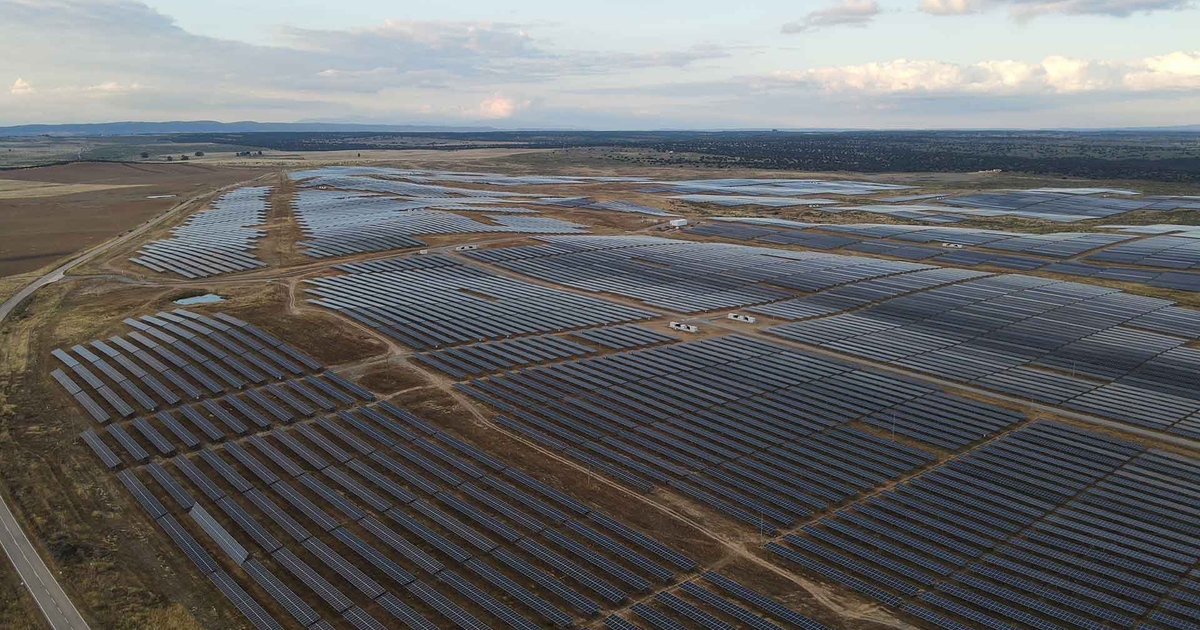
Metals and energy production company Metlen has signed a power purchase agreement (PPA) with French energy company Engie for solar energy in Britain.
Under the ten-year agreement, Metlen Engie will supply 235 MW of solar energy annually, generated from six solar projects in the UK.
The projects were all developed and built by M Renewables, Metlen’s solar project engineering and construction division. Four locations are expected to be operational by the end of 2025, the company said, while the last two are planned for 2026.
Metlen said it has 90 renewable energy projects in the UK, including solar and battery energy storage system (BESS) sites.
Metlen, a Greek company formerly known as Mytilineos, said the deal with Engie strengthens its “growing portfolio of offtake agreements across Europe.”
The company has expanded its engineering, procurement and construction (EPC) portfolio of UK solar and storage projects in recent months. In May it signed six EPC contracts for a combination 314MW of solar energy and BESS systemsthrough which it will build projects for major developers including Lightsource bp and AMPYR.
Then, in July, it was inked two more EPC contracts worth approximately £34.8 million for approximately 130 MW of solar and storage projects.
Elsewhere, the company has built and managed renewable energy portfolios in Australia and Chile, two of the most dynamic utility-scale solar markets in the world. It was refinanced earlier this year a 530 MW solar portfolio in Australiaas described on our sister site PV technologyand sold one 588MW/1.6GWh solar plus storage portfolio in Chile.
In turn, Engie is one of the largest business and industrial energy suppliers in Great Britain. The company says it supplies 17,000 businesses and organizations in the UK.
This year, Engie announced plans for a ten-year renovation of it Dinorwig pumped hydroelectric storage (PHES) location in North Wales. First Hydro Company (FHC), a joint venture 75% owned by Engie, said it planned to replace and replant the plant’s entire generating capacity. It also owns the Ffestinog PHES site, also in North Wales. Globally, it also operates an extensive portfolio of both renewable energy sources and fossil fuels.
