

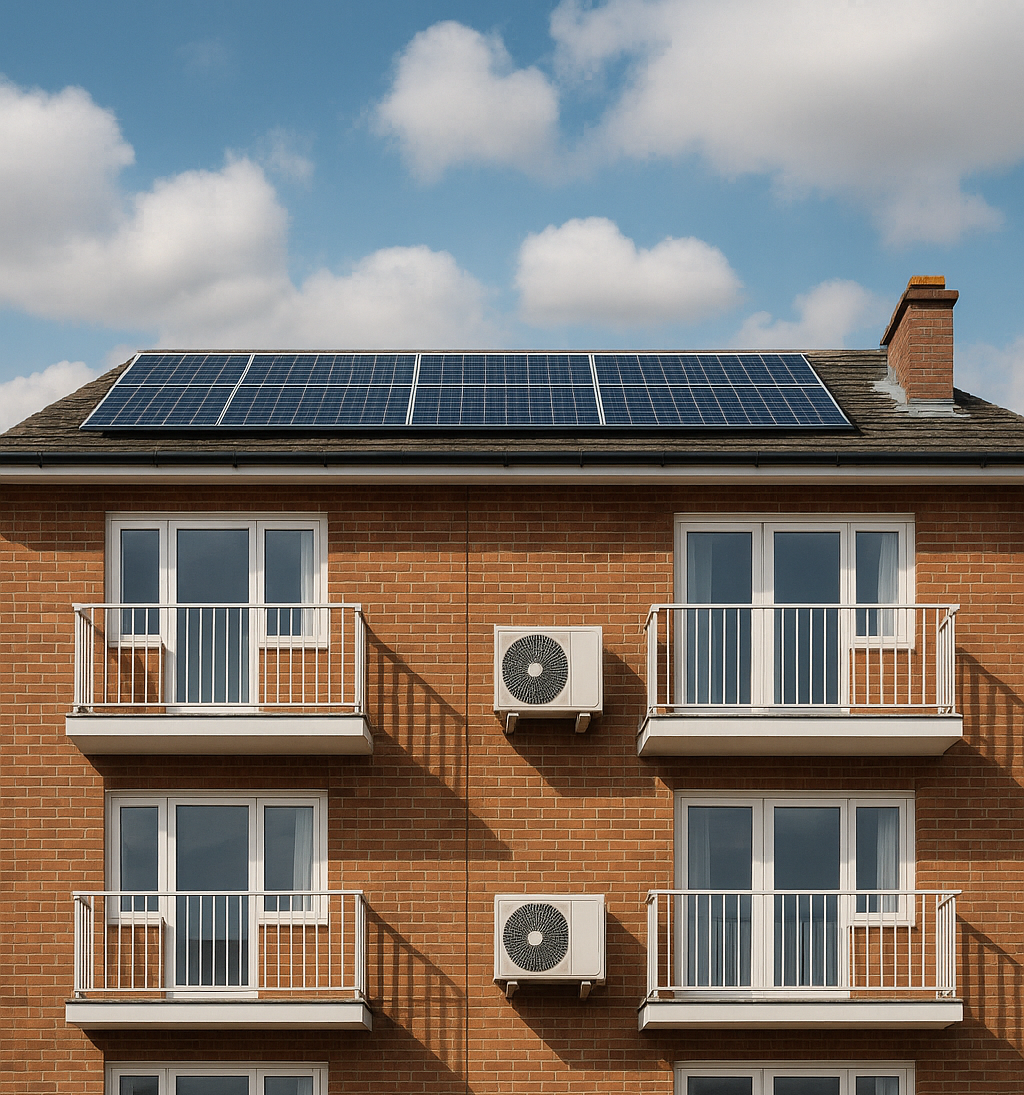
British researchers believe that smart, centrally controlled air heat pumps can reduce peak electricity demand. The technology not only keeps homes comfortable, but also increases the flexibility of the electricity grid and reduces emissions.
A group of researchers from the University of Southampton in the United Kingdom and British energy company Good Energy have investigated how remote control of air source heat pumps (ASHPs) could increase suppliers’ energy flexibility through peak shaving strategies. The research found that ASHPs can deliver significant average power reduction during periods of high demand.
The field trial involved 30 test buildings and 30 control buildings in southern England. In the proposed system configuration, a central control system managed the ASHPs during peak periods of grid demand.
Testing began in January 2023 and continued until March 2023. The average floor area of the participant group was 141 m², significantly larger than the UK average. About 33% of homes were built before 1945, 13% after 2002, with detached homes being most common. Participants were generally affluent, highly educated, and predominantly homeowners aged 30-64.
The system performance was evaluated using three types of energy flexibility events: a “power limitation” scenario, where the heat pump power was reduced to 60% of full capacity; a “call to heat” scenario, where the space heating was turned off; and a “call for heating – DHW off” scenario, where both the room heating and domestic hot water (DHW) were switched off.
A maximum of one event per day took place and participants were informed that events could take place between 4:00 PM and 9:00 PM. They could override third-party control at any time through a special web page.
During testing, 22 flexibility events were initiated, lasting between 30 minutes and 2 hours. Requests to override third-party control accounted for 1.1% of total potential requests during events, 1.3% after the same-day event, and 0.3% before the event, slightly higher than the 0.7% recorded on non-event days. For longer events of two hours, transfer requests were made by 4.4%, while rates for shorter events were lower.
The field trial showed that the ‘call for heat’ and ‘call for heat – DHW off’ mechanisms achieved a significantly greater power reduction compared to ‘power limitation’, with an average reduction of 88.2% and a maximum demand reduction of 1,581 kW.
“However, the data also revealed evidence of a substantial rebound in heating output following energy flexibility events – often referred to as the ‘snapback’ effect,” the researchers explained. “This can be mitigated by successively combining the two mechanisms: first ‘call for heat’ and then ‘power restriction.’ This approach was tested during the 20th event on March 22, 2023.”
Their findings are available in “Embedding energy flexibility in air-to-water heat pumps through third-party control: insights from a field trial with residential buildings in England”, published in Applied energy.
The research team also plans to investigate how smart systems can be integrated with other low-carbon technologies, such as solar panels and home batteries.
“Most people just want their homes to be warm and their bills to be affordable,” said lead researcher Patrick James. “Our research shows that heat pumps can provide comfortable heating while helping the grid during busy times. With smart control, they can play a key role in reducing emissions and making our energy system more resilient – and even save some money on their bills.”
“This research shows how new technologies such as smart heat pumps can benefit both people and the planet,” said Kedar Pandya, Executive Director of Strategy at the UK Research and Innovation Engineering and Physical Sciences Research Council (UKRI EPSRC), which funded the project. “By reducing peak demand, households can help avoid power outages, reduce costs and reduce emissions, all while staying warm.”
This content is copyrighted and may not be reused. If you would like to collaborate with us and reuse some of our content, please contact: editors@pv-magazine.com.
