

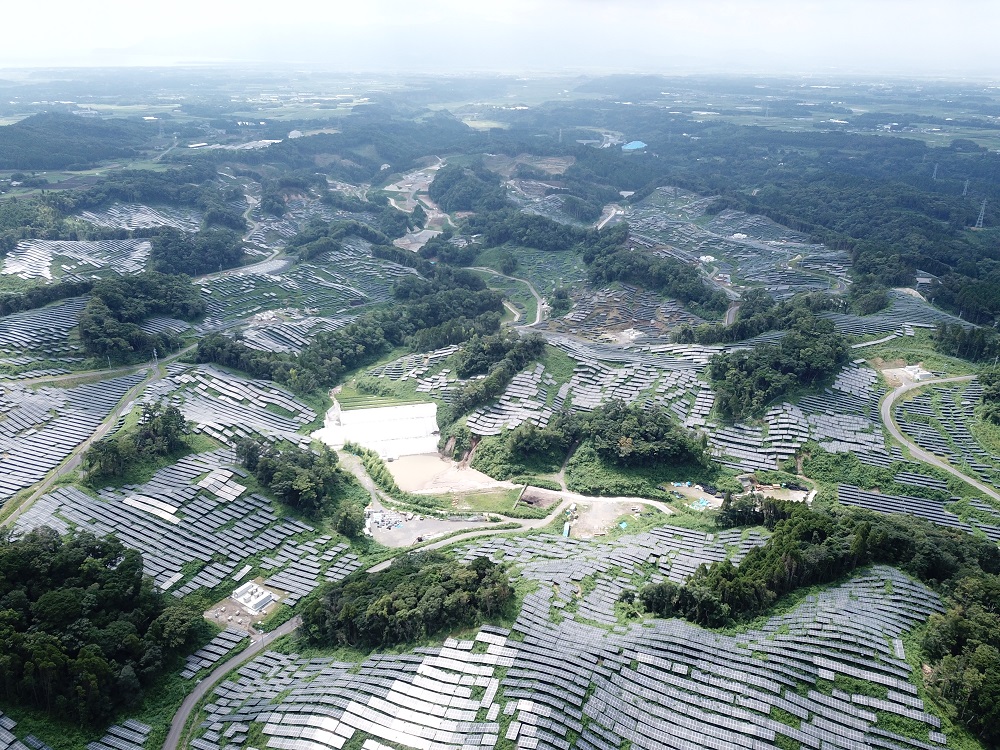
Researchers in India have developed a new layout design tool to identify optimal locations for installing solar panels on undulating terrain. The tool consists of two components: a filter module that excludes unsuitable areas of land, and an algorithm that determines the optimal distribution of panels over the remaining usable area. The approach was demonstrated at a test site in India.
A group of researchers from the Indian Institute of Technology have developed a new algorithm to optimize the placement of photovoltaic (PV) panels on undulating hilly terrain.
The Python-based tool was tested on real terrain in Uttarakhand, India. It consists of two key components: an algorithm that identifies areas of land suitable for PV installation, and a distribution algorithm that places panels on these areas with optimal spacing.
“Several critical factors must be considered when estimating the optical performance of a PV field,” the team explained. “First, solar radiation on hilly terrain is uneven because areas at lower elevations are often shaded by higher elevations. These shady areas receive significantly less sunlight than higher elevation areas. Second, hilly terrain contains spots with different orientations, leading to uneven sun exposure. Finally, in some regions, steep slopes make panel installation and maintenance challenging or impractical.”
The model uses terrain geometry data – including latitude, longitude and altitude – sourced from the Indian geoplatform Bhuvan. Solar radiation and meteorological data come from the National Solar Radiation Database (NSRDB), which provides 15 years of average weather data to generate a typical meteorological year (TMY). Parameters considered include direct normal irradiance (DNI), diffuse horizontal irradiance (DHI), global horizontal irradiance (GHI) and the position of the sun.
The first part of the algorithm applies five filters to identify usable land. Firstly, steep areas with slopes greater than 30° are excluded, which are not suitable for PV installation. Next, an azimuth filter removes north-facing areas with surface azimuth within 180° and 10°, which remain in shadow most of the year. A terrain shadow filter eliminates spots that are shaded for more than 20% of simulated sun positions annually.
The fourth filter, based on the Sky View Factor (SVF), excludes places where less than 80% of the sky dome is visible, because these areas do not receive enough diffuse radiation. Finally, a LOF (Local Outlier Factor) filter removes isolated spots with fewer than three adjacent grid points, leaving only clustered, accessible areas suitable for installation. The second component of the algorithm determines the optimal panel spacing based on the local slope, panel tilt and sun height.
“The choice of discard criteria is determined by the user,” the researchers noted. “In addition to the slope and LOF filters, criteria are established based on the acceptable level of solar radiation loss for a given application. Decisions on discard thresholds are guided by project cost analysis, which is beyond the scope of this study.”
For a case study in Uttarakhand, the selected terrain was 1,000 m long and 500 m wide, with elevations ranging from 1,740 m to 1,980 m. After applying the azimuth filter, 5.56% of the area was discarded, followed by 9.7% from the slope filter, 6.36% due to terrain shading, 4.77% from the SVF filter and 2.7% from the LOF filter, representing a total of 29.09% of the excluded area.
“The average solar power falling on a 1 x 2 m panel is 1,589.1 W, resulting in 1,120.4 MWh of solar energy falling on the PV field during the equinox,” the academics explained. “Panels spread over hilly terrain capture more energy than an equivalent installation on flat terrain over the same 0.5 km² area, which receives 1,089.67 MWh.”
Their findings were presented in “An algorithm for laying photovoltaic panels on an undulating hilly terrain”, published by Solar energy.
This content is copyrighted and may not be reused. If you would like to collaborate with us and reuse some of our content, please contact: editors@pv-magazine.com.
