

The energy transition forces us to solve problems that are often complex, interconnected and in many cases unprecedented. No individual, company or discipline has all the answers. In that environment, leadership is less about having the right answer yourself and more about creating conditions in which the best ideas can emerge from the collective expertise of a team.
For me, inclusive leadership is a decision-making benefit rather than a social objective. People with different backgrounds, experiences, and ways of thinking will often identify risks, opportunities, or unintended consequences that others overlook. The challenge is to ensure that these perspectives are actually heard. When the same voices dominate every discussion, organizations risk becoming less innovative and more vulnerable to blind spots.
Trust, challenge and psychological safety
Psychological safety doesn’t mean avoiding difficult conversations or seeking consensus on everything. It means creating an environment where people can question assumptions, question decisions, and express concerns without fear of negative consequences. When people feel trusted and respected, they are much more likely to contribute honestly, even if they disagree. This ultimately leads to better decisions and stronger organizations.
One lesson I learned relatively early is to view management as a cycle of trust, responsibility, authority and supervision. You start by trusting people, giving them meaningful responsibilities and the authority needed to deliver results, and then monitoring the results to learn and improve together.
What I also learned is that trust is not just about intentions. It depends on systems. If an organization does not have visibility into the performance of individuals and teams, managers may become reluctant to delegate authority, not because they do not trust people, but because they do not have the information needed to effectively monitor results. Unfortunately, that can sometimes be interpreted as a lack of trust.
Creating psychological safety therefore requires both the right culture and the right organizational structures. Without both, the cycle falls apart.
Trust, communication and overlooked voices
I have mixed feelings about this subject. In consulting and other knowledge-based industries, people are ultimately paid for their ideas, judgment, and willingness to contribute. Creating opportunities for people to speak is important, but individuals also have some responsibility to make their voices heard.
Over the years, some people have suggested that my communication style can be intimidating or that stronger personalities can inadvertently discourage others from contributing. Whether that perception is fair or not is probably for others to judge. My own view has always been that ideas should be vigorously challenged and that disagreement is often a healthy part of arriving at better decisions.
Where I think there is a useful lesson is that people communicate very differently. Some people are comfortable with direct debate, while others are not. A leader cannot be expected to adapt perfectly to every individual, but it is worth recognizing that not everyone interprets the same interaction in the same way.
One thing that has always fascinated me is how differently the exact same behavior can be perceived depending on who is exhibiting it. A young professional who challenges assumptions may be seen as arrogant or inexperienced, while a senior executive who expresses the same views may be seen as decisive or visionary. The behavior has not changed; has the context.
Early in my career I experimented with many different communication styles, depending on the manager, organization or situation. In reality it often made little difference. People tend to form opinions about others surprisingly quickly and then interpret subsequent behavior through that lens.
This is one reason why leaders must be careful when equating trust, communication style or seniority with competence. Valuable ideas can come from unexpected sources, and organizations perform better when they assess arguments on their merits rather than on the profile of the person who comes up with them.
Leadership is a two-way process
For professionals who feel intimidated to contribute in environments where they are underrepresented or where there are strong hierarchies, my advice would be to contribute anyway. Ask questions, respectfully challenge assumptions, and be willing to advance ideas even if they are ultimately not accepted. No organization benefits from people censoring themselves because they assume their opinions don’t matter.
At the same time, leadership is a two-way process. Employees have a responsibility to contribute, but leaders have a responsibility to listen and explain decisions. Not every idea can or should be implemented, but people deserve to understand why.
In my experience, people are much more willing to accept disagreements than to accept being ignored. Some of the best leaders I’ve worked with weren’t the ones who agreed with me most often, but the ones who took ideas seriously, challenged them openly, and explained their reasoning. This creates trust, even if the answer is ultimately ‘no’.
I’m probably not the best person to comment on every aspect of leadership within large organizations, having worked independently for a significant portion of my career. One of the reasons I chose that path was that I often found corporate politics and bureaucracy in organizations frustrating.
That said, organizations should be careful about defining “leader material” too narrowly. Different situations require different styles. Some leaders are charismatic and highly visible. Others lead by their expertise, judgment or ability to build consensus around difficult decisions. In a sector as complex as energy transition, there is room for many different forms of leadership, and organizations benefit from recognizing and valuing that diversity.
The future of leadership in the Solar+ industry
If I had to choose one skill, it would probably be judgment. Information is becoming increasingly abundant and accessible. New technologies, including artificial intelligence, will make it easier than ever to analyze data, generate reports and access knowledge. However, knowing what information to trust, how to interpret it, and how to make decisions under uncertainty remain fundamental human skills.
I would also encourage people to remain curious and intellectually honest. The energy transition is evolving rapidly and no one has all the answers. The most effective leaders are not necessarily the ones who always seem confident. They are often the people who continue to learn, listen carefully to others, and are willing to change their minds when presented with better evidence.
Finally, come out from behind your screen. Our industry is ultimately about people, not just technology, models or spreadsheets. There is no substitute for speaking to colleagues, customers, investors, developers, operators and other market participants.
Leadership itself does not necessarily require formal authority. Some of the most influential people I worked with had little formal authority. What they possessed was credibility, expertise, integrity and the ability to build trust. People may submit to authority because they have to, but they tend to follow leadership because they choose to.
In the energy sector, where complex projects often involve collaboration between organizations, disciplines and stakeholders with different objectives, business is often more important than hierarchy. The ability to listen, build relationships, understand different perspectives, and bring people together around a common goal can be as important as any formal title. Leadership is ultimately about enabling progress, and there are many ways to achieve that without relying solely on authority.
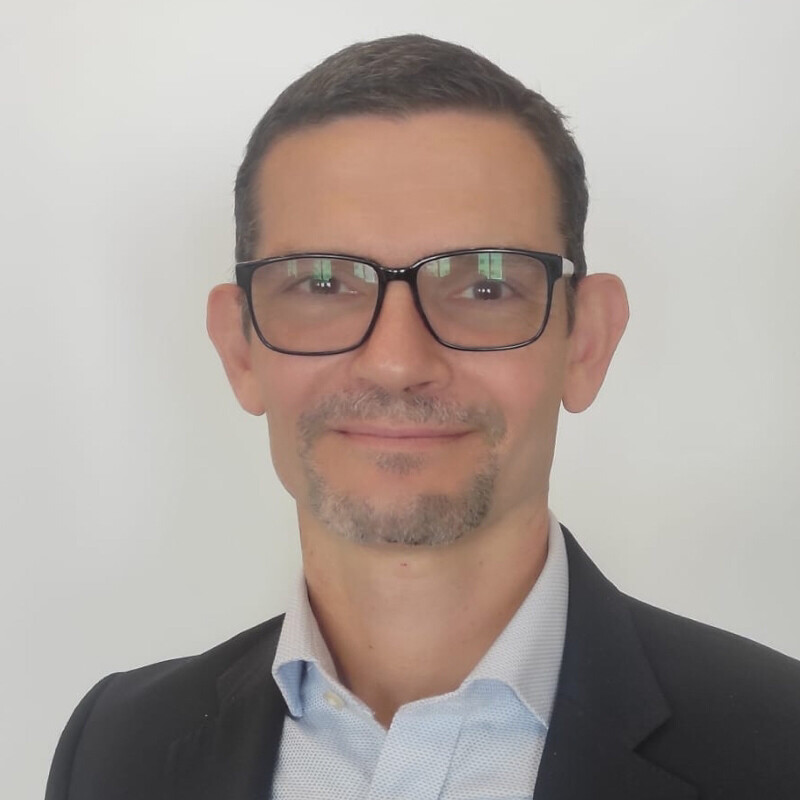
Kim Keats Martínez is a partner at K4K Training & Advisory and Ekon Strategy Consulting, an independent consultant specialized in energy markets, renewable energy, energy storage and desalination. Based in Spain, he has more than 28 years of international experience in the energy sector, supporting developers, investors, lenders, utilities and fuel suppliers in Europe, the Middle East, Asia and the Americas. Throughout his career, Kim has advised on more than 78 GW of conventional and renewable generation projects and more than 743 MIGD of desalination capacity, representing an investment value of approximately $48 billion. His work focuses on market analysis, commercial strategy, project due diligence, revenue forecasting and the integration of emerging technologies such as battery energy storage systems. Kim is a frequent speaker at industry conferences and regularly provides commentary on electricity market design, flexibility, energy storage and the evolving role of renewables in modern energy systems. He is based in Madrid and leads assignments across Europe and internationally.
