

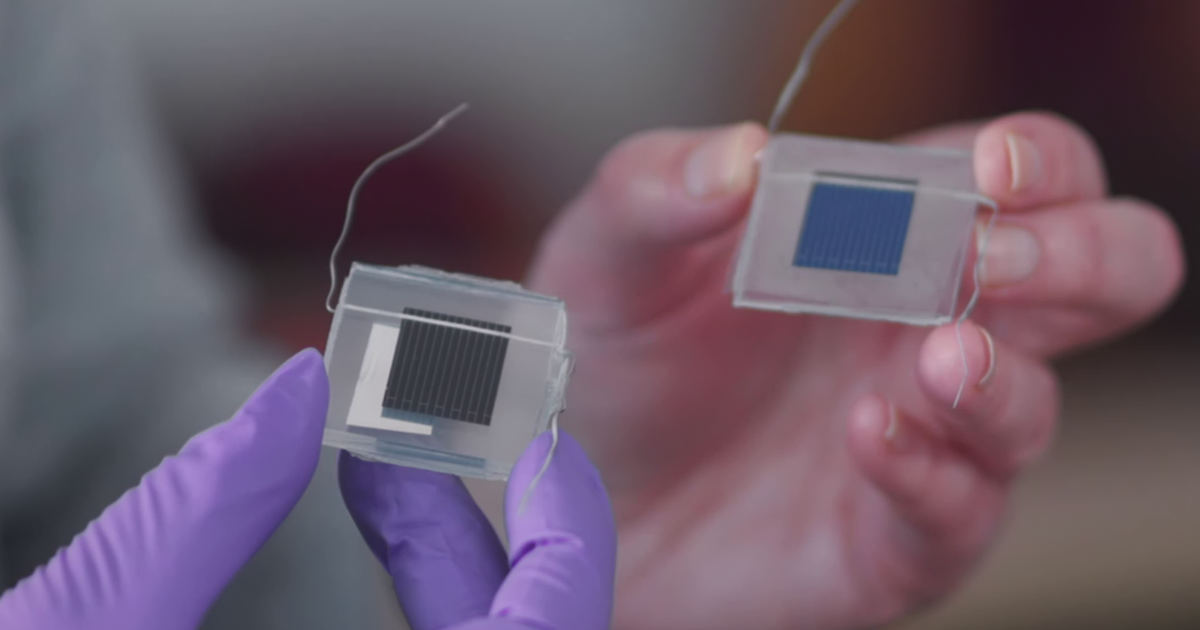
Cambridge Photon Technology, a deep-tech spin-out from the University of Cambridge focusing on materials technology, has raised £1.56 million to commercialize its ‘photon multiplier’ technology.
The patented technology developed by Cambridge Photon Technology (CPT) is a drop-in solution that allows existing silicon solar panels to generate more power, the company said.
The pre-Series A funding round raised £926,000 of equity investment with a £630,000 grant from Innovate UK’s Investor Partnerships: Clean Energy and Climate Technologies programme.
The equity investment came from international companies: Cambridge Enterprise Ventures, Spectrum Impact, Tybourne Capital, Providence Investment Company and SourceSquared. Cambridge Enterprise’s involvement made the Innovate UK award possible.
CPT’s photon multiplication technology improves the efficiency of silicon panels by converting high-energy photons, normally ‘wasted’ as heat, into two infrared photons that silicon can absorb. The solution, which fits into standard solar panels without redesign or production changes, can increase energy yield by up to 15% while remaining fully compatible with existing solar infrastructure.
According to CPT, the product is the first demonstration of the photon multiplication effect at scale.
The funding, which CPT CEO Dr Caludio Marinelli said “demonstrates strong confidence from private investors in CPT’s technology and vision”, will be used to expand the company’s research and development (R&D) activities in Cambridge. It will also allow CPT to accelerate materials testing and prepare for a larger Series A raise prior to deploying pilots.
It is generally accepted that the theoretical efficiency ceiling of Silicon PV is approximately 28%. As manufacturers race to provide the highest efficiency, discussed extensively on our sister site PV technologyCPT’s solution improves output power without a new panel design; what it calls a “frictionless upgrade of the world’s most established renewable energy platform.”
It may be clear that higher efficiency solar panels would reduce the necessary size of solar power plants. While this would provide cost benefits to developers, it would also potentially counter a major objection to solar power plants that is often raised: the repurposing and industrialization of large tracts of land.
One solar development was described by the local opposition last year as “visually intrusive”and would risk overdevelopment in the area.
Despite the evidence that solar PV installations do not harm biodiversity, do not threaten food security by decommissioning agricultural land, and have no lasting impact once decommissioned, there is no way around the fact that to generate the large amounts of renewable energy needed to support the UK government’s Clean Poer 2030 ambition, there is a necessary scale for solar PV sites.
