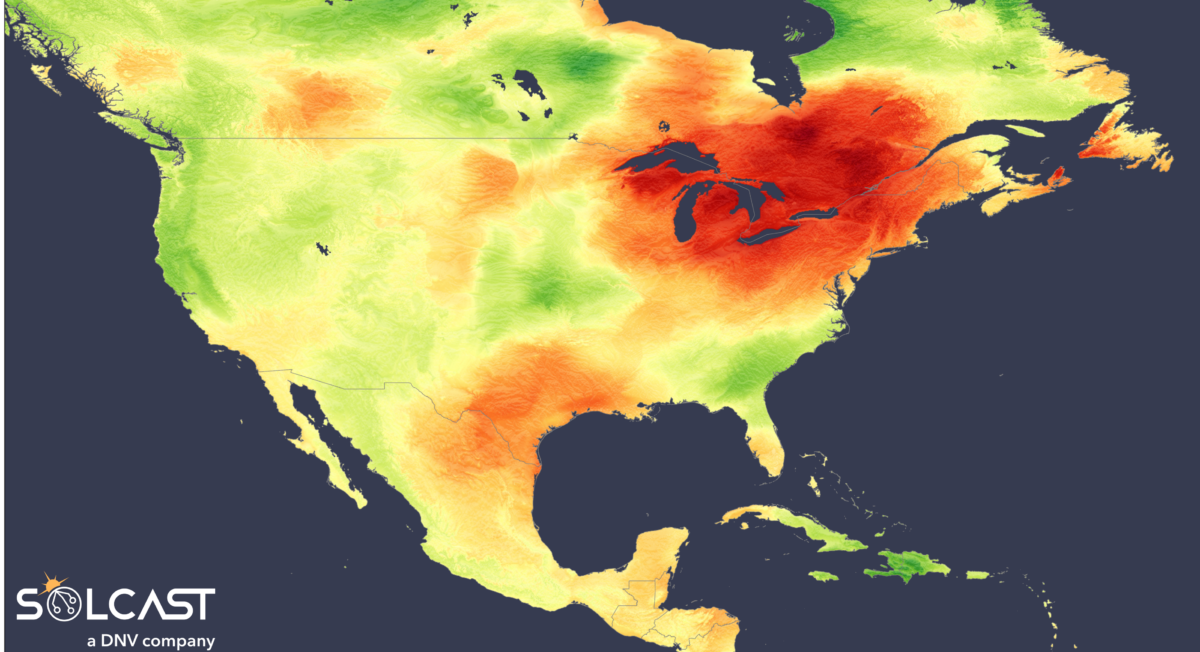
In a new weekly update for pv magazineSolcast, a DNV company, reports that North America experienced highly variable solar performance in October as a strong high-pressure system increased irradiance in the eastern regions, while cooler, cloudy conditions reduced solar potential in the Pacific Northwest.
North America experienced highly variable solar performance in October, as a strong high-pressure system increased radiation in the eastern regions, while cooler, cloudy conditions reduced solar potential in the Pacific Northwest. In the Caribbean, Hurricane Melissa significantly disrupted radiation levels and damaged infrastructure. According to analysis using the Solcast APIThese contrasting regional weather patterns led to a variable month for solar power generation across the continent.
A dominant high-pressure system anchored over eastern Canada was the driving force behind increased solar radiation across much of the Northeast. The high pressure system effectively suppressed cloud formation, allowing consistent sunshine across Ontario, Quebec and into the northeastern United States. In areas such as New York and Michigan, irradiation levels rose 20-25% above typical values in October. This sunny stretch extended into southern Texas and Mexico, where insolation increased by about 15%. The development and persistence of this high-pressure system matched well with seasonal forecasts, which had predicted above-average insolation in these regions for the autumn months.
In stark contrast, the Pacific Northwest had a markedly different October. Temperatures in Washington state and Vancouver were as much as 4 degrees Celsius below average, accompanied by persistent cloud cover and increased precipitation. These conditions suppressed insolation levels and limited the sun’s performance across the region. Meteorological indicators suggest this pattern is associated with the early onset of a La Niña-influenced winter, which typically brings cooler and wetter conditions across the continent’s Northwest Corridor. However, the rest of the United States experienced warmer than normal conditions, with deviations of 2 to 4 degrees above average, under sunnier skies and under the influence of a marine heat wave in the Pacific Ocean.

Meanwhile, the Caribbean faced a serious disruption in solar production following the landfall of Hurricane Melissa. Melissa, which struck on October 28 with sustained winds of 180 miles per hour, was the strongest hurricane to hit the region in nearly 200 years. Irradiance across much of the Caribbean fell by 20%, with some areas experiencing prolonged periods of heavy cloud and heavy rain. The damage to infrastructure was extensive, leaving more than 70% of the affected island without power and causing large-scale evacuations. This came after Hurricane Beryl disrupted power grid reliability in Jamaica in July 2024, leading to a regional push toward resilient energy solutions such as distributed rooftop solar and battery storage.
Solcast produces these figures by tracking clouds and aerosols worldwide at a resolution of 1-2 km, using proprietary satellite data AI/ML algorithms. This data is used to drive irradiance models, allowing Solcast to calculate high-resolution irradiance, with a typical deviation of less than 2%, as well as cloud tracking predictions. This data is used by more than 350 companies that manage more than 300 GW of solar energy worldwide.
The views and opinions expressed in this article are those of the author and do not necessarily reflect those of the author pv magazine.
This content is copyrighted and may not be reused. If you would like to collaborate with us and reuse some of our content, please contact: editors@pv-magazine.com.
Popular content