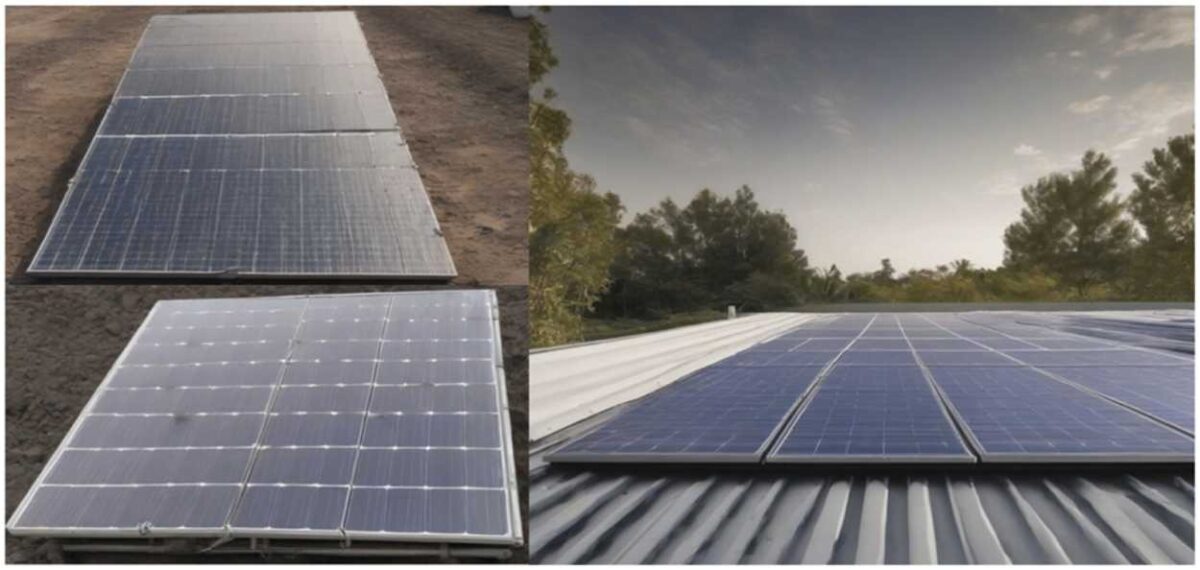
Researchers from South Korea have improved dust detection from solar panels using SMOTE and stable diffusion (SD) augmentation, where SD increases detection accuracy from 76.5% to 98.9% while maintaining spatial realism.
A research group from South Korea Jeju National University addressed the imbalance of the datasets in photovoltaic modules by applying two complementary augmentation strategies. Specifically, they applied a synthetic minority oversampling technique (SMOTE) at the feature level and stable diffusion (SD) augmentation at the image level.
A dataset imbalance occurs when one class in a dataset contains many more examples than the other, causing models to favor the majority class and potentially miss rarer but important cases.
“Our study shows that diffusion-based augmentation significantly improves the detection of dusty panels in minority classes while maintaining robustness at the implementation level,” said corresponding author Raj Kumar. pv magazine. “Unlike previous works that relied solely on traditional oversampling or GAN-based augmentation, our study systematically compares strategies for reducing imbalances at the feature and image levels,” said Kumar. “We also introduced a two-stage synthetic image validation protocol, including manual screening plus FID, KID and perceptual hashing metrics, in addition to stratified 10-fold cross-validation and imbalance-sensitive metrics such as F1 score, Cohen’s κ and MCC.”
SMOTE is a commonly used method to address class imbalance in datasets. It works by randomly selecting samples from the minority class and generating new synthetic samples through combinations with their nearest neighbors. However, this process can disrupt spatial relationships, which are critical for image-based tasks such as dust detection on solar panels.
To address this limitation, the team investigated whether stable diffusion (SD) could be more effective. This artificial intelligence (AI) model starts with random noise, which is gradually transformed into an image guided by text prompts. The diffusion model iteratively removes noise until a realistic image of a dusty panel emerges. Generated images are then filtered to remove artifacts and duplicates, and the accepted synthetic images are included in the training dataset.
Image: Jeju National University, Energy Reports, CC BY 4.0
Both approaches – SMOTE and SD – were evaluated against each other, as well as against the original imbalanced data set. The team used publicly available materialSolNET dataset, containing polycrystalline silicon modules, labeled as clean or dusty. The dataset includes 842 images, originally unbalanced with 502 clean modules and 340 dusty modules. All images have been resized to 224 x 224 pixels.
Three convolutional neural network (CNN) models – VGG-16, ResNet50 and MobileNetV3 – were tested on both the extended balanced datasets and the unbalanced dataset. In all experiments, the data was split into 80% training and 20% testing, and the models were evaluated using matrices of accuracy, precision, recall, F1 score, and confusion.
“Several findings were particularly noteworthy,” Kumar said. “For example, ResNet50 improved from 76.53% accuracy on the unbalanced dataset to 98.87% using SD augmentation. Minority class detection was nearly perfect, with scores reaching 99%, and both Cohen’s κ and MCC exceeded 0.90.”
Kumar also highlighted that while SMOTE improved model performance, SD consistently produced superior results by maintaining spatial realism. “After training on the balanced datasets, the models maintained up to 98% accuracy even when tested on the original unbalanced dataset,” he noted. “These findings confirm that realistic image-level augmentation is critical for improving the performance of PV dust detection.”
Looking ahead, the team is working to further improve their imbalance mitigation framework by integrating undersampling with oversampling techniques. “While this study focused on SD and SMOTE, our updated research introduces Tomek-Link undersampling to remove borderline samples of majority classes and reduce class overlap,” Kumar explains. “This hybrid approach improves decision boundary clarity, minimizes noise, and improves minority class detection more effectively than oversampling alone.”
The two methodologies were presented in “Mitigating imbalance in datasets using image-based stable diffusion and feature-level SMOTE for solar panel classification with CNNs”, published in Energy reports.
This content is copyrighted and may not be reused. If you would like to collaborate with us and reuse some of our content, please contact: editors@pv-magazine.com.
Popular content