
Close Menu
  • News
  • Industry
  • Solar Panels
  • Commercial
  • Residential
  • Finance
  • Technology
  • Carbon Credit
  • More
    • Policy
    • Energy Storage
    • Utility
    • Cummunity
What's Hot

Lithuanian grid operators can now shut down solar power plants without cybersecurity measures

June 8, 2026

Dutch solar owners asked to switch off during peak periods to ease the distribution crisis

June 7, 2026

The hydrogen flow: Toyota demonstrates its racing prototype on liquid hydrogen

June 7, 2026
Facebook X (Twitter) Instagram
Solar Energy News
Monday, June 8
  • News
  • Industry
  • Solar Panels
  • Commercial
  • Residential
  • Finance
  • Technology
  • Carbon Credit
  • More
    • Policy
    • Energy Storage
    • Utility
    • Cummunity
Solar Energy News
Home - News - Enhanced solar water splitting achieved with MoS2 GaN nanorod heterostructures
News

Enhanced solar water splitting achieved with MoS2 GaN nanorod heterostructures

solarenergyBy solarenergyNovember 13, 2025No Comments1 Min Read
Facebook Twitter Pinterest LinkedIn Tumblr Email
Share
Facebook Twitter LinkedIn Pinterest Email


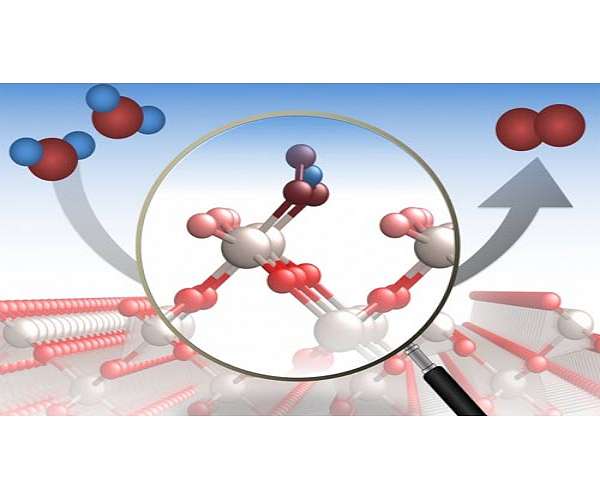
Researchers from CSIR-National Physical Laboratory and IIT Madras have fabricated MoS2-coated GaN nanorods on tungsten foil to improve the photoelectrochemical efficiency of water splitting. Gallium nitride nanorods, prized for their electron mobility and stability, face limitations due to their large band gap that limits solar energy absorption. To address this, the team integrated molybdenum disulfide – a catalytic material – onto the nanorods.

MoS2/GaN nanorods exhibited a photocurrent density of approximately 172 microamps per square centimeter, outperforming bare GaN nanorods by a factor of 2.5. This improvement was related to Type II band alignment, which improves charge separation, decreases charge transfer resistance, and increases active sites.

The heterostructures were developed using chemical vapor deposition at atmospheric pressure and molecular laser beam epitaxy. Materials analysis using Raman spectroscopy, X-ray diffraction and X-ray photoelectron spectroscopy confirmed hexagonal phases and mapped electronic states.

These findings suggest that MoS2 integration with GaN nanorods offers a way to advance solar-powered hydrogen production technology. The project received support from CSIR-FIRST and SAMMARTH. Future work will focus on scaling the approach for industrial application.

Research report:Tailoring GaN nanorods with MoS2 on tungsten foil for enhanced photoelectrochemical performance


Source link

See also  Symmetrical surfaces open up new photovoltaic paths
achieved enhanced GaN heterostructures MoS2 nanorod solar splitting water
Share. Facebook Twitter Pinterest LinkedIn Tumblr Email
solarenergy
  • Website

Related Posts

Lithuanian grid operators can now shut down solar power plants without cybersecurity measures

June 8, 2026

Dutch solar owners asked to switch off during peak periods to ease the distribution crisis

June 7, 2026

Letter from China’s PV Industry: Arctech wins 2.1 GW solar deal

June 5, 2026
Leave A Reply Cancel Reply

Don't Miss
Utility

Doral Renewables uses IHI Power Services for solar O&M services

By solarenergyJuly 9, 20240

O&M company IHI Power Services Corp. has been engaged by Doral Renewables to provide asset…

Weidmuller USA launches PV connectors suitable for 1,500 V

February 24, 2026

Spanish researchers design an agrivoltaic system with hydroponic towers – SPE

November 20, 2024

France’s best audit body Request feasibility from EDF’s nuclear plans – PV Magazine International

February 3, 2025
Stay In Touch
  • Facebook
  • Twitter
  • Pinterest
  • Instagram
  • YouTube
  • Vimeo
Our Picks

Lithuanian grid operators can now shut down solar power plants without cybersecurity measures

June 8, 2026

Dutch solar owners asked to switch off during peak periods to ease the distribution crisis

June 7, 2026

The hydrogen flow: Toyota demonstrates its racing prototype on liquid hydrogen

June 7, 2026

Era of electrification exposing Australia’s weakest link

June 6, 2026
Our Picks

Lithuanian grid operators can now shut down solar power plants without cybersecurity measures

June 8, 2026

Dutch solar owners asked to switch off during peak periods to ease the distribution crisis

June 7, 2026

The hydrogen flow: Toyota demonstrates its racing prototype on liquid hydrogen

June 7, 2026
About
About

Stay updated with the latest in solar energy. Discover innovations, trends, policies, and market insights driving the future of sustainable power worldwide.

Subscribe to Updates

Get the latest creative news and updates about Solar industry directly in your inbox!

Facebook X (Twitter) Instagram Pinterest
  • Contact
  • Privacy Policy
  • Terms & Conditions
© 2026 Tsolarenergynews.co - All rights reserved.

Type above and press Enter to search. Press Esc to cancel.