

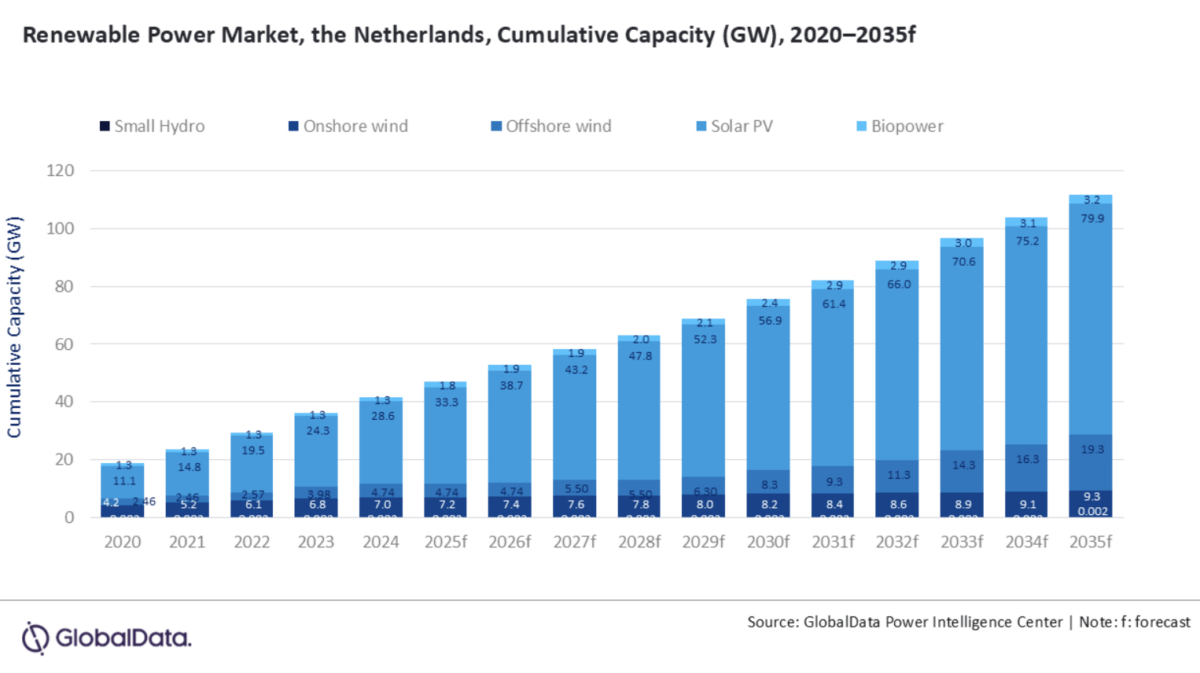
According to the latest analysis by the British consultancy GlobalData, the annual increase in solar energy in the Netherlands until 2035 will be between 4.5 and 5.5 GW.
The Netherlands is on track to deploy 79.9 GW of solar energy by 2035, according to an analysis by London-based data analytics and consultancy firm Global data.
GlobalData expects the Netherlands to add 4.7 GW of solar energy this year, bringing the cumulative capacity to 33.3 GW. The analysts then predict that approximately 5.4 GW of solar will be added in 2026, followed by annual additions of between 4.5 GW and 5 GW between 2027 and 2035.
This trajectory would see the Netherlands surpass 50 GW of solar capacity by 2029, before reaching 75 GW sometime in 2034 and sitting just below 80 GW by the end of 2035.
GlobalData expects that solar energy will increase its position as the largest renewable energy source in the Netherlands over the next ten years. The consultancy forecasts that the country’s total renewable energy capacity will reach 111.7 GW by the end of 2035, up from 41.6 GW in 2024, representing a compound annual growth rate of 9.4% between 2024 and 2035.
Mohammed Ziauddin, a power analyst for GlobalData, said supporting tools such as the SDE++ renewable energy subsidy scheme and that of the country The National Energy and Climate Plan catalyzes the growth of renewable energy in the country.
Ziauddin added that although the Netherlands is addressing bottlenecks in connecting new capacity through TenneT’s large-scale network reinforcement program and the National Grid Congestion Action Programme, challenges surrounding network congestion remain.
Containment risks, rising network rates, negative electricity prices, the need to accelerate storage deployment and spatial planning for new solar and wind projects are some of the ongoing challenges facing the country’s renewable energy market.
“With the rapid scale-up of solar energy, the steady addition of onshore wind energy and a strong offshore wind pipeline, the Netherlands is expected to be able to build a much larger sustainable base by 2035,” Ziauddin concludes. “Continued grid modernization, investments in flexibility and streamlined permitting will be critical to quickly converting the current pipeline into operational capacity.”
In October, the Dutch government announced that it will replace the SDE++ subsidy scheme with two-way contracts for difference to adapt to market reforms in the EU. The month before, the Ministry of Climate and Green Growth and the Ministry of Housing and Spatial Planning proposed changes to the Dutch Environmental Decree to accelerate the granting of permits for transport and distribution projects above 21 kV.
This content is copyrighted and may not be reused. If you would like to collaborate with us and reuse some of our content, please contact: editors@pv-magazine.com.
