
Close Menu
  • News
  • Industry
  • Solar Panels
  • Commercial
  • Residential
  • Finance
  • Technology
  • Carbon Credit
  • More
    • Policy
    • Energy Storage
    • Utility
    • Cummunity
What's Hot

Dutch solar owners asked to switch off during peak periods to ease the distribution crisis

June 7, 2026

The hydrogen flow: Toyota demonstrates its racing prototype on liquid hydrogen

June 7, 2026

Era of electrification exposing Australia’s weakest link

June 6, 2026
Facebook X (Twitter) Instagram
Solar Energy News
Sunday, June 7
  • News
  • Industry
  • Solar Panels
  • Commercial
  • Residential
  • Finance
  • Technology
  • Carbon Credit
  • More
    • Policy
    • Energy Storage
    • Utility
    • Cummunity
Solar Energy News
Home - Policy - Persistent Amazon fires reduce solar radiation in neighboring regions – SPE
Policy

Persistent Amazon fires reduce solar radiation in neighboring regions – SPE

solarenergyBy solarenergyOctober 5, 2024No Comments3 Mins Read
Facebook Twitter Pinterest LinkedIn Tumblr Email
Share
Facebook Twitter LinkedIn Pinterest Email

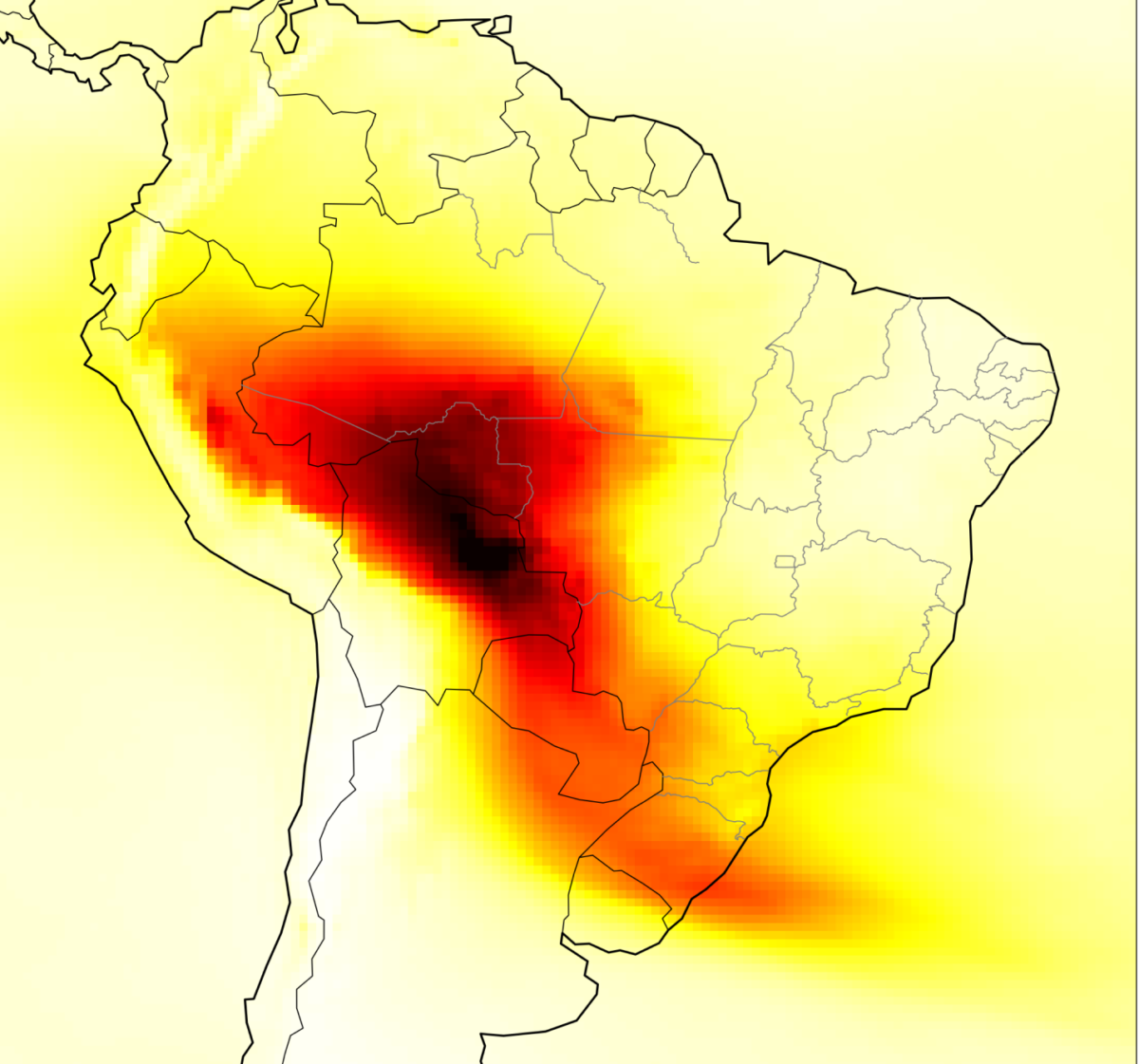
In a new weekly update for pv magazineSolcast, a DNV company, reports that this winter has brought dry and warm conditions to most of South America, resulting in higher than normal insolation across the continent. Conditions have been particularly dry in the Amazon Basin, promoting wildfire activity, and the resulting smoke has reduced solar radiation along the plume’s path.

October 4, 2024 Solcast

This winter brought dry and warm conditions to most of South America, resulting in higher than normal insolation across the continent. Conditions have been particularly dry in the Amazon Basin, promoting wildfire activity, and the resulting smoke has subsided
solar radiation along the path of the plume, according to analysis using the Solcast API.

In August and September, many areas experienced a significant increase in insolation. In eastern and northern Brazil, Ecuador, Colombia, but also in the states along the Caribbean Sea, Chile and Argentina, radiation levels were more than 20% higher than climatological averages. These conditions were caused by clear skies and favorable atmospheric patterns, encouraging solar energy generation in areas unaffected by smoke or haze.

On the other hand, the Amazon basin continued to experience prolonged winter drought, which exacerbated the frequency and intensity of forest fires. As the smoke was carried across the continent by prevailing westerly winds, radiation levels fell sharply in certain regions
bordering the Amazon Basin all the way to southern Brazil and Uruguay, with some areas experiencing a reduction in solar radiation of up to 20%. This trend mirrors conditions last winter, when similar dry conditions led to increased wildfires and widespread smoke plumes.

See also  Nicaragua is starting to work on 70 MW Solar Plant, largest to date - PV Magazine International

Data from the Copernicus Atmosphere Monitoring Service (CAMS) confirms the alignment of aerosol concentrations with the negative anomalies observed in Solcast data.

Closer to the Amazon, in Trinidad, Bolivia, insolation levels fell by more than 10% compared to the historical average. Porto Alegre and Asuncion, cities far from the Amazon fires but along the path of the smoke, were also hit by clear sky radiance of 6% and more than 5% lower, respectively, than the August average.

Like the Amazon, California and Canada have experienced multiple large-scale, record-breaking wildfires over the past 18 months. This changes the way weather models use and understand the impact of aerosols on irradiance.
important to use high-resolution dynamic data input rather than relying on long-term climatic data as conditions change.

Solcast produces these figures by tracking clouds and aerosols worldwide at a resolution of 1-2 km, using proprietary satellite data AI/ML algorithms. This data is used to drive irradiance models, allowing Solcast to calculate high-resolution irradiance, with a typical deviation of less than 2%, as well as cloud tracking predictions. This data is used by more than 300 companies that manage more than 150 GW of solar energy worldwide.

The views and opinions expressed in this article are those of the author and do not necessarily reflect those of the author pv magazine.

This content is copyrighted and may not be reused. If you would like to collaborate with us and reuse some of our content, please contact: editors@pv-magazine.com.

Popular content
Source link

Amazon fires neighboring Persistent radiation reduce regions solar SPE
Share. Facebook Twitter Pinterest LinkedIn Tumblr Email
solarenergy
  • Website

Related Posts

Dutch solar owners asked to switch off during peak periods to ease the distribution crisis

June 7, 2026

The hydrogen flow: Toyota demonstrates its racing prototype on liquid hydrogen

June 7, 2026

Era of electrification exposing Australia’s weakest link

June 6, 2026
Leave A Reply Cancel Reply

Don't Miss
Technology

Trina Solar investigates possible infringements of TOPCon patents – SPE

By solarenergyJuly 23, 20240

Trina Solar says it has begun evaluating possible violations of some of its patents for…

Somalia launches tender for off-grid solar plus storage at 25 healthcare institutions – SPE

November 26, 2024

Flogas plans an investment of €50 million in Irish solar projects

November 1, 2024

Greenvolt Next supplies EPC for two solar power plants from Infinis UK

April 15, 2026
Stay In Touch
  • Facebook
  • Twitter
  • Pinterest
  • Instagram
  • YouTube
  • Vimeo
Our Picks

Dutch solar owners asked to switch off during peak periods to ease the distribution crisis

June 7, 2026

The hydrogen flow: Toyota demonstrates its racing prototype on liquid hydrogen

June 7, 2026

Era of electrification exposing Australia’s weakest link

June 6, 2026

‘Come out from behind your screen, our industry is ultimately about people’

June 6, 2026
Our Picks

Dutch solar owners asked to switch off during peak periods to ease the distribution crisis

June 7, 2026

The hydrogen flow: Toyota demonstrates its racing prototype on liquid hydrogen

June 7, 2026

Era of electrification exposing Australia’s weakest link

June 6, 2026
About
About

Stay updated with the latest in solar energy. Discover innovations, trends, policies, and market insights driving the future of sustainable power worldwide.

Subscribe to Updates

Get the latest creative news and updates about Solar industry directly in your inbox!

Facebook X (Twitter) Instagram Pinterest
  • Contact
  • Privacy Policy
  • Terms & Conditions
© 2026 Tsolarenergynews.co - All rights reserved.

Type above and press Enter to search. Press Esc to cancel.