

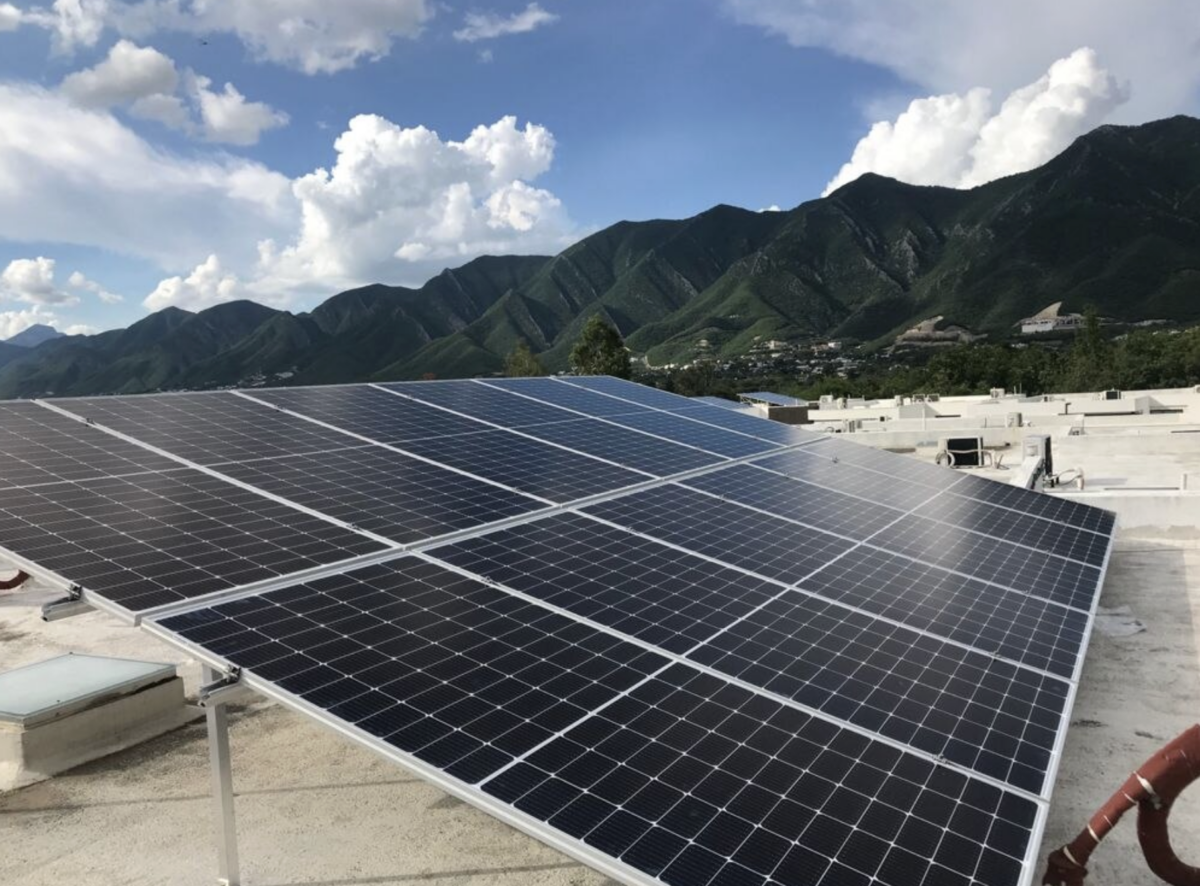
Solar energy recycler OnePlanet will use vision-driven robots and automation to scale up its River City facility and recover more, purer valuable materials from used panels.
A tsunami is headed toward the American solar industry, but only time will tell when exactly the wave of mass solar panel retirements will crash. Modules from the early 2010s solar wave are nearing the end of their lives, with many expected to peak between 2027 and 2030.
An estimate from the newly christened National Laboratory of the Rockies (formerly the National Renewable Energy Laboratory) indicates that by the end of the decade, the decommissioned panels will cost the equivalent of approximately 3,000 American football fields. Solar energy recycling could be one solution, but whether the country’s infrastructure will be prepared for such a rapid influx is another story.
“The U.S. currently has about 400 million solar panels installed, and that number will grow to several billion by mid-century,” said André Pujadas, the CEO of solar recycler OnePlanet. pv magazine USA. He explained that as the country approaches a major turning point in the coming years, it needs more recycling capacity as quickly as possible. “Facilities development timelines are three to five years from planning to commissioning…[as] Building industrial-scale recycling infrastructure is complex, capital-intensive and requires expertise that few organizations possess.”
That’s why he’s pushing OnePlanet to deploy their flagship River City Recycling Facility in Green Cove Springs, Florida, in early 2027. That’s just two years after the company received nearly $15 million from the 48C tax credit last January. While the company noted that the plant will have an initial processing capacity of approximately two million panels per year, River City will eventually be able to process up to six million panels per year.
An important part of the scaling-up approach? Automation.
Pujadas pointed out that processes for dismantling panels and sorting materials currently in use are slow and labor-intensive and can cause unnecessary safety hazards. Combined with labor costs ranging from $15 to $25 per hour, relying on human labor on a large scale becomes unsustainable.
Instead, River City will take a different tack and use vision-enabled robotics, which use sensors, cameras and image processing software to give a robot “eyes.” The systems take care of deframing, transport and processing; AI-optimized parameters will adjust specific processes in real time depending on a panel’s characteristics.
“The labor will focus on the operation, maintenance and quality control of the system, and not on manual sorting,” Pujadas said, noting that this significantly reduces labor costs per panel compared to most current operations and dramatically improves throughput. He noted that the steel industry has proven that scrap-based production can economically match or exceed the production of virgin materials, which is OnePlanet’s goal. Improved process technology should also help the company produce larger quantities of valuable materials (such as silicon, copper, silver and aluminum) that are purer.
“We are essentially creating one domestic mine from decommissioned solar energy,” he explained, which reduces dependence on volatile international markets and politically unstable supply chains. That is a crucial strategy for building domestic energy independence, he emphasized.
China produces approx 80% of the world’s polysiliconwhich is an important ingredient in making PV panels. The US has end-of-life panels that contain significant amounts of polysilicon, so in Pujadas’ eyes the opportunity is clear: take advantage of that opportunity embedded value instead of shipping it to landfills.
“Recycling creates resilience in the supply chain and price stability in a way that pure import dependence can never achieve,” he added.[It’s] complementary today, increasingly substantive tomorrow and potentially transformational in the coming decades as installed capacity converges.”
This content is copyrighted and may not be reused. If you would like to collaborate with us and reuse some of our content, please contact: editors@pv-magazine.com.
