

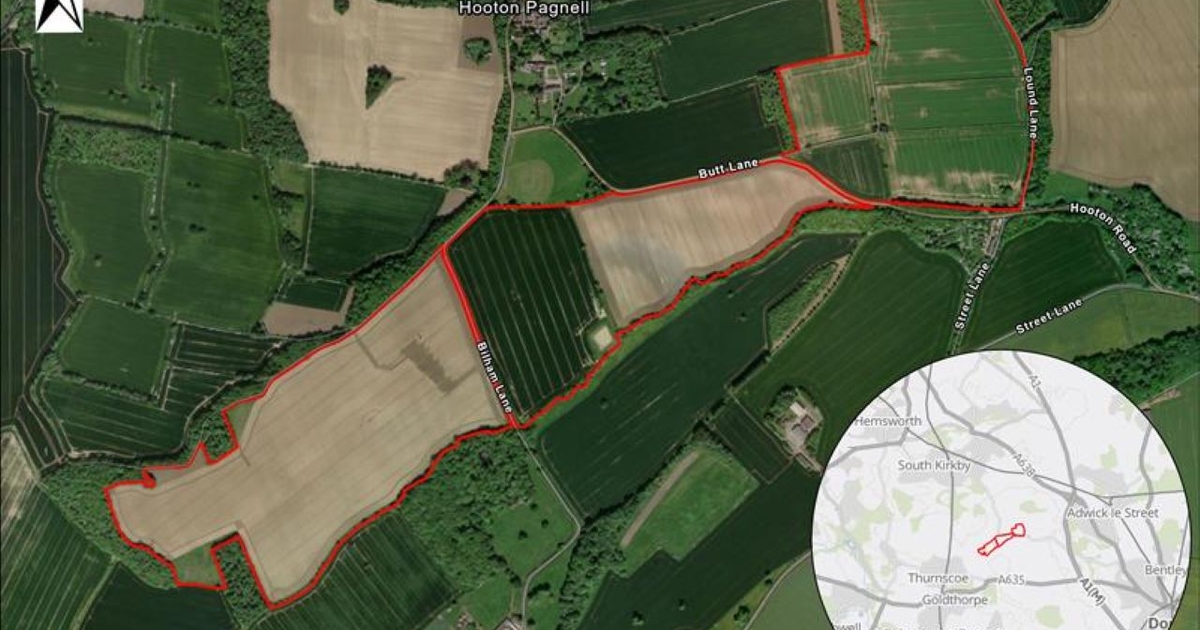
Clean energy developer British Solar Renewables (BSR) has submitted a planning application to Doncaster Council for a 49.9MW solar PV plant, combined with a 30MW battery energy storage system (BESS).
The renewable energy plant would be located in South Yorkshire, on the border with West Yorkshire, near the village of Hooton Pagnell, which gives the site its name.
BSR said the Hooton Pagnell Renewable Park would deliver a net biodiversity gain of 184.2%, in line with the stated strive to ensure that all its projects deliver a net biodiversity gain of more than 60%. In Great Britain, developers must achieve at least a 10% improvement in biodiversity.
If the project is granted planning permission, BSR will establish a community benefit fund of up to £310,000.
The building application is one of the first to be submitted since the Second World War National Energy System Operator (NESO) has published the results of grid queuing reforms. There has been some surprise at the fact that there is actually a shortage of solar PV projects due to grid connection until 2030.
This will be partly due to developers rushing their planning submissions in the hope of proving project progress, one of the criteria for getting into the queue; However, these hasty applications were rejected in relatively large numbers. This meant that not enough of the solar projects submitted to NESO for grid connection were considered ‘ready’.
However, that does present an opportunity for developers to race through and fill some of that capacity for a connection before 2030. There is also some scope for new solar to connect between 2030 and 2035, but the regions with available grid capacity are mainly in the south east of England – the area committed to BSR’s project is not one of them.
It’s also worth noting that the BESS element of the project faces a massively oversubscribed connection queue. Due to the volume of connection requests, only those in ‘protected’ status (who had already made significant progress before the connection queue was reorganized and thus will retain previously issued connection data) received offers. This could indicate that BSR is hedging its bets that enough BESS will fall out of the queue to allow for a connection date, or that it doesn’t expect the BESS to be connected to the grid until after 2035.
