

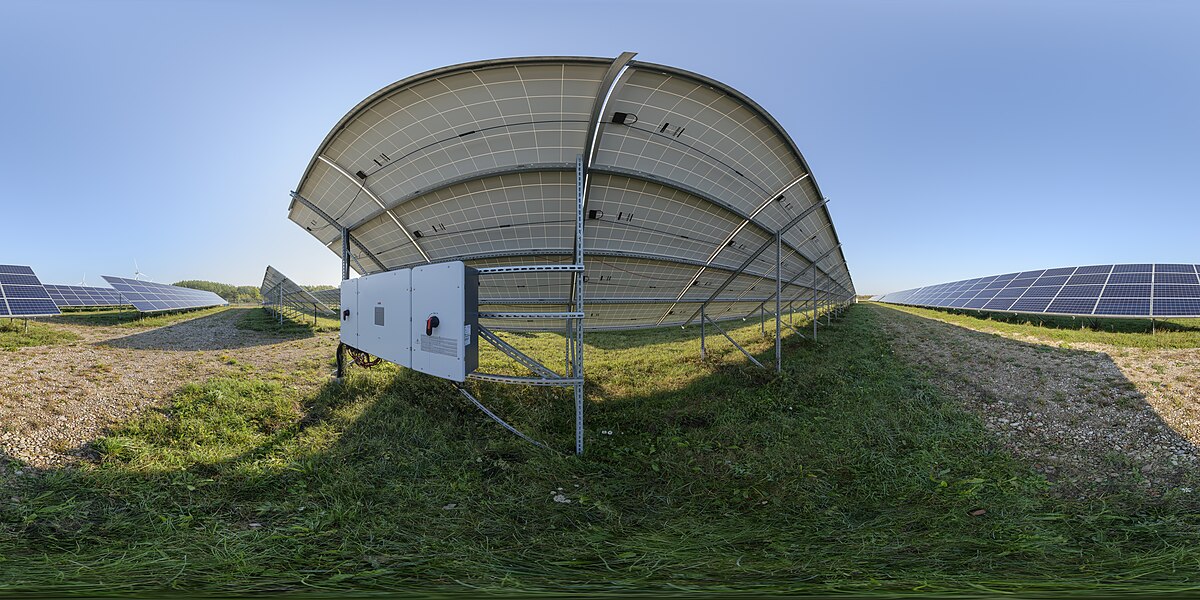
The latest analysis from Wood Mackenzie expects market uncertainty in China, Europe and the US to cause two consecutive years of contraction in the global solar inverter market, with a decline forecast to 577 GWac this year and 523 GWac in 2026.
According to an analysis by CBS, the global solar inverter market will shrink over the next two years Wooden Mackenzie.
The consultancy forecasts that the market will decline to 577 GWac in 2025, a decline of 2% year-on-year, followed by a further decline of 9% to 523 GWac in 2026.
Wood Mackenzie says the downturn follows record shipments in 2024 and reflects market uncertainty in China, Europe and the United States.
China’s solar inverter market is expected to shrink 5% to 304 GWac by 2025, marking the first annual decline in 2019. Nevertheless, the country is still expected to maintain its dominance in the global market, accounting for more than 2.9 TWac of cumulative inverter demand through 2034, according to Wood Mackenzie forecasts.
European inverter deliveries are on track to fall from 88 GWac to 83 GWac this year, before falling below 75 GWac per year in 2032 due to lower utility-scale capture prices and inventory issues. In the US, the inverter market is expected to decline by 22% next year as tax breaks from the Inflation Reduction Act are phased out.
The Southeast Asian market is one region that could break the downward trend, with the solar inverter market growing to 89 GWac this year, supported by domestic manufacturing investments and emerging rooftop PV segments.
Joe Shangraw, research analyst at Wood Mackenzie, says the solar inverter industry is facing “a period of strategic realignment as manufacturers navigate evolving market dynamics and regulatory frameworks.”
“After years of exponential growth in solar inverter demand, continued supply growth is no longer realistic for even the largest global inverter manufacturers,” Shangraw continued. “Instead, suppliers will have to adapt to new demand factors to stay competitive: hybrid solar-plus-storage systems, retrofits and repowering, cybersecurity features, 2000-volt architectures and grid services.”
Shangraw added that cybersecurity concerns among the US and European governments over the remote access capabilities of inverters are expected to impact the competitive landscape between domestic and foreign manufacturers.
“We expect that the two regions will adopt different strategies to address cybersecurity issues,” Shangraw explains. “Europe is expected to expand the Cyber Resilience Act by introducing additional software, reporting and remote access requirements that could serve as economic or logistical barriers for foreign manufacturers. Meanwhile, Republican lawmakers in the US are pushing the Commerce Department to impose restrictions on Chinese imports of inverters, adding uncertainty to the roadmap for both foreign and domestic manufacturers.”
Wood Mackenzie expects the solar inverter market to recover in the early 2030s and surpass 2024 market size with electrification, AI demand growth and a cyclical repowering market providing a solid foundation for inverter demand. “Companies that address today’s challenges while investing in next-generation technologies will emerge stronger when the market recovers in the late 2020s,” Shangraw predicted.
In October, London-based analytics firm GlobalData predicted that the global solar inverter market will increase $38.8 billion by the end of the decade, driven by increasing demand for utility-scale projects and hybrid solar-plus-storage systems, as well as stricter regulations around grid compliance and cybersecurity.
This content is copyrighted and may not be reused. If you would like to collaborate with us and reuse some of our content, please contact: editors@pv-magazine.com.
