

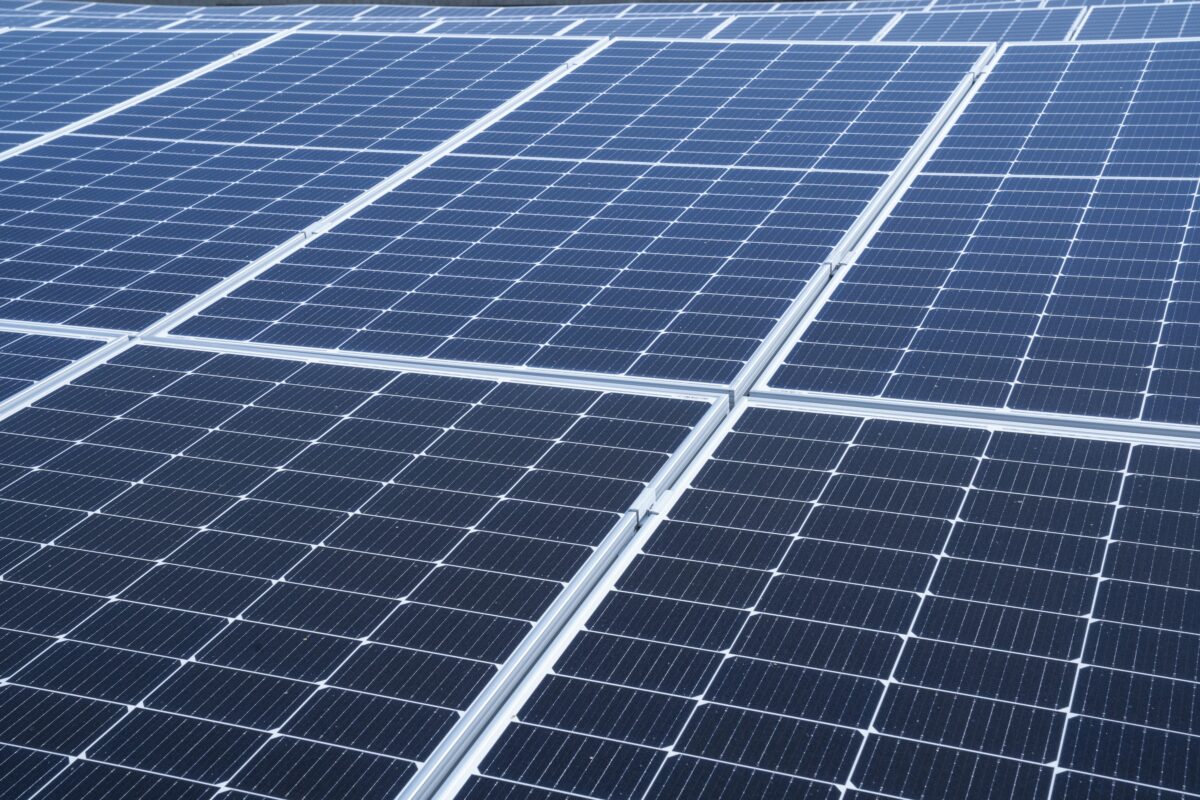
Research commissioned by the British government shows that rooftop solar panels can significantly influence fire behavior, especially when the height distance between the modules and the roof surface falls below critical limits.
A research paper commissioned by the UK government has concluded that a more comprehensive approach to fire safety in rooftop solar installations is needed.
The researchcarried out by Manchester-based fire and risk consultancy OFR Consultants, includes a literature review examining the extent to which rooftop solar systems alter fire dynamics or pose additional risks to roof structures and firefighting operations.
It was found that the interaction between solar panels and roofing materials can significantly influence fire behavior by increasing the incident heat flow to the roof surface and the rate of fire spread. Experiments discussed in the study show that heat flows reach almost 50 kW/msq when solar panels are present on roofs. The height, slope, mounting systems, wind and spacing of solar panels are among the factors that play a crucial role in defining fire dynamics.
The consultants said a key insight from their research was the identification of a critical gap height between solar panels and roof surfaces above which damage from flame spread can be minimized. A review of experimental research has shown that flame spread can accelerate by a factor of 38 when the gap height falls below critical limits, due to improved heat storage and re-radiation, compared to a fire scenario on a roof without a solar system. The study adds that these findings are consistent across multiple independent studies conducted at medium and large-scale incidents.
The consultants said the findings present a potential mitigation strategy for existing and new PV installations, but cautioned that this must be balanced by structural and environmental considerations, such as wind loads and mechanical stability.
“While critical gap height can inform fire safety designs, it is important to recognize that reported values are case-specific and should not be integrated directly into installation standards without further validation,” the report said.
The research also found that existing rating tests and building guidelines in England do not fully capture the fire dynamics introduced by solar panels as they do not take into account changed fire scenarios caused by PV system geometry, installation techniques or system-wide behaviour.
In the absence of a test that can address the unique fire properties of rooftop solar panels, consultants say emphasis should be placed on limiting fire spread and roof penetration. Recommendations include the use of non-flammable roof coverings under solar installations and the introduction of guidelines for the configuration and layout of solar panels, including minimum gap heights between the roof covering and the PV underside and the correct spacing between panels.
“The extent to which all or some of the above recommendations are necessary would require additional research to examine their efficacy,” the research article said. “The alternative to the above recommendations is to consider developing a roof test that better reflects the fire dynamics caused by the installation of PV arrays.”
The research is part of the UK government’s Real Fire Research Project, which uses evidence from real fire incidents to understand how buildings perform in practice to help improve building safety.
This content is copyrighted and may not be reused. If you would like to collaborate with us and reuse some of our content, please contact: editors@pv-magazine.com.
