

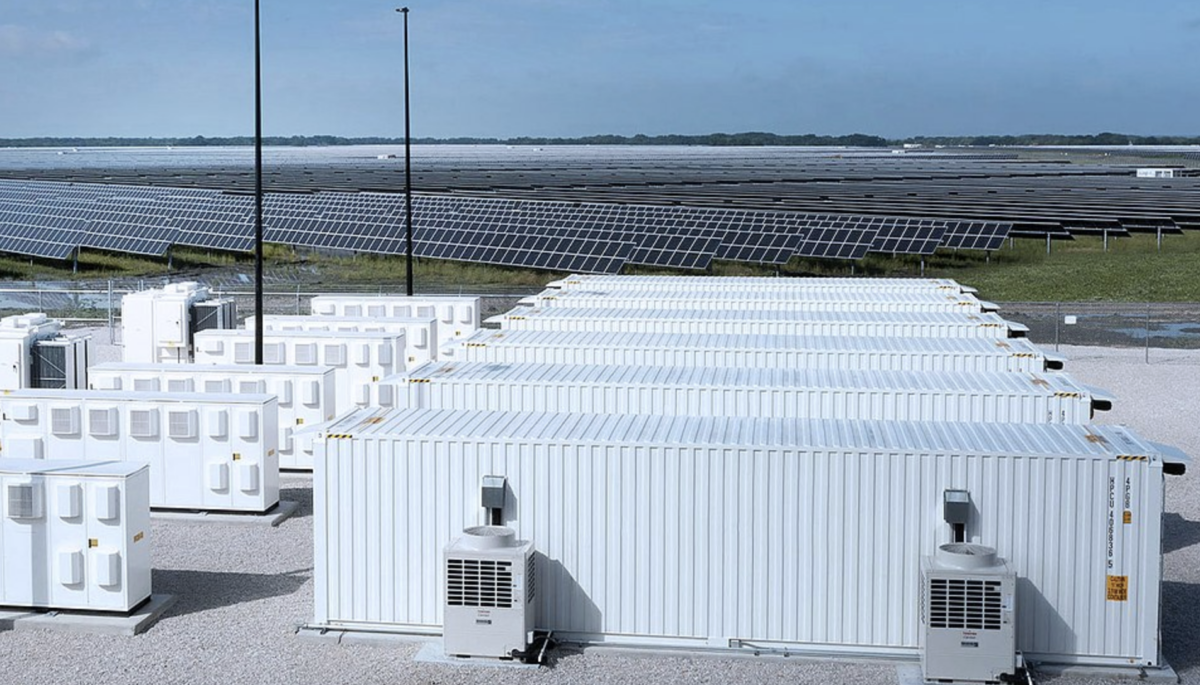
The energy storage industry took a bumpy road in 2025, but eyes are on the tech stack of 2026. While lithium-ion remains dominant, pressure is mounting for longer-duration storage, safer chemistry, and more resilient supply chains in the face of AI-driven tax growth, data center demand, wildfire risk, and tightening domestic content regulations.
pv magazine USA spoke with leaders from across the energy storage industry to learn about what’s next for batteries in 2025.
Long-term storage will shift from a niche solution to a strategic necessity.
“As we look to 2026, the industry is moving towards greater technological diversity, more stable revenue models and continued cost reductions, allowing battery energy storage for longer duration an essential pillar of America’s energy strategy.” – Giovanni Damato, President, CMBlu Energy, Inc.
“Future market designs should match renewable supply with industrial demand and support longer-term storage and innovative approaches, unlocking additional revenue streams such as energy arbitragepeak shaving and congestion management.” – Matt Kennedy, Global Head of Client Transformation, IDA Ireland
“Combined with each generation being able to come online quickly, long-duration storage can provide the rugged reliability that consumers need and expect. Fast, affordable, and rugged power is on track to win economically with long-duration storage, and that momentum isn’t slowing down regardless of the political climate.” – Arvin Ganesan, CEO, Fourth power
“As demand for data centers continues to rise, there is a growing recognition that we need longer-duration storage solutions and hybrid configurations that sustainable backup power and grid stability that these facilities require.” – Jim Spencer, president and CEO of Exus Renewables
Safety concerns could bring non-flammable chemicals back into the conversation.
“I think it’s more likely in 2027 than in 2026 that wildfire-prone regions like California will explicitly value wildfire. non-flammable storage chemicals in tenders or permits. What would make things move quickly is another Fire incident at Mosslanding somewhere, and I think it’s a matter of when, not if.” – Eugene Beh, CEO, Quino energy
The use of non-lithium chemicals will accelerate, even though 2026 may not be the peak year.
“While 2026 may not see a dramatic change in the composition of new batteries, new ones are on the horizon production installations in the design phase.” – Steve Feinberg, president of Bluewater Battery Logistics
“The convergence of EV and storage supply chains are creating real momentum for ‘home-built’ solutions non-lithium chemistry…While the US is steadily moving towards one circular storage economyalternative chemistries are shifting from ‘nice-to-have’ to ‘must-have’ as they improve safety, affordability and trust in the long term.” – Julie Royes, Vice President of Corporate Affairs, CMBlu Energy, Inc.
“A continuous decline Li-ion battery prices would be the biggest bottleneck for non-lithium storage in 2026. However, there are other compelling geopolitical and supply chain reasons why cost could no longer be the biggest consideration in 2026, especially if tensions between China, Taiwan and Japan continue to escalate.” – Eugene Beh, CEO, Quino Energy
Recycling and domestic processing will become a supply chain requirement, not just a sustainability measure.
“Localized recycling And domestic processing will become non-negotiable if the US wants its battery supply chains to remain domestic. Sending black matter abroad for processing goes against the logic of domestic production. In 2026, the winners will not only be those who build cells and packages, but also those who can close their loop locally, from recovery of materials via spent batteries.” – Joe Adiletta, CEO, Volexion
“Although it would be great to have one reuse value for waste battery energy projects, the reality of cheaper, smaller and safer new batteries leaves recycling the only option for disposal.” – Steve Feinberg, president of Bluewater Battery Logistics
The value of independent storage will be recognised.
“We see storage evolving from merely combining it with solar energy for energy arbitrage to becoming a crucial factor infrastructure component that makes it possible data centers to operate on clean energy while maintaining the reliability their operations require.” – Jim Spencer, president and CEO of Exus Renewables
The implementation of Foreign Entity of Concern (FEOC) will shape sourcing strategies more than technology choices.
“The BESS supply chain is working hard to determine the impact of this on the sector FEOC Regulationsand several options will present themselves in the coming year. The great thing is that there is so much recognition that BESS is good for the grid, I have no doubt about that [we] will have options and that compliance will not be a major issue.” – Chris McKissack, CEO, Fullmark Energy
“Developers are now facing dramatically higher construction costs due to the Trump administration’s aggressive tariff policies. Since January 2025, battery storage costs have increased by 56% to 69% due to Trump’s tariffs. The administration’s new FEOC rules, effective from 2026, threaten to increase cost and complexity further.” – Michael Thomas, CEO, Cleanview
“FEOC Regulations And global mineral pressure have created both uncertainty and opportunity, forcing the US to do so domestic production seriously and generate renewed interest in non-lithium, FEOC-safe chemistry that strengthens our energy and geopolitical position.” – Giovanni Damato, President, CMBlu Energy, Inc.
Domestic supply chains will be a prerequisite for scaling up.
“Supply chain localization will evolve from a competitive advantage to a competitive need, as customers seek more certainty about delivery times, domestic content compliance and end-to-end quality control.” – Andrew Gilligan, senior director of commercial strategy, Fluence
“The companies that are positioned to win are the companies that are being invested in now secure, scalable supply chains and embrace next-generation chemistry that can meet the nation’s reliability and infrastructure needs in the AI era.” – Giovanni Damato, President, CMBlu Energy, Inc.
Allowing reforms plus private capital could be a powerful mix.
“In 2026 I expect to see real movement allow and transmission reform. Smarter regulations and new grid technologies can finally unlock capacity and move clean energy to where it is needed most. Add private capital to the mix and we can build a stronger, faster electric grid that keeps pace with America’s growing appetite for power.” – Peter Davidson, CEO and co-founder of Aligned Climate Capital
AI and data centers will raise the bar for what “bankable” battery performance means.
“By 2026, energy storage will be clearly recognized as one of the fastest and most affordable ways to add flexible power and capacity into the future. areas in high demandespecially as the rapid growth of AI data centers gathers pace grid capacity and retains customers over several years interconnection queues. However, in this environment, capacity alone is no longer enough. Customers are increasingly demanding truly affordable performance with high-density systems that can reliably perform advanced networking functions.” – Andrew Gilligan, senior director of commercial strategy, Fluence
“As the AI boom continues, there will be demand for it non-lithium, non-flammable energy storage to meet these needs. Lithium-ion batteries tend to deteriorate faster than regular batteries power batteries when exposed to frequent cycling, making them less suitable for use in data centers. Therefore, flow batteries are very suitable because of their ability to cycle several times a day.” – Eugene Beh, CEO, Quino Energy
“The rise of AI-powered battery management and smarter manufacturing gives people and communities energy storage assets they can rely on when it matters most. We see it in all regions [the development of] nano-partnerships, or neighborhood-like collaborations where developers, policymakers and community leaders lift each other up and build the kind of shared strength that comes from truly showing up for each other.” – Julie Royes, Vice President of Corporate Affairs, CMBlu Energy, Inc.
This content is copyrighted and may not be reused. If you would like to collaborate with us and reuse some of our content, please contact: editors@pv-magazine.com.
