

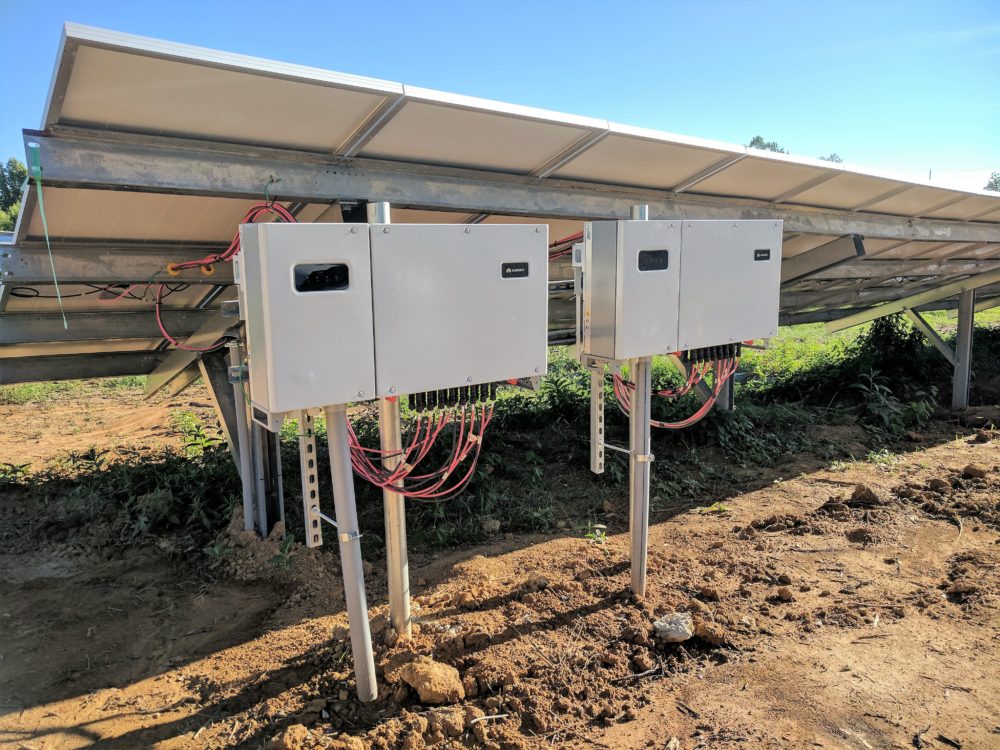
Huawei and Sungrow are ranked as the world’s top two solar inverter manufacturers for the first half of 2025, based on Wood Mackenzie’s ‘Global Solar Inverter Manufacturer Rankings H1 2025’ report. The ranking assesses 23 leading manufacturers from seven countries based on eight performance criteria. Manufacturers accounted for approximately 90% of global shipping volume in 2024.
“The 2025 global inverter landscape will be led by a diverse group of power electronics leaders who combine scale with innovation,” said Timothy Shen, senior research analyst at Wood Mackenzie. “Competitive advantage is increasingly determined not only by shipping volume, but also by the opportunities for breakthrough environmental, social and governance (ESG) initiatives, service quality and stable supply chains.”

Global Top 10 Inverter Manufacturers. Wooden Mackenzie
Based on operational sustainability studies, six of the top 10 companies achieved an EcoVadis ranking of silver or higher, placing them in the top 15% of companies globally for sustainability. In addition, all ten manufacturers now offer warranty extensions of 20 years or more.
Eight of the ten largest inverter manufacturers are reinvesting more than 6% of their sales in research and development, driving advances in digitalization, energy conversion technologies and faster product innovation cycles, in addition to expanding patent portfolios.
Manufacturing footprints are changing in response to changing global trade dynamics. Four of the top ten solar inverter manufacturers now offer global manufacturing coverage, with operations in China, Europe, India, the United States, Southeast Asia and Israel.
“The strongest performers are those that use regionalized assembly strategies,” Shen said. “This strategic positioning allows manufacturers to meet local content requirements and avoid import barriers while maintaining supply reliability.”

Manufacturers of Class A inverters. Wooden Mackenzie
A grade of A is awarded to manufacturers who meet the Wood Mackenzie benchmark for industry best practice, demonstrating consistent and verifiable performance against the key criteria assessed in this ranking. To achieve Class A status, a manufacturer must meet at least five of the defined benchmarks, which reflect a level of capability that helps reduce execution and operational risks for developers, EPCs and asset owners.
Wood Mackenzie said last month that it expects the global inverter market to shrink over the next two years. The US market is experiencing a downturn due to the volatility of solar policy.
News item from Wood Mackenzie
