UNSW researchers developed an experimentally validated model that links UV-induced degradation in TOPCon solar cells to hydrogen transport, charge capture and permanent structural changes in the passivation stack. They show that thicker alumina layers significantly improve UV resistance by limiting hydrogen migration, providing clear guidance for more robust TOPCon designs.
Researchers from the University of New South Wales (UNSW) have investigated this ultraviolet-induced degradation (UVID) in TOPCon solar cells and have discovered that a thicker layer of aluminum oxide (AlOx) prevents this kind of
“Our new work provides a comprehensive, experimentally validated model for UV degradation in TOPCon devices, directly coupling electrical degradation to hydrogen dynamics and permanent structural changes in the passivation stack. It was first presented in a plenary lecture at the recent European PVSEC meeting in Bilbao, Spain,” said the study’s lead author, Bram Hoex. pv magazine. “It builds directly on our previous work in wavelength-dependent UVID and hydrogen dynamics, and we believe it fills an important gap in understanding the long-term reliability of TOPCon.”
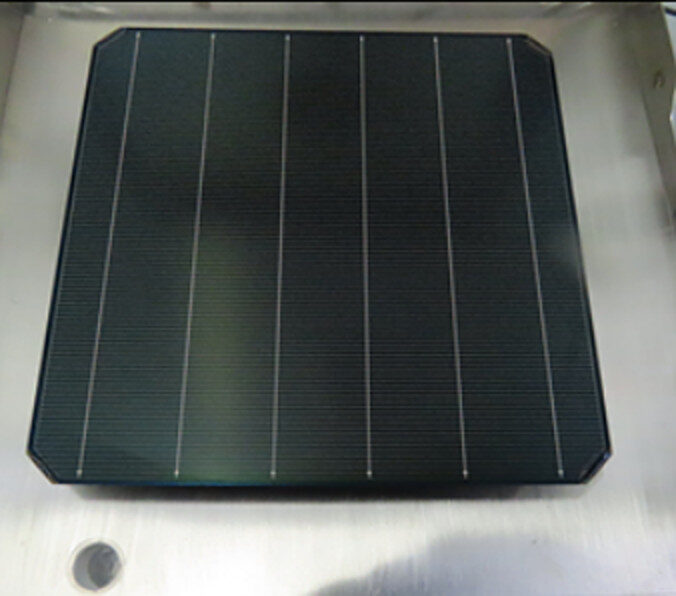
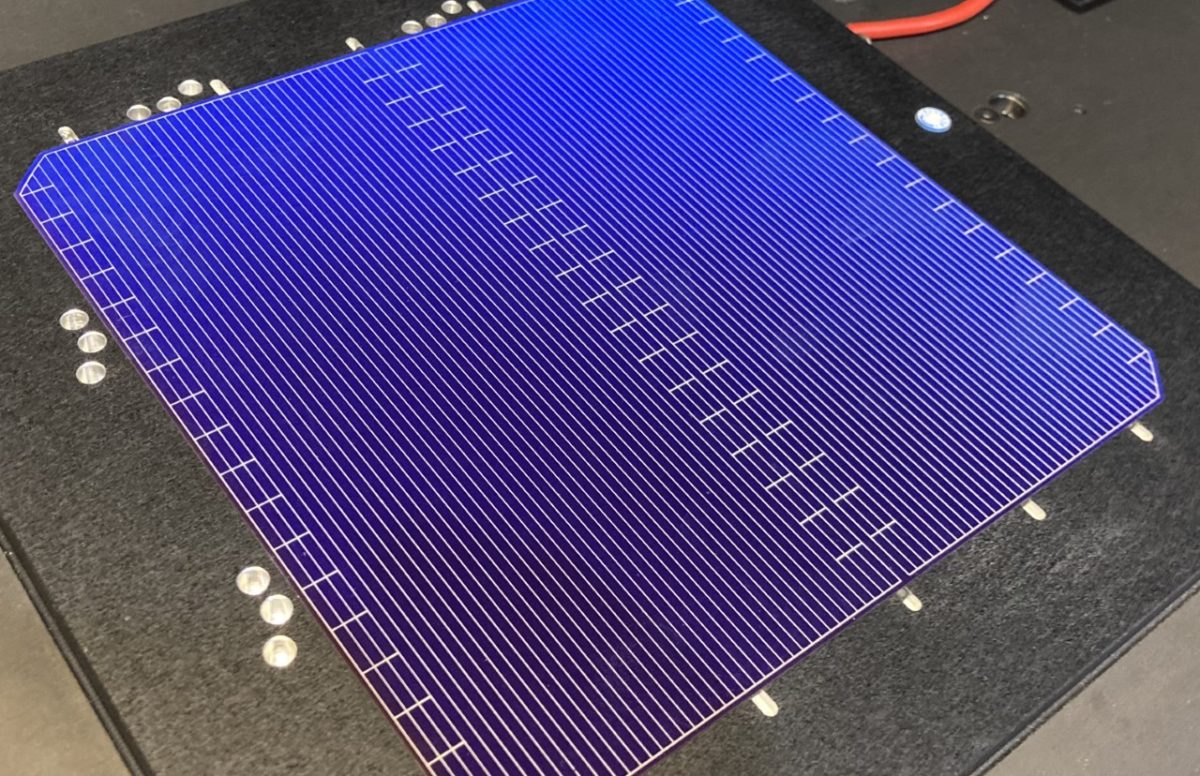
The tests were performed on TOPCon cells based on n-type Czochralski (Cz) wafers, manufactured on an industrial production line. The primary passivation stack consisted of an AlOx layer grown by atomic layer deposition (ALD) and a 75 nm silicon nitride (SiNx) overlayer deposited by plasma-enhanced chemical vapor deposition (PECVD).
The AlOx thickness was varied between 4 and 7 nm, reflecting the industrial TOPCon passivation window on the front. The 4nm layer (SP1, SP3) represents a cost-efficient minimum, while the 7nm layer (SP2, SP4) remains thin enough to avoid significant optical impact. “This comparison allows to assess the trade-off between production capacity and UVID resilience,” the researchers explained.
Image: UNSW, Solar Energy and Solar Cell Materials, CC BY 4.0
Corona-Oxide Characterization of Semiconductors (COCOS) and Fourier transform infrared spectroscopy (FTIR) were used to analyze changes in interface defect density (Dit) and negative solid charge (Qf) under controlled UV exposure, dark storage and thermal annealing conditions.
The measurements revealed a complex interaction between chemical degradation and a transient charge capture-induced enhancement of passivation due to field effects, followed by a metastable decay during dark storage.
“We found that high-energy UV photons break the silicon-hydrogen (Si-H) bonds in the SiNx capping layer, releasing and expanding mobile hydrogen that accumulates at the AlOx/Si interface, breaking down the chemical passivation,” Hoex said. “At the same time, UV exposure temporarily enhances the passivation of field effects through charge trapping in AlOx, due to an increase in Qf.”
During subsequent storage in the dark, Qf is removed, leading to further performance losses despite unchanged chemical damage. “Low-temperature dark annealing redistributes interfacial hydrogen in the silicon bulk, restoring chemical passivation through Dit recovery, but FTIR reveals a permanent structural rearrangement of the dielectric stack,” Hoex added. “Thicker 7 nm AlOx layers significantly improve UVID resistance by acting as a more effective barrier to hydrogen transport, rather than through differences in passivation due to field effects.”
“This work establishes a unified physical model that links UVID, hydrogen transport, charge capture and structural modification,” Hoex concludes. “It explains why some degradation is electrically reversible but structurally irreversible, and provides clear design guidance for more UV-robust TOPCon passivation stacks and improved accelerated UV testing protocols.”
The research work was presented in “Charge capture, hydrogen accumulation and structural rearrangement: a complete model for ultraviolet-induced degradation in TOPCon devices”, published in Solar energy materials and solar cells.
In June, researchers from the University of Oxford in the United Kingdom and Chinese metallization paste specialist Changzhou Fusion New Materials identified a new failure mode in LECO-based TOPCon solar panels.
Other research by UNSW demonstrated the impact of solder flux on the performance of TOPCon solar cells, degradation mechanisms of industrial TOPCon solar panels encapsulated with ethylene vinyl acetate (EVA) under accelerated moist heat conditionsas well as the vulnerability of TOPCon solar cells to contact corrosion and three types of defects in TOPCon solar modules that have never been detected in PERC panels.
In addition, UNSW scientists investigated the sodium-induced degradation of TOPCon solar cells under moist heat exposure, the role of ‘hidden contaminants’ in the degradation of both TOPCon and heterojunction devices, and the impact of electron irradiation on PERC, the performance of TOPCon solar cells.
This content is copyrighted and may not be reused. If you would like to collaborate with us and reuse some of our content, please contact: editors@pv-magazine.com.
Popular content