

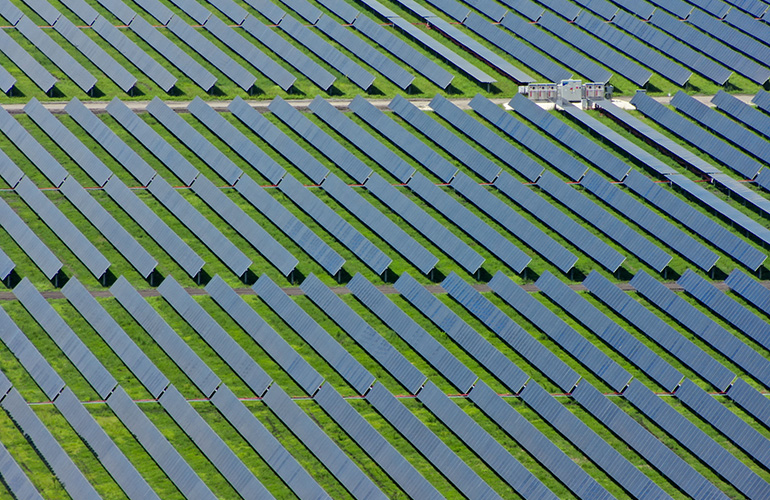
The One Big Beautiful Bill Act (OBBBA) kicked off a frenzy for solar and storage developers to take advantage of expiring federal tax credits. Some states are taking action to deliver as many renewable kilowatts to the grid as possible before the big deadline for construction to start on July 4, 2026.

Credit: Lichtsource bp
In Oregon and Colorado, governors themselves have tried to streamline permitting and cut other red tape to get projects online faster.
Oregon Governor Tina Kotek issued an executive order in October 2025 titled “Accelerating Wind and Solar Energy Development to Avoid the Elimination of Federal Clean Energy Tax Credits.” The order directs government agencies to take all steps necessary to expedite and prioritize site and permit reviews for projects seeking to meet the ITC’s July 4 deadline.
“With the Trump administration’s elimination of promised stimulus, states must act as the last line of defense against climate catastrophe. We must build renewable energy infrastructure, and quickly,” Kotek said in a speech. press statement. “We cannot afford to lose this critical period; every wind and solar project we help complete now directly combats the irreversible climate damage we are desperate to prevent.”
Similarly, in Colorado, Governor Jared Polis launched an executive action over the summer titled “State Commitment Prioritizing Deployment of Affordable Clean Energy,” which also directs state agencies to do everything they can to expedite implementation before the deadline. Polis announced a state commitment to introduce flexible interconnection, which will allow more projects to be connected to the grid using operational software that matches renewable energy production to the needs of the grid.
Efforts to meet the deadline are also underway in state legislatures and utility commissions across the country. In New Jersey and Illinois, new actions have created more capacity in state incentive programs to help developers stack incentives and reduce costs to taxpayers before federal deadlines.
The Illinois Commerce Commission has doubled the size of its adjustable block program, providing incentives for 1,000 MW of community, commercial and small-scale solar projects. The expanded capacity prioritizes projects that can begin construction before July 4.
“By acting now, Illinois will ensure residents and businesses benefit from the lowest-cost solar projects while federal incentives remain available – strengthening the state’s position as a national model for smart, affordable clean energy growth,” said Stephanie Burgos-Veras, senior manager of equity programs at the Coalition for Community Solar Access.
In New Jersey, Governor Phil Murphy signed a bill that released an additional 3,000 MW of community solar energy by October 2025. The state focused specifically on community projects to give more residents the opportunity to lower their bills with clean energy.
“By accelerating the process of bringing new energy sources online and rapidly building new energy storage facilities, we will meet growing demand while making life more affordable for our state’s families,” Murphy said in a statement.
And in California, Governor Gavin Newsom signed a bill to exempt solar developers from paying taxes on IRA benefits – keeping project costs low, attracting investors and spurring development ahead of the deadline.
“SB 302 will keep energy project costs low by allowing California energy developers to realize the full value of federal tax credits,” said Stephanie Doyle, SEIA California state director.
Newsom also signed a bill creating a West-wide regional electricity market that will allow California to develop and sell renewable energy to other states in the Interior West, and vice versa. These efforts create new opportunities for developers working to get as many megawatts in the ground as possible with remaining tax credits.
“Fast-growing demand for new energy sources based on data computing needs, aging transmission infrastructure and extreme weather events are driving up the cost of electricity in the West. The stakes are high, and with the passage of AB 825, we have an opportunity to work together and create a Western regional market for cost-effective delivery of newer clean energy sources,” said Vijay Satyal, deputy director of markets and transmission at Western Resource Advocates.
States are taking different approaches, some more explicit than others, to expedite and incentivize renewable projects as time passes until the deadline for construction to start. Speeding up permitting, removing bureaucratic obstacles and changing tax rules are crucial steps to deploy as much solar energy + storage as possible before then.
