

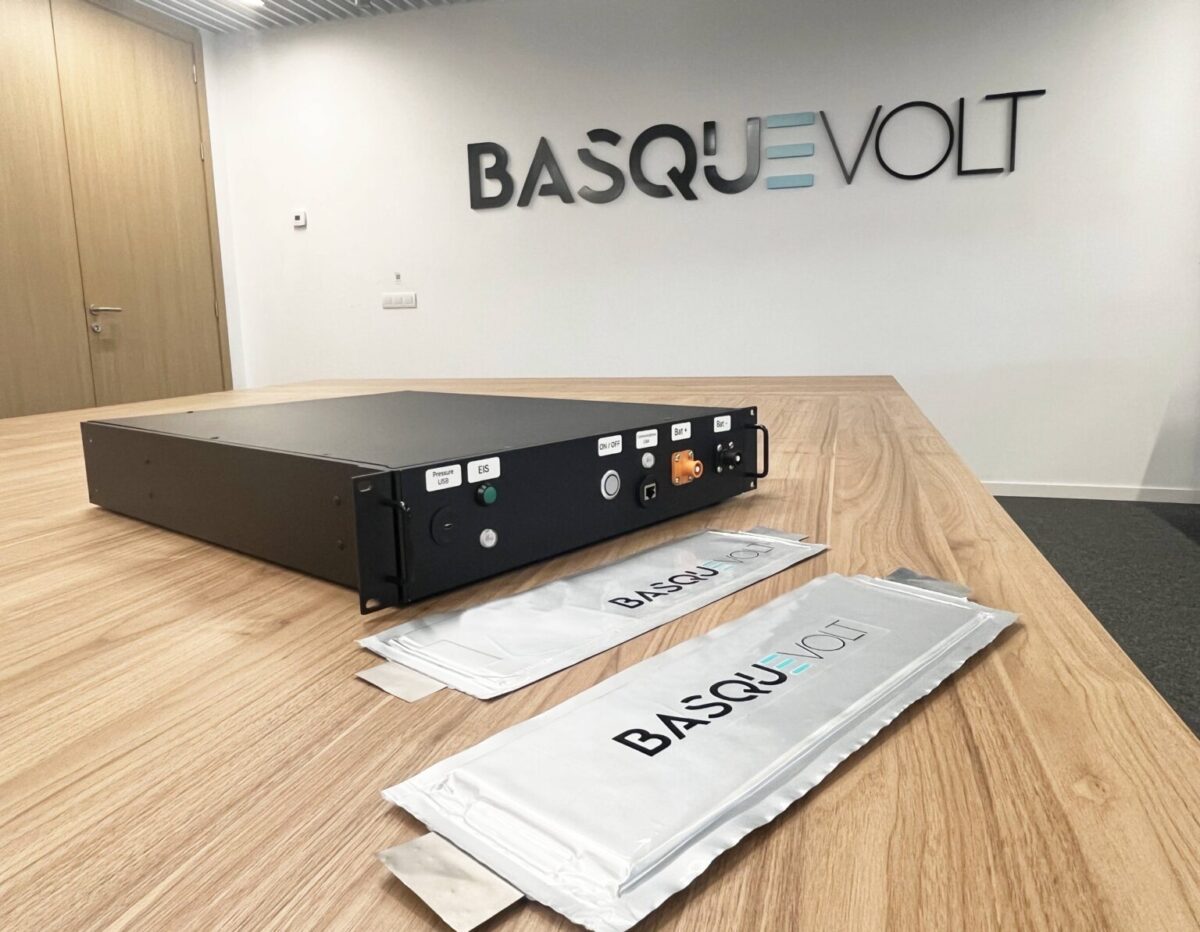
Basquevolt and Bcare have successfully developed and integrated the first solid-state cells into a module for stationary applications, within the Iberdrola-led ASTRA-CC project (2023-2025).
By pv magazine Spain And ESS news
Basquevolt, the Basque solid-state battery initiative whose shareholders are the Basque government, Iberdrola, CIE Automotive, Enagás, EIT InnoEnergy, CDTI (via Innvierte) and CIC energiGUNE, announced this week a “game-changing milestone in storage” in collaboration with Bcare, a Basque technology and research center specialized in batteries and storage systems. In a statement, the companies said that for the first time they have developed and integrated solid-state battery cells into a module intended for stationary applications.
This achievement was carried out within the framework of the ASTRA-CC R&D project, led by Iberdrola and integrated into the HAZITEK call of the Basque Government, which promotes strategic technologies for the energy transition.
Within ASTRA-CC, Basquevolt and Bcare were responsible for the design, development and validation of a solid-state cell specifically optimized for stationary use, and for its integration into a functional module. Their work demonstrated the technical feasibility of the technology not only at the cell level, but also in modular configurations – an important step for future scalability and integration into electrical infrastructures. The module has been tested within a public direct current (DC) network architecture.
The ASTRA-CC project (2023–2025) is a strategic industrial research initiative focused on the development of technologies and components for DC networks, with the aim of accelerating the integration of renewable energy and storage systems. It is led by i-DE Redes Eléctricas Inteligentes (i-DE Smart Grids) and includes entities of the Basque Science, Technology and Innovation Network, with funding from the Basque Government and the European Union through the ERDF 2021-2027.
In July, Basquevolt announced it would focus its activities on the development and supply of electrolytes, which act as conductors in batteries. The company’s Board of Directors expects the industrialization and commercialization of its electrolyte to begin in 2027.
This content is copyrighted and may not be reused. If you would like to collaborate with us and reuse some of our content, please contact: editors@pv-magazine.com.
