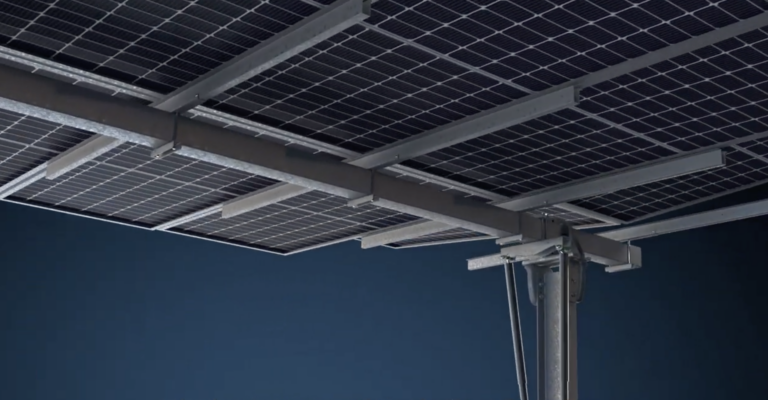
Solar Steel has unveiled the TracSmarT+2P, an enhanced version of its 2P single-string tracker, previously marketed as the Compact model, and now also available in a dual-string configuration with row lengths up to 41 meters. The company said the new design builds on the original concept with changes aimed at improving versatility and adaptability for PV projects of different scale and site complexity.
The TracSmarT+2P reduces the number of components required for construction, a move Solar Steel says allows for faster assembly and reduces the risk of mechanical problems during operation. The company added that the simplified design can also positively impact operation and maintenance costs and the overall lifespan of the system.
The tracker features a high degree of component standardization, with most structural elements and mounting hardware shared in both single- and dual-string configurations. Solar Steel says this approach simplifies logistics, installation and spare parts management. The main technical difference between the two configurations is the inclusion of dampers in the dual-string version, which are intended to optimize the dynamic behavior of the array.
Offering both single- and dual-string options, the TracSmarT+2P is designed to adapt to uneven terrain and complex site layouts. According to the company, this flexibility allows projects to better accommodate curves, optimize land use and reduce the need for extensive earthworks, improving both the technical and economic viability of PV installations in non-uniform locations.
This is what a spokesperson for Solar Steel said pv magazine that the TracSmarT+2P is now commercially available in all markets.
While the dual-string configuration is expected to be the preferred option for larger projects, Solar Steel says the single-string version remains suitable for smaller installations and specific use cases such as agricultural or irrigation projects. The tracker is also part of the company’s agrivoltaic design line and complies with current regulations in several European countries, providing up to 1.3m of ground clearance to enable agricultural and livestock operations under the array without compromising PV performance.
This content is copyrighted and may not be reused. If you would like to collaborate with us and reuse some of our content, please contact: editors@pv-magazine.com.
Popular content