

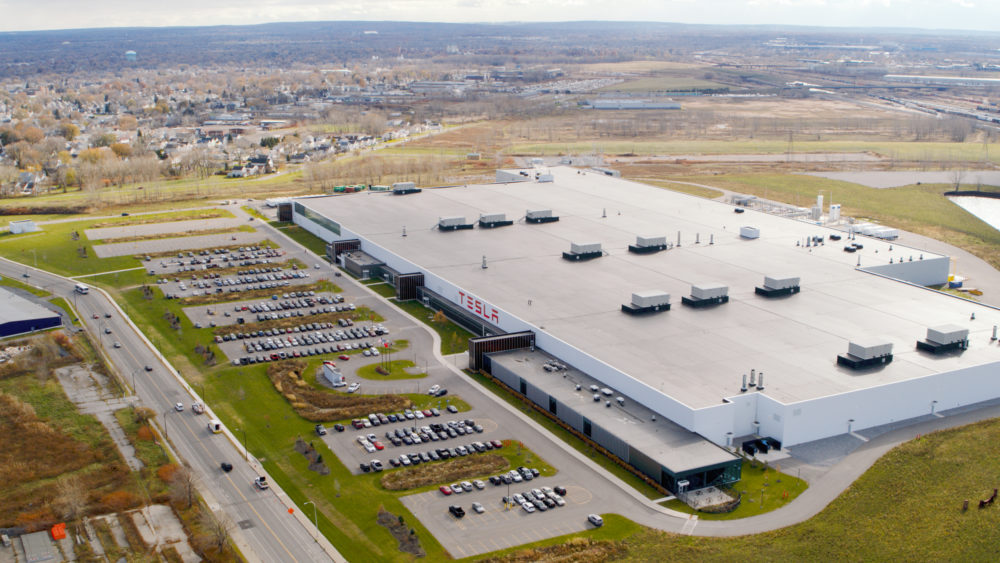
After years of relative quiet, the Tesla factory in Buffalo, New York, has been repurposed for its original purpose: making solar panels.
The 1.2 million ft2 facility got an almost Investment of 1 billion dollars from upstate New York, and local organizations have questioned Tesla’s employment figures since day 1. Originally built for Silevo in early 2010, the Buffalo factory ended up in SolarCity’s fold in 2014 after the solar installer acquired the panel manufacturer. Then Tesla bought SolarCity and took over the factory. Tesla first partnered with Panasonic to make solar cells at the factory, but Panasonic left in 2020. Since then, the Buffalo factory has made a number of solar roof products, become the core location for EV superchargers and is a home for self-driving car data.
 Rumors started brewing among the end of 2025 that Tesla released a large solar panel. During Tesla’s Q4’25 earnings call, Elon Musk revealed that he wants the company to build 100 GW of fully integrated U.S. solar manufacturing capacity.
The United States currently produces less than 4 GW of silicon cells and less than 50 GW of silicon solar panels annually, and not for lack of trying. One of the many challenges in scaling up silicon solar panel production in the United States is the complicated IP web with n-type technology. Tesla appears to be creating a completely unique panel design in Buffalo.
The TSP-415 and TSP-420 panels have 18 ‘power zones’, which control 18 sections of a 1,805 x 1,135 x 40mm panel to work semi-independently and reduce shadow effects. The panels are designed to work best with Tesla’s own inverter. Specifications circulate shows that the panels have an efficiency of 20.5%.
Colby Hastings, senior director of Tesla Energy, has told multiple outlets that the goal is to scale the Buffalo factory to 300 MW of panel assembly capacity this year.
