

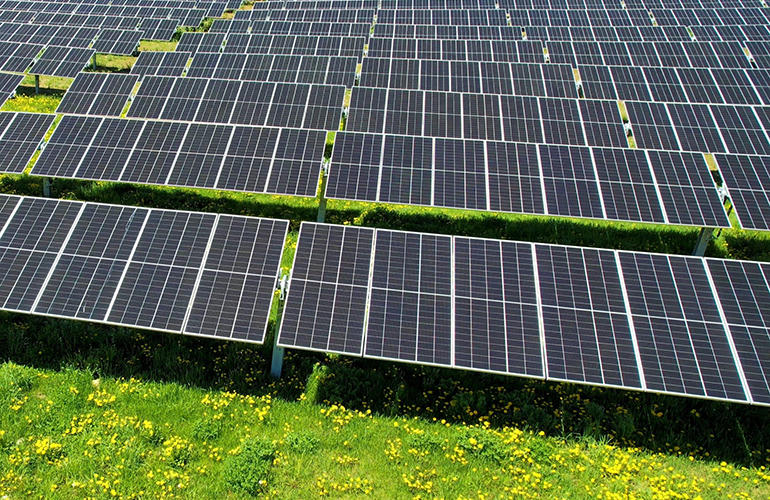
Risk assessment company VDE America has released guidance for project owners and developers in meeting the July 4, 2026 deadline to qualify for the end of clean energy tax credits.
Credit: Alliant Energy
The conclusions in the technical memorandum, “Navigating the Beginning of Construction Requirements for Solar Energy Projects,” represent VDE’s assessment based on its interpretation of published guidelines and expert insight into engineering, procurement and construction best practices.
Under incentive changes to the One Big Beautiful Bill Act (OBBBA), solar projects over 1.5 MW must now meet a stricter threshold to qualify for tax credits by performing qualified “physical work of a significant nature” before the deadline.
Developed by trusted technical experts at VDE, the newly released technical memorandum empowers stakeholders to take decisive actions that maximize the number of solar projects eligible for tax credits. It also provides recommendations that developers can use to appropriately value capital expenditures before closing project financing while reducing exposure to regulatory risk. The memo covers all commercial market sectors, provides guidance for utility and community solar projects, and covers both the Investment Tax Credit (ITC) and the Production Tax Credit (PTC).
In addition to the detailed guidance in the technical memorandum, VDE offers the following high-level strategic recommendations:
- Download and view the technical memo about the start of construction. The guidelines include a detailed analysis of qualifying on-site and off-site work that meets the physical work test. The memo also includes an example of a 5 MW project and a compendium of legal advice levels.
- Where possible, meet the construction start date. This date fundamentally changes the economics of solar projects and implementation risks. Projects that begin construction after July 4 face a challenging and potentially insurmountable 18-month deadline before qualifying for tax credits.
- Apply improved documentation standards to reduce interpretation risks. Thorough documentation, including date-stamped photos, GPS coordinates, and inspector reports, is critical to meeting the increased “work performed” standard and proving completion of work activities eligible for tax credits.
- Execute contracts for products and services for tax credit eligibility. Work with your legal team (or use VDE’s ready-made Request for Proposal (RFP) templates) to prepare comprehensive technical specifications that meet the Treasury’s requirements for ‘physical work of a significant nature’.
“We are seeing extraordinary demand for additional energy capacity across the United States, driven by energy-intensive industries, U.S. manufacturing initiatives, the rise of data centers and broader electrification efforts,” said Brian Grenko, CEO and president of VDE Americas. “Solar energy remains the fastest and most cost-effective way to meet that demand, and VDE Americas is committed to helping our customers develop, build, finance and operate these energy generation facilities as they navigate our dynamic regulatory environment.”
News item from VDE Americas
