

Scotland-based energy storage company Gravitricity quietly went bankrupt in October last year.
Gravitricity’s file history shows that through a Microsoft Teams (online) meeting on October 1, it was decided that the company would go into voluntary liquidation, after which Callum Carmichael and Graham Smith of FRP Advisory Trading were appointed liquidators. It had £7,913.82 worth of assets available to creditors.
Following the liquidation, the company’s intellectual properties, including the Gravitricity brand and its patents, will be offered for sale through financial services provider Hilco, with a deadline for the offer is February 25, 2026.
One of the creditors mentioned in Gravitricity’s statement of business is Aurora Ventures, of which Martin Wright, co-founder and chairman of Gravitricity, is a director. He is also chairman of the board of the Renewable Energy Association (REA).
He and Gravitricity co-founder Peter Fraenkel offer consulting services through a company called Fraekel Wright.
Founded in 2011, Gravitricity developed underground gravity energy storage systems that work by lifting weights in a deep shaft and releasing them when energy is needed. It received various government-backed and private investments, a new £40 million funding drive will begin in early 2023 that was intended to support demonstrator projects to be developed until 2028.
Gravitricity was currently fundraising through private market investment platform CrowdCube. Investors on the platform were notified of Gravitricity’s liquidation via email, but report receiving little other information.
Why did Gravitricity go bankrupt?
A new technology like Gravitricity’s came with significant overhead costs, and although the company was a pioneer in the field, the company competed to bring it to market.
Apart from the company’s poor financial situation, little information is available about what went wrong.
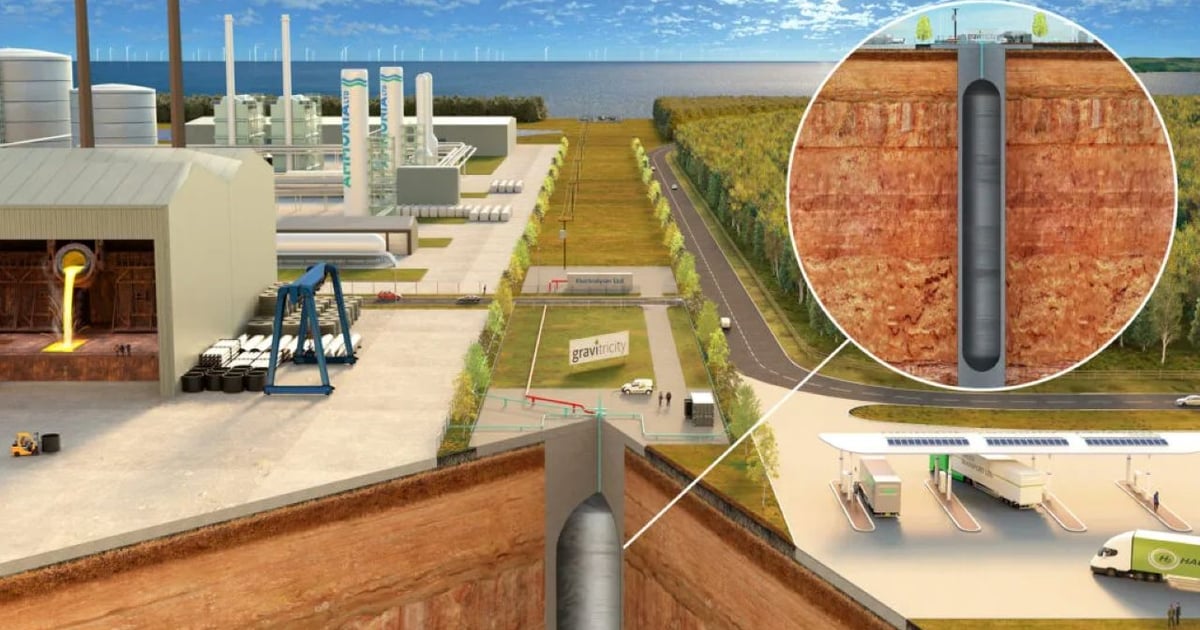
In 2021, Gravitricity began a pivot to incorporate hydrogen and heat storage technologies into its energy storage systems. filing a patent to convert the purpose-built shafts into pressurized energy stores capable of collecting significant amounts of gas.
In 2024 it will indeed Gravitricity’s Wright wrote a blog for Solar Power Portal about the need for hydrogen storage in a clean industrial strategy.
As recently as summer 2025, the company was shortlisted as the preferred hydrogen supplier in the Prieska Power Reserve, one of six South African renewable energy flagship projects selected for presentation at COP26.
Solar energy portal is in contact with the designated administrators. We will update this article as more information becomes available.
