

The Department for Energy Security and Net Zero (DESNZ) has unveiled measures to reduce the impact and volatility of the gas market on electricity prices, including an increase in the windfall tax on renewables.
The most immediate measure will be to increase the windfall tax on renewable energy sources – through the Electricity Generator Levy (EGL) – from 45% to 55% from 1 July 2026. This is due to the ongoing conflict in the Middle East and its impact on the cost of living for households and businesses.
Introduced in 2023, the EGL was intended as a temporary tax on older large renewable energy plants, based on their annual turnover above a reference price, which currently stands at £82.61/MWh. New investments in sustainable energy projects are not covered by the EGL.
Originally scheduled to end in 2028, the UK government will extend the EGL beyond that deadline. However, it has not yet been announced how long this measure will remain in force.
According to Treasury Secretary Dan Tomlinson, this measure will “support the government’s objective of reducing the impact of gas prices on businesses and households.”
Despite the increase in renewable energy generation contributing to the UK electricity grid and helping to reduce electricity prices, the government highlighted that almost 30% of UK renewables are still exposed to wholesale prices determined by gas and to global factors affecting its price, such as the current conflict in the Middle East.
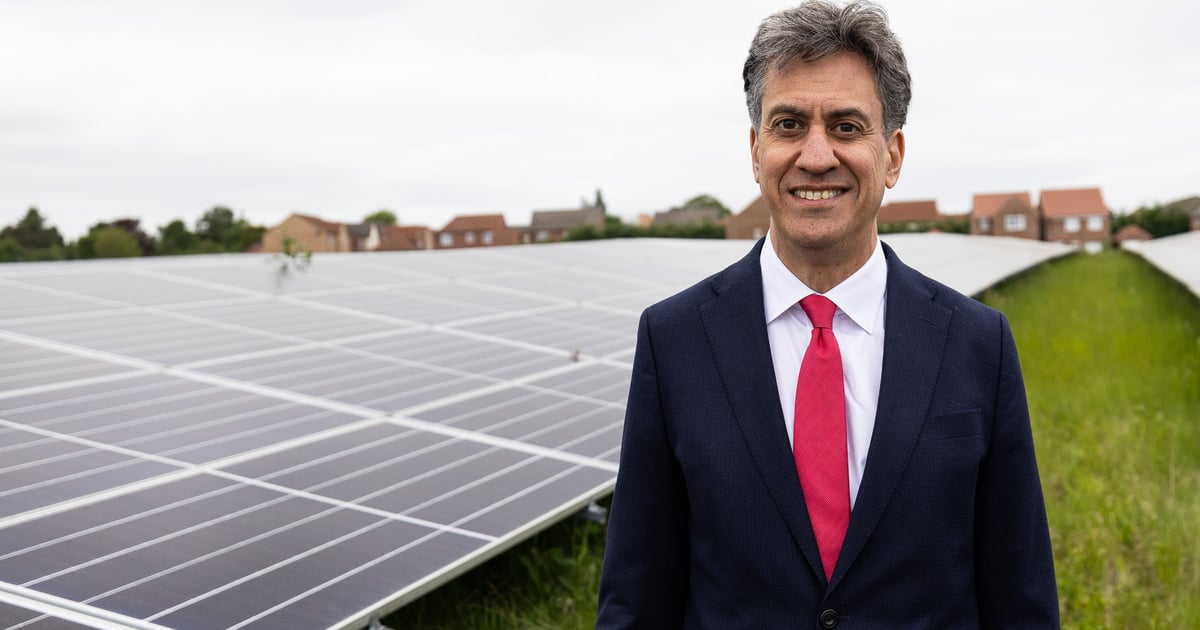
UK Energy Secretary Ed Miliband said: “As we face the second fossil fuel shock in less than five years, the lesson for our country is clear: the era of fossil fuel security is over and the era of clean energy security must come of age. That’s why we are redoubling our commitment to clean energy, to give our country energy security and cut bills for good.”
Tomlinson also added that the measure is intended to encourage “competitive price participation” in wholesale Contracts for Difference (WCfD), which is also part of the measures DESNZ has outlined “To break the impact of gas on electricity prices”.
One of the new plans is to introduce a voluntary long-term fixed price WCfD for existing low-carbon producers not covered by an existing CfD. These permanent contracts will be introduced voluntarily later this year, together with further details, while the intention is to start an allocation process in 2027.
Under the WCfD, eligible electricity producers would give up their current wholesale revenues in exchange for a fixed electricity price achieved through a CfD. DESNZ added that under the proposal, the intention is for producers accredited under the Renewables Obligation (RO) to continue to receive support through the RO in the way they currently do. Only wholesale earnings will be exchanged for a fixed price CfD.
“The proposed expansion of fixed-price CfDs, alongside incentives for participation of legacy ROC-backed assets, is a credible way to reduce gas price exposure over time. Careful design will be needed to avoid locking in temporarily high prices, but if done right, there is an opportunity to provide commercial producers with fair returns while realizing modest savings on consumer bills through lower financing costs,” said Aurora Energy Research, a provider of global energy market analytics.
Ed Matthew, director of the UK program at independent climate change think tank E3G, said: “Our dependence on gas and oil is killing the economy and the planet. The Government is right to double down on the clean energy transition – it is the only path to stability and security.
“The next step must be to eliminate hidden taxes on electricity bills while controlling network costs. This is the most powerful action to make it cheaper for people to use clean energy to heat their homes and power their cars.”
Rooftop solar support and planning overhaul
In addition, the Government has also outlined measures related to solar energy, including expanding its support for Great British Energy’s solar scheme, with up to £40 million in government investment to install rooftop solar at a further 100 schools and colleges this year.
This comes just over a month after the state-owned energy company, Great British Energy, reached 100 UK schools with solar energy installed.
At ground level, the government plans to expand renewable energy sources across the public estate, including brownfield sites, industrial sites and railway sites, to install solar and wind power. This measure could unlock up to 10 GW of capacity.
Finally, the government also mentioned that it aims to review planning and grid connection processes to accelerate clean energy and reduce delays in grid upgrades.
Simone Rossi, CEO of EDF in Britain, said: “We welcome streamlining the planning and connectivity processes to reduce the cost of building the infrastructure Britain needs.”
