

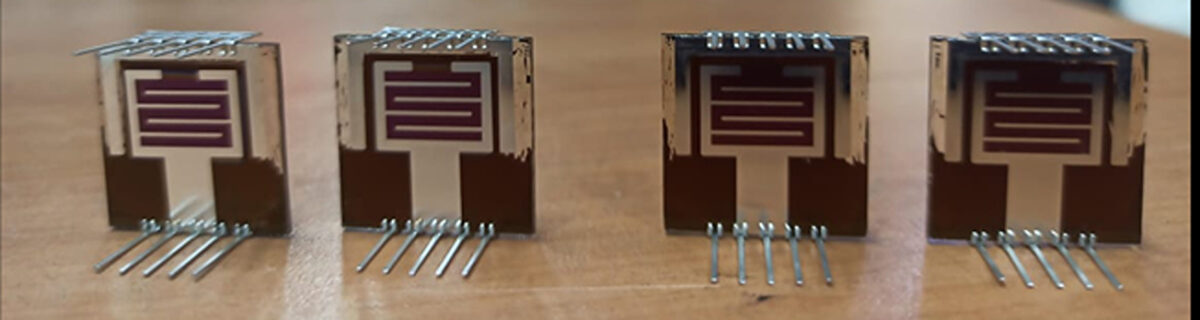
The four-terminal transparent perovskite solar cell uses an ion-modulated spiro-MeOTAD hole transport layer, which passivates interfacial defects, improves carrier dynamics, and enables a tunable work function in wide bandgap perovskites. When integrated into mechanically stacked 4T tandems with an n-TOPCon cell, the device achieved an overall efficiency of 28.4–30.2%, along with improved open-circuit voltage and fill factor.
Researchers at the Indian Institute of Technology Bombay have fabricated a four-terminal (4T) transparent perovskite solar cell based on a hole transport layer (HTL) that suppresses interfacial recombination while improving photoluminescence quantum yield and quasi-Fermi level splitting.
“The cell also exhibits a dynamically tunable work function, allowing effective coupling with perovskite absorbers that vary in the band gap,” the study’s corresponding author Dinesh Kabra shared. pv magazine. “Across three perovskite compositions, the device shows a substantial improvement in open-circuit voltage and fill factor, independent of band gap. Implemented in transparent pinch configured perovskite solar cells, the universal HTL improves efficiency and operational stability, enabling a combined efficiency of 30.2% when optically coupled in four-terminal tandems with commercial N-TOPCon silicon cells.”
“Our strategy eliminates the need for bandgap-specific HTL engineering, thereby reducing halide segregation, a key limitation of wide-bandgap perovskites in tandem solar photovoltaics,” he continued. “By decoupling transport layer compatibility from absorber composition, perovskite formulations can be selected based on intrinsic stability and optoelectronic quality rather than interfacial limitations. Therefore, it enables absorber optimization independent of charge-selective layer matching; this universal HTL redefines tandem device design principles and provides a scalable route to commercially viable, highly stable and efficient perovskite-silicon solar photovoltaics.”
In the study “Bandgap tunable transparent perovskite solar cells for 4T Si/perovskite tandem photovoltaics with PCE > 30% via rational interface management”, published in the Royal Society of Chemistry, The scientists explained that the cell was manufactured with an HTL of ion-modulated spiro-OMeTAd, noting that for perovskite cell applications, spiro-OMeTAD is commonly doped with a compound known as lithium bis(trifluoromethanesulfonyl)imide (LiTFSI) to improve hole extraction and conductivity. However, this type of doping requires time-consuming air oxidation for 24 hours, which is reported to be an obstacle to the commercial production of perovskite PV devices.
The ion-modulated, radical-doped spiro-MeOTAD HTL can reportedly achieve optimal work function tuning via 4-tert-butyl-1-methylpyridinium bis(trifluoromethanesulfonyl)imide (TBMPTFSI) salt modulation, offering improved stability. Unlike molecular structure engineering for energy level adjustment, this approach provides a simpler and more controllable way to align energy levels and reduce interfacial defects.
Image: Indian Institute of Technology Bombay
The tandem device is built with a perovskite cell at the top, made with a substrate of glass, an electron transport layer (ETL) made on tin oxide (SnoO2), a perovskite absorber, the spiro-MeOTAD hole transport layer (HTL), a indium zinc oxide (IZO) layer that serves as the top transparent electrode (TE), and silver (Ag) metal grids.
Image: Indian Institute of Technology Bombay
According to the researchers, optimization of the TBMPTFSI concentration, ranging from 15 to 20%, together with careful adjustment of the HTL spin coating speeds, led to significant improvements in efficiency, open circuit voltage and fill factor for each perovskite composition. By integrating the Ion-Spiro HTL, the carrier lifetime was significantly extended and the Shockley-Read-Hall recombination constants were reduced compared to the conventional HTL, indicating fewer interfacial defects. Optical characterization confirmed minimal changes in the perovskite band edges, while photoluminescence quantum yield (PLQY) measurements further confirmed the reduced defect densities in Ion-Spiro devices.
The researchers integrated the perovskite into four-terminal (4T) mechanically stacked tandem configurations with n-TOPCon silicon solar cells, and the tandem device achieved an overall efficiency of 28.4-30.2%. Measurements of external quantum efficiency (EQE), transmission, and integrated JSC closely matched the JV and optical analyses, validating the performance improvements provided by the ion-modulated HTL. Finally, stability testing under heat, continuous illumination, and maximum power point tracking showed that devices with the Ion-Spiro HTL exhibited slightly improved robustness, consistent with the reduced density of interfacial defects.
“Specifically, the introduction of ion-modulated spiro-MeOTAD with an optimized work function significantly improved the tolerance to surface defects, influencing carrier dynamics, resulting in an improved open-circuit voltage of 2-5% and a fill factor of 6-7%,” said Kabra. “These findings highlight the essential impact of interfacial defect passivation using ion-modulated spiro-MeOTAD in achieving highly efficient, stable perovskite solar cells for tandem applications, providing a promising route to next-generation photovoltaic technologies.”
This content is copyrighted and may not be reused. If you would like to collaborate with us and reuse some of our content, please contact: editors@pv-magazine.com.
Popular content

