

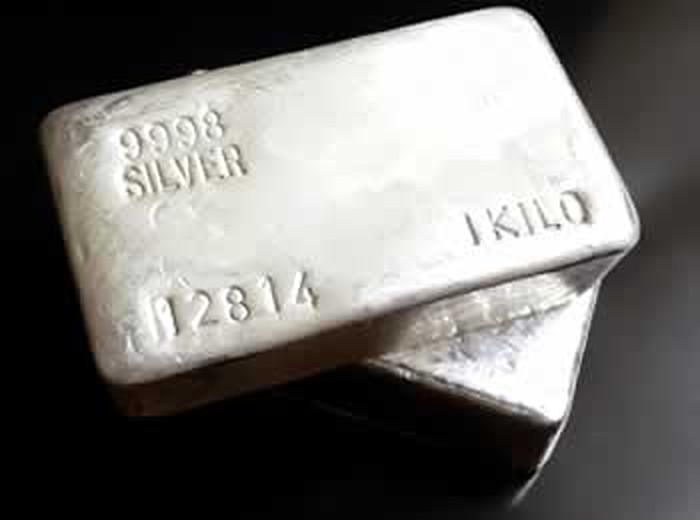
Silver prices have resumed their climb, reaching $95 per ounce this morning. Silver analyst Philip Newman explains pv magazine that escalating tensions in the Middle East are expected to continue to drive investment demand for safe havens such as gold and silver.
After reaching an all-time high of $121.62 per ounce on January 29 and stabilizing between $70 and $90 per ounce over the past two weeks, silver prices have started to rise again, reaching $95.80 per ounce this morning.
“Escalating tensions in the Middle East are expected to continue to drive investment demand for safe havens such as gold and silver,” said Philip Newman, Managing Director of independent research consultancy Metals Focus. pv magazine. “Silver is also likely to benefit from weaker-than-expected US inflation data for January, which has underpinned hopes for further rate cuts in the United States.”
“Elsewhere, tail risks are expected to be significant,” he continued. “These include persistent US tariff uncertainties, growing concerns about fiscal sustainability in major economies and overextended valuations of AI tech stocks. Collectively, these factors make a compelling investment case for defensive assets. While gold will remain the main beneficiary of portfolio diversification, silver is poised to experience significant spillovers due to its close correlation with the yellow metal. Against this backdrop, Metals Focus expects silver to surpass its early 2026 high later this year.”
“That said, two major concerns remain: the recent spike in silver price volatility, and the continued downsizing and substitution within some industrial applications,” Newman added. “While it may take some time for the latter to fully resonate with investors, it remains a key reason why silver may gradually underperform gold as 2026 progresses.”
Silver paste currently accounts for about 30% of the total cost of solar cells, creating a difficult environment for manufacturers already dealing with overcapacity, falling module prices and tight margins. Companies are exploring alternative metallization technologies and other ways to reduce silver consumption.
Last month, China-based metallization paste supplier DK Electronic Materials highlighted this trend, revealing that a gigawatt-scale customer will use its copper-rich paste for commercial production.
According to Radovan Kopecek, co-founder and director of the German research institute the International Solar Energy Research Center Konstanz (ISC Konstanz), an immediate transition to copper is technically and economically feasible. “Copper screen printing can be implemented quickly and we have received many inquiries about it,” he said pv magazine last month.
Ning Song, from the University of New South Wales (UNSW) in Australia, explained that even if using a high copper paste results in a small drop in efficiency, the price trade-off should be acceptable to manufacturers. “This trade-off is acceptable if it does not introduce new reliability risks. Ultimately, the decision depends on how well the efficiency loss can be compensated at the module and system level,” she said. pv magazine.
This content is copyrighted and may not be reused. If you would like to collaborate with us and reuse some of our content, please contact: editors@pv-magazine.com.
