The electric grid is a real bottleneck for energy supply in the United States, and it’s not just utilities and grid operators that are struggling. Grid congestion also puts pressure on the owners of renewable energy projects and is both a business and technical problem, writes Alon Mashkovich, CEO of energy management software provider enSights.
From pv magazine 26/2
Congestion on the electricity grid limits the value that renewable energy sources can deliver. This is especially painful for projects that are technically complete, fully permitted and funded, yet unable to bring in the targeted revenues.
Much of the talk about grid congestion comes from the perspective of the utility or grid operator, focusing on how they can manage an ever-changing and complex system. This perspective is paramount, but there is also another side of the coin. Distributed generation (DG) owners, such as independent power producers (IPPs) and commercial and industrial (C&I) portfolio managers, can actively shape the consequences of grid congestion. Congestion is not just a technical problem for the electricity grid, it is also a business problem.
Full value
Imagine a portfolio manager managing dozens of small renewable sites. Their projects are built, financed and ready to be connected to the grid. But with abundant solar energy resources available during peak hours, grid congestion forces curtailment. Now the asset owner’s expected revenues disappear, not because the assets fail, but because the grid cannot efficiently absorb or coordinate them.
In contrast, imagine another DG operator, one who has assets that are not functioning optimally due to classic problems that plague the sector. In fact, enSights measured six C&I portfolios (hundreds of assets), and we know that many delivered only two-thirds of their expected production. This means that the grid operator had planned and counted on the electricity, but it was not delivered. It’s a lose-lose situation, and it’s happening more and more.
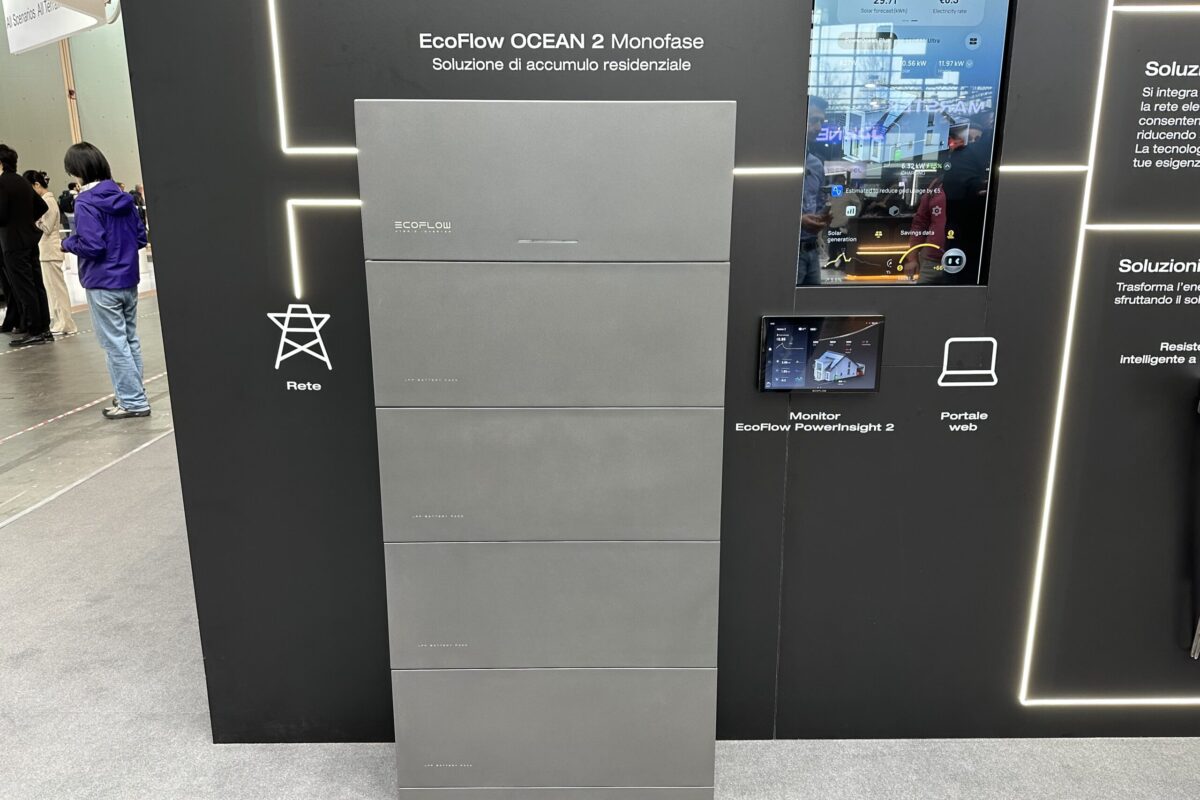
Storage allows energy to be moved, meaning that excess renewable energy does not have to be curtailed, but rather sent later when the grid is less congested. It is a powerful asset that can help IPPs achieve their expected revenues. But storage alone doesn’t solve the problem.
Each battery introduces decisions such as when to charge, when to discharge, and which occasion to prioritize. On a large scale, these decisions become constant and expensive if handled poorly. Storage is not a simple on-off resource. It is a multi-dimensional system made up of prices, forecasts, grid restrictions, asset health, degradation and market rules. As storage becomes more distributed, grid congestion becomes a management problem.
Many existing control systems are designed to think per location and have limited visibility to other assets in a portfolio. Manually managing dozens of storage assets is an impossible task. Even manually managing 10 or 20 storage locations requires constant forecasting, planning and reconfiguration. It becomes operationally untenable at dozens or hundreds of locations.
Consider two portfolio operators. People rely on older systems and manual processes. Every day starts with hours of planning, spreadsheets, and site-by-site configuration. Congestion is forcing cuts and revenues are quietly leaking from assets that are technically ‘online’ but are underperforming economically.
The other works with intelligent coordination at the portfolio level. Storage responds dynamically to congestion and energy shifts rather than curtailment. Assets participate in multiple programs without constant manual intervention. Both possess similar hardware, but only one unlocks the full value. What IPPs lack is the ability to manage flexibility across entire portfolios, not individual assets. And when assets perform as expected, grid operators can plan with confidence.
Flexible management
The advantage shifts from who installs the most assets to who operates with the most flexibility. It’s not a matter of set it and forget it, it’s constant monitoring and adjustment. Doing this on a large scale is difficult with manual labor alone.
Modern energy management platforms must evolve beyond basic control tools to AI-powered digital layers that can create dynamic storage and consumption strategies to reduce grid congestion. These systems must coordinate the storage fleet and provide uniform orchestration across sites, enabling grid-level functions such as frequency regulation, voltage support and congestion relief, and automatically optimize participation in grid service programs, including demand response events, ancillary service markets and capacity incentives.
AI-powered energy business management systems enable IPPs to manage distributed assets at scale, with the granularity to improve their bottom line. Instead of spending hours manually planning assets every day, IPPs can review, verify and refine recommendations in minutes. The value of storage increasingly depends on the software that manages it.
AI optimization only works if the data is reliable. As the network becomes more complex, IPPs must raise the bar on data acquisition and quality. And because this coordination is done digitally, cybersecurity can no longer be an afterthought. It should be built into a project from the start. Protecting operational data and control systems with modern security protocols is part of protecting uptime, revenue and network reliability.
Market maturity
Grid congestion persists as systems struggle to coordinate distributed assets with speed, confidence and financial precision. Success will depend less on how much capacity is built and more on how intelligently it is managed. Operators with intelligent management will continue to unlock value even under a limited network.
As the network evolves, the success of AI-optimized solutions depends on high-quality data and the latest cybersecurity protocols that IPPs must secure to prevent disruption. Grid congestion need not slow down renewable energy growth if IPPs change the way they manage their assets. AI-powered utility management gives IPPs a way to act now, improving data quality, unlocking flexibility, and allowing renewable assets to operate at their full economic value while the grid catches up. Alon Mashkovitch
About the author
Alon Mashkovich, CEO and co-founder of enSights, is an entrepreneur with more than 15 years of experience in strategic business development, operations management, energy efficiency and renewable energy. The former business and energy efficiency consultant recognized the challenges his clients faced in energy management and optimization, which led him to create the energy business management solution enSights with his co-founders.
The views and opinions expressed in this article are those of the author and do not necessarily reflect those of the author pv magazine.
This content is copyrighted and may not be reused. If you would like to collaborate with us and reuse some of our content, please contact: editors@pv-magazine.com.
Popular content