

Like any business, defense forces are researching the most efficient, easily deployable and cost-effective technologies to power armies, navies and air forces.
As modern militaries increasingly rely on uninterrupted power supplies for communications, surveillance and autonomous technologies, the need to protect energy sources from disruption is growing.
This is where perovskite solar cells (PSCs) are beginning to play an important role in strengthening energy independence in a range of existing and emerging technologies.
Current applications
PSCs are known for their ultra-lightweight composition, application flexibility and highly efficient performance properties – even in low light conditions.
Laboratory tests have shown that perovskite solar cells are more than 25% more efficient than conventional silicon solar cells.
That figure has increased from just 3% in ten years, making PSCs the fastest improving photovoltaic material in terms of efficiency.
Combined with the ability to fabricate PSCs as thin, light and flexible films, this extreme efficiency makes integration easier on non-traditional surfaces.
In the defense sector, real-world testing of PSCs has already begun in earnest, aimed at strengthening energy security.
For example, the US military has begun testing perovskite solar cells for use in modular mobile microgrids, designed for rapid deployment during military operations or natural disasters.
As traditional energy sources are shut down, these energy-efficient microgrids can provide a reliable resource to support critical infrastructure while reducing dependence on diesel generators and fuel supplies, which are often considered vulnerabilities from a defense perspective.
There is also an opportunity to use PSCs to improve the endurance of unmanned aerial vehicles (UAVs), such as high-altitude drones, over long distances.
The US military has already invested $20 million in a range of sustainable solar-powered drones for surveillance and reconnaissance.
In Austria, a research team has successfully created autonomous drones powered by perovskite solar cells. Although these hand-held drones are not yet produced at the scale required by the defense industry, the results demonstrate the future potential of the technology.
Weight remains the dominant challenge to the flight range and performance of UAVs, as adding heavy solar cells to a drone’s wings can shorten its flight time.
The use of lighter, more efficient perovskite solar cells could significantly extend UAV missions from days to weeks, enabling longer flight times over conflict zones or disaster-affected areas.
The role of graphene
Although the efficiency of PSCs has already improved by leaps and bounds, further gains remain promising.
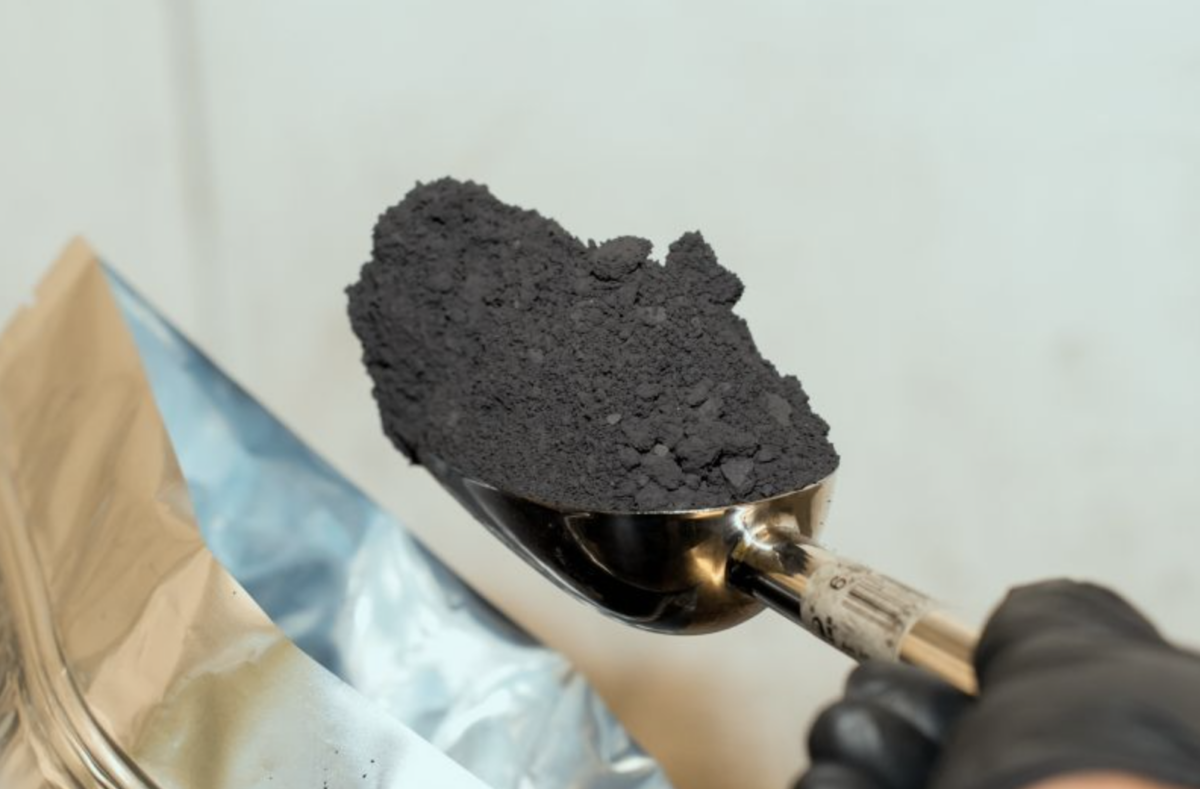
Research conducted by our team together with Australian PSC manufacturer Halocell has shown that adding graphene to a PSC can increase efficiency by more than 30%.
Production costs can also be reduced by up to 80% because graphene reduces the volume required for expensive conductor materials, such as silver and gold.
The combination of high efficiency, low capital intensity and rapid roll-to-roll production makes graphene-enhanced PSCs a very attractive option for defense applications.
However, one of the biggest challenges for perovskite solar cells is long-term durability, as they typically have a shorter lifespan than traditional silicon cells.
This is where graphene could become a game changer for the defense industry. The unique material is one of the strongest available and has consistently shown the ability to improve durability when incorporated into other materials.
In addition to defense and military applications, the strategic value of graphene-enhanced perovskite solar cells also lies in its logistical resilience.
Modern military operations are severely limited by supply chains, particularly the need to transport fuel to remote or contested environments.
Every gallon of fuel moved to a progressive base comes with both financial costs and operational risks.
Lightweight, quickly deployable solar solutions could reduce this burden by allowing units to generate power independently for longer periods.
Over time, this shift would not only improve operational endurance, but also lower emissions, reduce noise pollution, and increase the overall survivability of energy-dependent defense systems.
More research is undoubtedly needed, but a clear vision is emerging of the role graphene could play in the wider defense sector.
Future applications
Graphene-enhanced perovskite solar cells are not yet turnkey battlefield solutions.
Currently, the primary market for PSCs developed by First Graphene and Halocell is small electronic devices, although the long-term prospects are much broader.
Halocell has identified more than 40 potential PSC applications in small electronic goods, from TV remote controls to torches and outdoor garden lights.
There is still a long way to go before solar modules that can currently replace disposable batteries in TV remote controls can be applied to long-range drones for the defense industry.
The bigger picture, however, lies in the application of rapidly evolving technology in defense and space, with global defense investment at record levels.
In Australia alone, more than AUD765 billion ($545.3 billion) is expected to be invested in the local defense industry over the next decade.
This presents a great opportunity for local manufacturers to collaborate with developers of modern renewable technologies to enter a fast-growing industry.
In an era where access to energy is both a goal and a target for countries, the ability to generate reliable, affordable energy is a strategic advantage.
Graphene-enhanced perovskite solar cells, supplied by companies such as First Graphene and Halocell, represent a convergence of materials science, renewable energy and defense strategy.
As geopolitical competition intensifies, countries that invest early in these foundational technologies may be better equipped for the conflicts and crises of the future.
Author: Michael Bell, Managing Director and CEO, First graphene
The views and opinions expressed in this article are those of the author and do not necessarily reflect those of the author pv magazine.
This content is copyrighted and may not be reused. If you would like to collaborate with us and reuse some of our content, please contact: editors@pv-magazine.com.
