

April 1, 2026 | This content is sponsored. Sponsored content is authorized by the customer and does not necessarily reflect the views of Solar builder magazine of Benjamin Media, Inc. Check out our privacy policy.
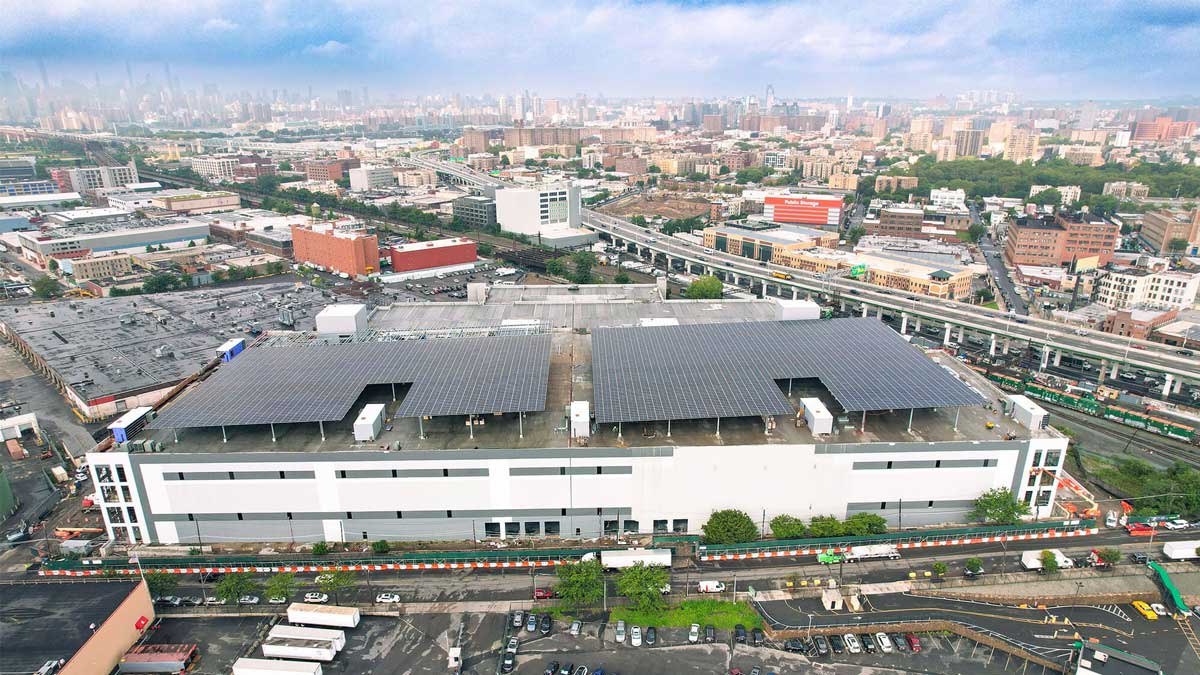
Canopies for parking garages shape the next generation of solar energy. The key to unlocking underutilized opportunities and simplifying complexity is expert design and engineering.
The abundance of parking garages in the US represents an area of high growth potential, especially as greenfield space for solar farms becomes increasingly scarce and contested due to land competition. Garage structures in dense urban or commercial environments provide valuable real estate for PV arrays. Yet, unlike ground-mounted structures, garage canopies must work within the structural limits and layout limitations of an existing building and have unique needs compared to ground-mounted solar.
Common design complexities
Simplifying complexity starts with understanding common design challenges in garage construction. Misaligned columns, awkward shear wall placement, and joints in the shear wall may require sliding joints. In addition to the physical structure, there are complicated electrical infrastructures and water drainage systems to take into account. All these challenges have a solution: for example, heavier support beams can maintain structural stability in the event of misalignment. It is crucial to identify these challenges and develop solution strategies in advance, in the early design phase.
Developing a framework plan
In this design phase, a framework plan determines the structural layout. A good design plan before engineering ever begins is imperative for a well-built structure. The plan identifies column and parking placements, reserves space for driveways, and examines each structural wall. Only then can a team determine where awning columns can be safely connected to the garage.
From there, the framing plan allows project teams to estimate steel requirements, develop canopy layouts, and evaluate the loads transferred to the structure. This information allows the team to generate early cost estimates.
Understanding reaction loads and structural forces
Now that a framework plan is in place, the next step is to ensure that the parking structure can support the roof in the long term. Reaction loads are critical in determining the forces transferred from the canopy to the existing garage structure, and the resulting project life. Loads must be approved by third party constructors before work can continue.
Structural forces also add complexity to the canopy design. Shear forces – the lateral force created by the canopy’s own weight – cause possible lateral movements. Moment forces are the rotational forces acting on the column connection and can cause structural twisting and serious damage if not clearly identified and addressed. The interaction of these forces with the parking structure directly affects the type of column connection that can be used.
Choosing the right connection and reinforcement type
Once reaction loads and structural forces are taken into account, connections and strengthening considerations provide additional stability. There are two primary approaches to connecting awning columns to a garage structure: pinned connections or fixed connections.
Pinned connections are common when adding a canopy to an existing garage structure. They also typically require additional lateral support, such as bracing. Solid connections can reduce costs due to the reduction of steel and material, but can involve more complicated engineering. Clear and early coordination between garage engineers and awning engineers is critical.
To strengthen a structure, cross bracing is the simplest option, but this is not always feasible. For example, garages with aisles in the path of cross braces or asymmetrical designs require portal frames instead of cross braces. These frames add vertical steel members and a horizontal beam to create a rigid frame, allowing clear traffic flow and improving lateral stability.
Questions about an upcoming construction or project kick-off? Please contact an awning expert at Terrasmart to discuss the feasibility of installing solar energy at a potential location.
Balance layout and design considerations
When added to the built environment, solar energy design is not new. The design of solar canopies must balance existing structural constraints with future energy production and mixed aesthetics. To balance all these elements, project teams weigh different design configurations. No two garages are the same, making these considerations tailor-made for each project.
Design options include:
- Tee designs are cost-effective and work well with mixed aisles and curbside parking rows.
- Long-span designs can maximize coverage and energy production, making them one of the most common design choices for parking structure canopies.
- Monoslope designs optimize solar production by installing panels at a constant slope, but the overall height of the canopy can be an issue.
- In contrast, louvered designs maintain the height of the canopy but require careful shading considerations.
- Alternating slope designs provide flexibility in layout and can help minimize shadows when oriented correctly.
Energy yield is not the only performance factor in layout and design. Water management systems, decking, snow guards and fascias can all help improve performance and usability. Likewise, matching existing design and visual aesthetics is not just a vanity consideration, but can also be a major concern for corporate entities with, for example, branded garages or parking lots connected to corporate headquarters locations.
Manage installation challenges unique to garage awnings
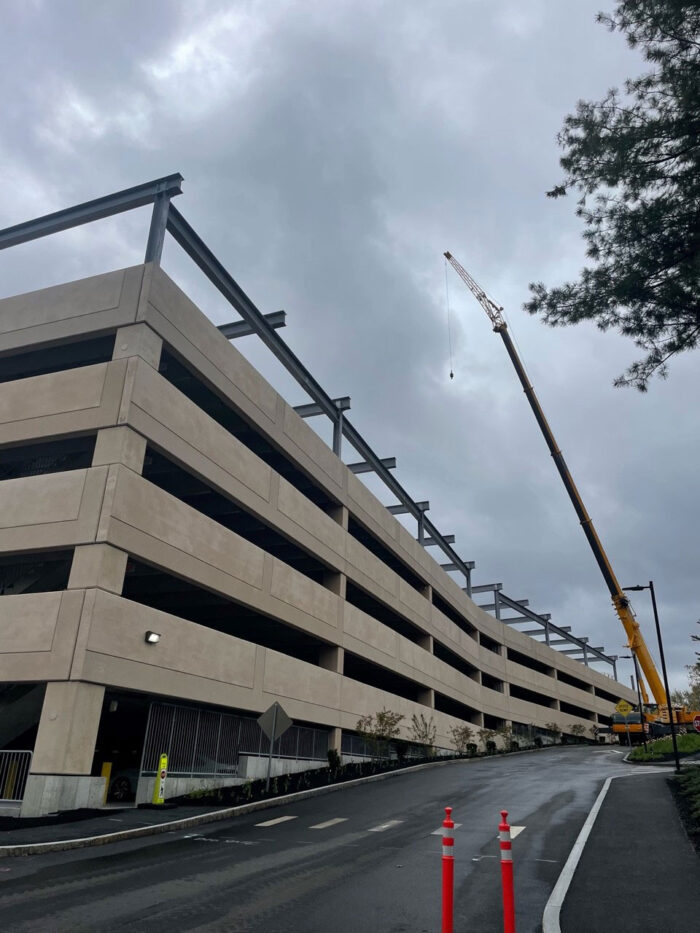
New construction in areas that are already densely built-up brings new logistical challenges. From finding space for a parking lot to ensuring trucks can navigate city streets, urban canopies need experienced planners to navigate the unique logistics.
In addition to urban density, building height adds new complexities. Steel beams must be transported to roof height, cranes are usually required and limited installation space can restrict workflows and complicate logistics.
To solve space and height factors, installation teams can arrange installation on the garage roof or carry out pre-assembly on the ground. As with layout and design considerations, there is no one-size-fits-all answer to the best approach. The right option will depend on the level of access to the site, the degree of urban density and the structural capacity of the garage.
Early engineering and expert partners lead to better results
Parking garage solar canopies offer significant energy potential in space-constrained environments, maximizing land use while generating clean energy. However, these projects require careful coordination between solar designers and constructors.
By addressing framing plans, analyzing loads, and understanding connection design and installation logistics early in the process, developers can avoid installation setbacks and expensive redesigns and ensure long-term canopy stability. By balancing layout and design factors and mitigating the challenges specific to commercial garage solar, developers can optimize construction schedules and overall project success.
As solar commercial opportunities expand, thoughtful engineering will play a critical role in making garage canopy projects both structurally sound and economically viable. An experienced team providing end-to-end canopy solutions can reduce complexity from pre-design through COD, ensuring smooth construction, a highly productive site and a structure that lasts.
Please contact an awning expert at Terrasmart or download the new one garage roof ebook to utilize the potential of solar energy for garage roofs.
Author: Patrick Lynch, canopy project architect
Sponsored by:

Keywords: Terrasmart
