

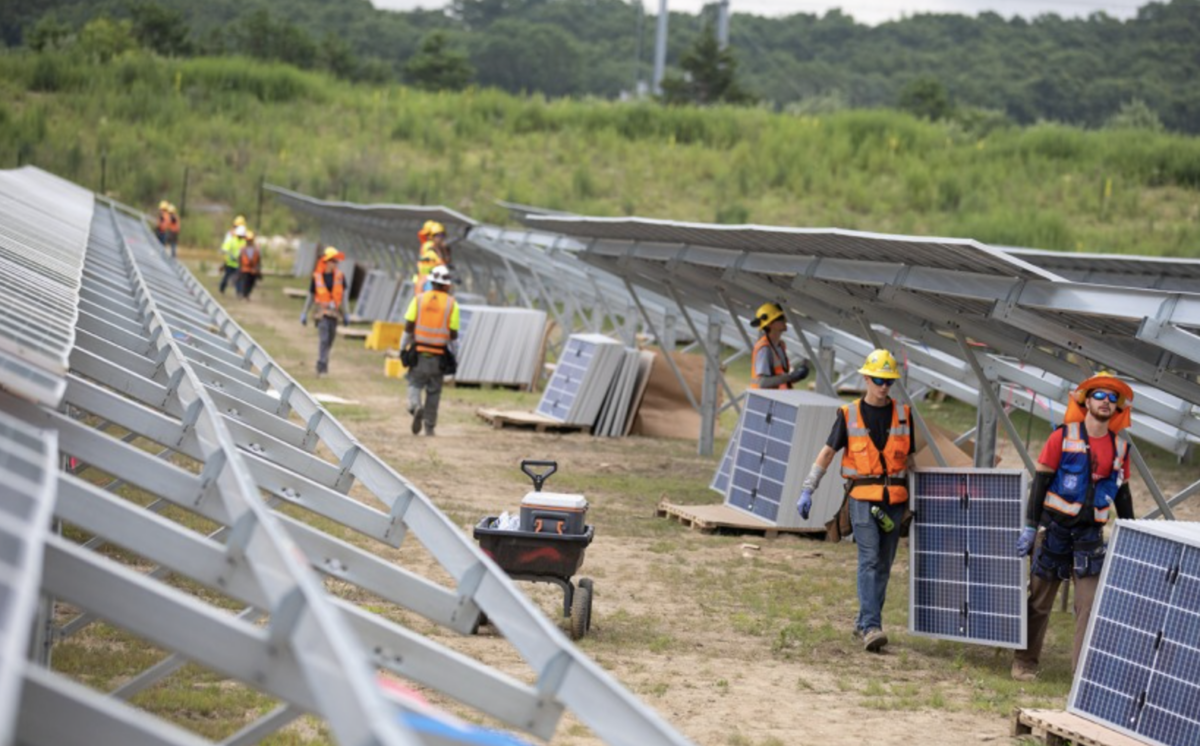
The U.S. solar industry cannot meet workforce needs as developers rush to meet July 4, 2026 construction deadlines tied to federal tax credits.
The U.S. solar industry is facing a serious skilled labor shortage developers are rushing to meet the July 4, 2026 construction deadline mandated by the One Big Beautiful Bill Act (OBBBA).
An analysis of the 2025 U.S. Energy & Employment Report (USER) and the IREC National Solar Jobs Census shows that while the industry now supports more than 280,000 workers, the supply of qualified workers cannot keep pace with accelerated project timelines.
Projections show the industry will need around 355,000 workers by the end of 2026 to support installation targets of 60 GW to 70 GW, leaving a near-term job shortfall of 53,000.
Hiring difficulties remain a systemic challenge, with 86% of solar employers reporting some level of difficulty filling open positions according to the 2025 USEER. This problem is most acute in the utilities sector, where 27% of companies describe hiring for installation and project development roles as very difficult.
The talent gap is especially pronounced for technical and mid-level management roles, with 47% of companies reporting significant barriers to hiring directors and supervisors. The shortages are mainly caused by a lack of candidates with specialized industry experience, technical training or specific certifications required for increasingly complex high-voltage and AI-integrated systems, USEER said.
The 2026 apprenticeship mandate adds an additional layer of regulatory burden to existing labor shortages. Under current federal guidelines, projects must ensure that 15% of total labor hours are performed by qualified apprentices to secure the full value of the Section 45Y and 48E tax credits.
However, the Interstate Renewable Energy Council Census shows that only 43% of the U.S. workforce currently has access to the skills training needed for these positions. This disparity is forcing a shift in how the industry approaches workforce development, as Tier 1 developers turn away from external workforces and build internal training pipelines.
To bridge the gap, the sector is increasingly focusing on attracting experienced candidates and employees from the fossil fuel industry transition. The efforts are complemented by the deployment of digital documentation tools and automated location tracking software, allowing smaller teams of skilled journey-level workers to oversee larger groups of semi-skilled workers.
By 2026, the ability to ensure a compliant, documented workforce has become a determining factor for project bankability, along with interconnection and supply chain stability as leading development risks.
This content is copyrighted and may not be reused. If you would like to collaborate with us and reuse some of our content, please contact: editors@pv-magazine.com.
