

California is taking steps to adopt virtual power plants (VPP) to compete in statewide reliability markets.
The Senate Energy, Utilities and Commerce Committee today voted to approve the Clean Local Power Act (SB 913). Introduced by Senator Josh Becker (Menlo Park), SB 913 would give solar-charged batteries, electric vehicle chargers, heat pumps and other on-site energy devices greater access to California’s Resource Adequacy program so they can help meet peak demand and reduce costs for everyone.

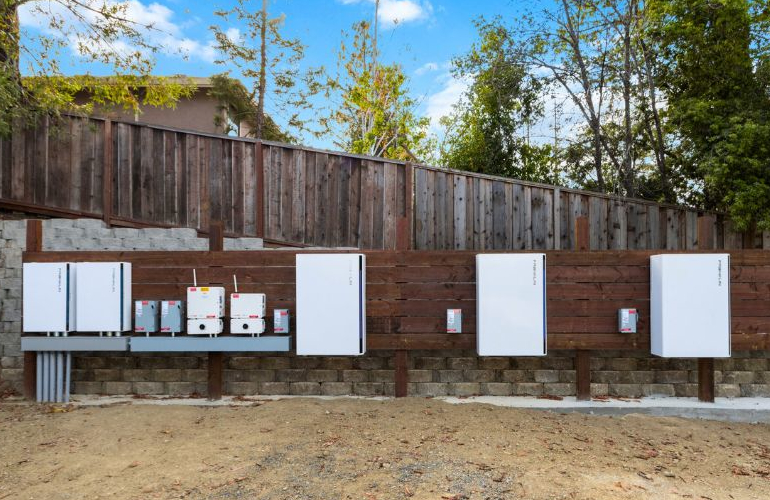
A FranklinWH system installation in California completed by Simply Solar.
“Californians are struggling with rising electric bills, we need to use our electric grid more intelligently and cost-effectively,” said Becker. “Rather than always building expensive new infrastructure to meet just a few peak hours of demand, we should make better use of the resources we already have. Millions of Californians already have tools like smart thermostats, home batteries and electric vehicles that can help support the electric grid. SB 913 ensures we can use those resources to lower costs, reduce pollution and improve reliability.”
Current CPUC programs aimed at ensuring the state has sufficient generation capacity to meet peak energy demand and using alternatives to traditional energy sources during the hours of greatest demand exclude most of California’s growing fleet of customer-installed batteries. The CPUC does not count electricity exported to the grid from customer locations. Home and business batteries can only receive credit for reducing a customer’s individual electricity use, and no incentive is available for electricity that the device could send back to the grid. That limits the ability to create VPPs that could replace more expensive and often polluting power plants to provide peak generation.
SB 913 provides a common sense solution by allowing customer battery networks to offer more of their energy to VPPs. It requires the CPUC, in consultation with the CAISO and the California Energy Commission, to develop a methodology that provides credit for energy exported from customer appliances to the electric grid.
“Tapping into solar-charged batteries and other customer devices when they are the cheapest option is a critical strategy for making energy affordable in California,” says CALSSA Policy Director Jon Hart. “California now has 300,000 solar-charged batteries installed in garages, campuses and farms across the state, with 2,000 more being added every week. They are already reducing costs for everyone, but we are not using them to their full potential yet.”
This year, the legislature will also consider the Network Use Act (AB 1975)introduced by Assemblymember Nick Schultz (Burbank). This bill will help lower California energy rates by requiring utilities to make better use of the grid capacity the state has already built and paid for.
Utilities have traditionally expanded the electrical grid when they estimate there may be a need to supply more energy. With increased electrification and more data centers, the need for network capacity will grow much faster than ever before. Expanding substations and increasing the size of other components of the electrical grid are expensive and slow, causing energy rates to rise. Utilities may simply not be able to expand the electrical grid fast enough, at any cost, to enable transportation and building electrification at the scale needed.
The traditional approach is favored by utilities because their profits are based on a percentage of dollars spent on the electric grid.
AB 1975 provides a modern solution to meet increasing electricity needs at the lowest cost and at a pace that works. Customer devices can be used in coordinated fleets to balance electricity supply and demand within the constraints of the electrical grid. The timing of electric vehicle charging can be flexible without affecting the needs of drivers. Batteries installed in homes, campuses and other buildings throughout California are networked and can be dispatched remotely in response to the needs of the electric grid. Energy controls in buildings can adjust the timing of electricity consumption. These combined assets create network flexibility.
AB 1975 would require the CPUC to create a grid usage metric and set minimum standards for PG&E, SCE and SDG&E below that metric each year. To meet an increasingly high standard, utilities would create load flexibility programs that encourage customers to shift their electricity consumption from the grid to off-peak hours.
“Building highways large enough so that rush hour delays never occur would be extremely expensive, but that is essentially what the state is doing with the power grid right now,” Hart said. “California can increase electricity consumption without a corresponding increase in grid costs if utilities take advantage of the load flexibility tools available today.”
News item from CALSSA
