

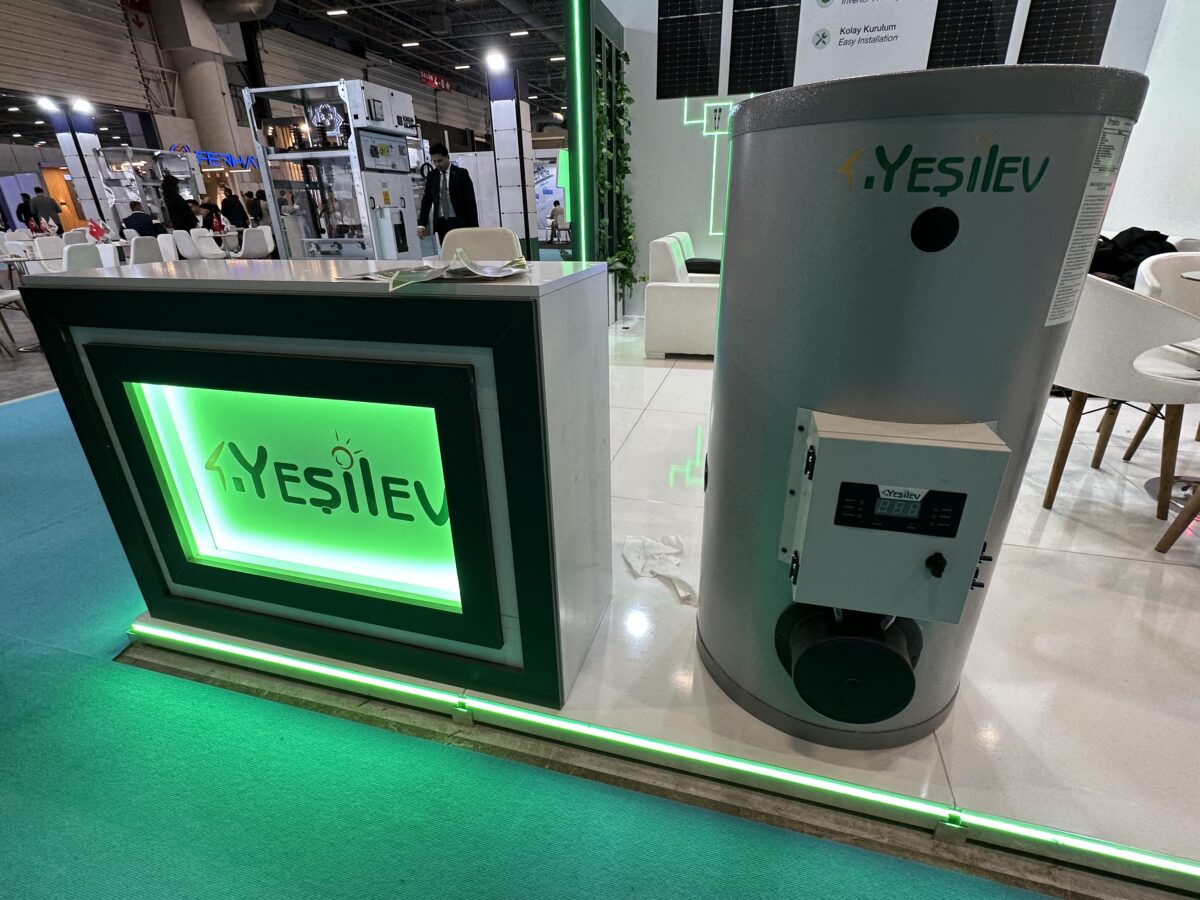
Adana-based WHS introduced a PV-powered water heating system that works without an inverter, using 1.6 kW direct DC solar input with integrated MPPT. The system supports hybrid operation with 2 kW AC backup, operates at an extra-low voltage of less than 50 V, provides approximately 3 kWh/day of thermal energy and heats water up to 65–85 C for residential and small commercial use.
Turkish heating solutions provider Water Heating Systems (WHS) has presented its DC Sunboil range of photovoltaic water heating systems, aimed at residential and small commercial applications, at the SolarEX Istanbul trade fair this week.
The product line is designed to operate without an inverter, converting solar energy directly into heat via direct current. According to the company, this approach reduces both initial investments and system complexity, while improving reliability in off-grid environments.
“The system uses four photovoltaic panels connected in parallel and operates at an extra low voltage level, which increases safety,” said Ahmed Kılınç, R&D engineer at WHS. pv magazine. “Typically, the system uses standard 400W PV panels, resulting in a total installed power of approximately 1.6 kW. The system is flexible, allowing users to scale by adding more panels as needed. It is also compatible with conventional PV panels, provided they meet the required voltage level of less than 50 V for safe operation.”
The system connects directly to photovoltaic modules via plug-and-play connections. Each unit integrates Maximum Power Point Tracking (MPPT), allowing optimized solar energy harvesting without the need for external electronics. The system is also suitable for hybrid operation, where an integrated electric heating element ensures a continuous hot water supply with little irradiation or at night.
The DC Sunboil range is offered in five tank sizes ranging from 120 liters to 500 litres, designed to meet diverse domestic and small commercial hot water needs. The smallest model in the series is the 120 L (WHS-120-HBB), designed for 2 to 4 users, while the largest is the 500 L (WHS-500-HBB), which can serve between 8 and 16 users. All variants operate at a maximum operating pressure of 0.6 MPa and are equipped with two MPPT trackers.
In terms of electrical configuration, the systems support up to 1,200 W PV DC input power and feature an external AC backup heating element with power up to 2,000 W. The recommended photovoltaic array size ranges from 1.6 kW to 2.4 kW, with each MPPT tracker capable of handling between 800 W and 1,200 W. The maximum PV current per MPPT is 15.5 A, making the system compatible with typical low-voltage PV module arrangements.
“One of the main advantages of this system is its simplicity and efficiency,” says Kılınç. “Because it converts solar energy directly into heat, it avoids the energy losses associated with inverters and battery storage. In this sense, the water tank itself effectively acts as an energy storage unit.”
The device is primarily intended for the production of hot water in the home and is not used for generating electricity or feeding it back into the electricity grid. However, it does offer flexibility as an AC backup option is available, allowing the system to operate at night or in cloudy weather.
“The system can produce an average of about 3 kWh of thermal energy per day, although actual performance depends on seasonal variations and sunlight availability. The water temperature is adjustable, typically between 65 C and 85 C, which provides sufficient capacity for household needs,” Kılınç said, noting that while the system itself does not include battery storage, it is technically possible to integrate a battery via an external switching mechanism. However, this is not the primary intent of the design as the system relies on thermal storage rather than electrical storage.
WHS is based in Adana and currently sells its products in the Turkish market. “However, we hope to expand our customer base outside Turkey,” concludes Kılınç.
This content is copyrighted and may not be reused. If you would like to collaborate with us and reuse some of our content, please contact: editors@pv-magazine.com.
