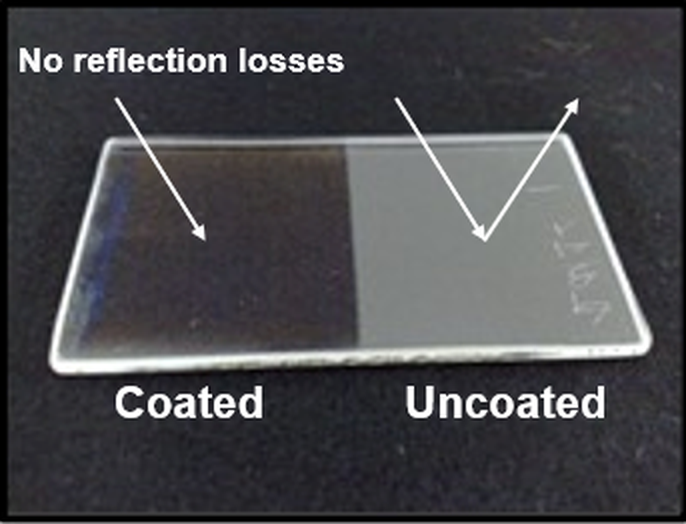
Researchers in Spain developed a porous silica anti-reflective coating for solar panels that improves optical transmission while balancing durability and mechanical stability through optimized sol-gel chemistry.
A research team led by the Spanish Center for Energy, Environment and Technological Research (CIEMAT) has developed a new anti-reflective coating (AR) for use in solar panels.
“By jointly tuning the concentration of pore-forming agents, the thermal treatment and the chemistry of silica precursors, we show that it is possible to tailor coatings that combine near-unity permeability with mechanical and environmental stability suitable for real solar installations,” says corresponding author Gema San Vicente. pv magazine. “This balance is essential for solar energy systems, where even small optical benefits are only meaningful if the coating survives years of outdoor exposure.”
“A particularly surprising finding was that long-term thermal treatment does not necessarily improve durability,” she continued. “In highly porous coatings, longer calcination times have significantly reduced mechanical resistance, despite maintaining excellent optical performance. This demonstrates that processing conditions that appear favorable from a material perspective can have unintended negative effects when porosity is pushed to extreme levels.”
To balance optical performance and mechanical and environmental durability, the scientists tested different concentrations of pore-forming agents, thermal treatment conditions and ratios of silicon precursors.
They prepared silica precursor solutions with varying ratios of methyltriethoxysilane (MTES) and tetraethylorthosilicate (TEOS), specifically TEOS:MTES ratios of 50:50, 70:30, and 90:10. Ethanol and deionized water were then added in the presence of sulfuric acid as a catalyst to form the sol–gel solution. The mixture was stirred for 24 hours to promote hydrolysis and condensation reactions. Pore-forming agent Pluronic P-123 was then added at concentrations between 0 and 3.3% v/v.
Image: CIEMAT-PSA
The coatings were deposited on borosilicate glass substrates with a thickness of 3 mm and polished silicon wafers. When different TEOS:MTES ratios were tested, the Pluronic concentration was kept at 2.5% v/v. In contrast, when the different Pluronic concentrations were analyzed, the TEOS:MTES ratio was kept at 50:50. All samples underwent thermal treatment at 500 C for 15 minutes or 1 hour to evaluate the effect of the thermal treatment on the final coating properties.
According to the research team, the addition of Pluronic effectively reduced the refractive index, thereby improving AR properties by increasing porosity. At the same time, the TEOS:MTES ratio played a key role in determining the porosity and durability of the coatings. Samples sintered at 500°C for 15 minutes retained better wear resistance and structural integrity than samples sintered for 1 hour.
Ultimately, optimal balanced performance was achieved with 2% v/v Pluronic and a TEOS:MTES ratio of 70:30. Moreover, an increase of up to 5.2% in optical transmission was achieved compared to clear glasswith transmission reaching 99.8% at 600 nm.
“We have a follow-up study aimed at further improving the balance between optical performance and durability under real operating conditions,” concluded Gema San Vicente. “In particular, we are exploring dual configurations, where we combine an external surface that is more durable and has dirt-resistant properties to reduce sensitivity to moisture and dirt, with an internal ultra-high optical transparency layer.”
The new AR coating was presented in “Customized, highly transparent porous silica coatings for improved optical and mechanical performance of sunshades”, published in Materials and design. Scientists from Spain’s CIEMAT, the Autonomous University of Madrid and the Slovenian National Institute of Chemistry contributed to the research.
This content is copyrighted and may not be reused. If you would like to collaborate with us and reuse some of our content, please contact: editors@pv-magazine.com.
Popular content