

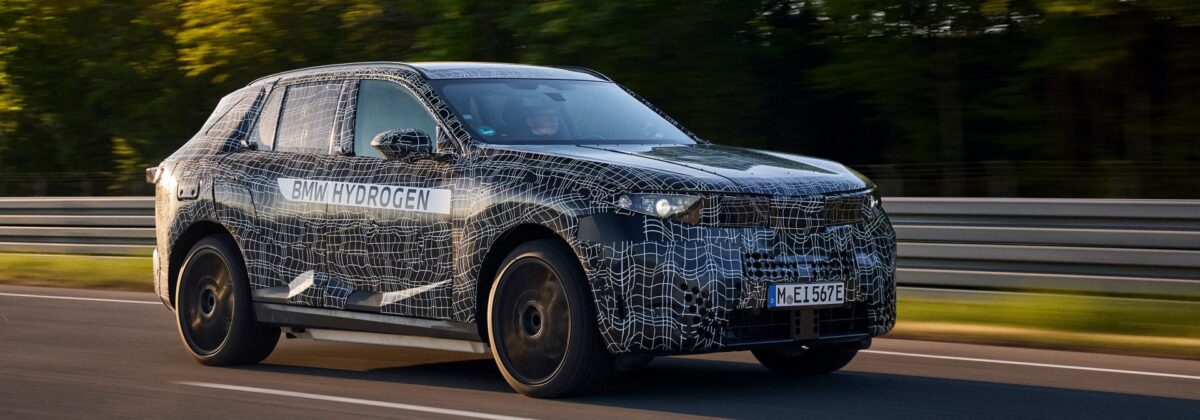
BMW Group tells pv magazine its iX5 Hydrogen Fuel Cell Electric Vehicle (FCEV) will enter series production in 2028 using a third-generation fuel cell system co-developed with Toyota, but says hydrogen pump prices will need to match those of diesel for the vehicle to succeed commercially.
BMW Group has confirmed that the iX5 Hydrogen FCEV will enter series production in 2028, powered by a third-generation fuel cell system developed in collaboration with Toyota Motor, which BMW says delivers greater efficiency, higher output and lower energy consumption compared to previous iterations.
BMW Group said improvements in operational strategies have resulted in increased range while reducing energy consumption. It added that the system’s compact design will enable seamless integration into future vehicle architectures.
“For customers, the most notable benefits are higher efficiency and greater sustainability, which together contribute to lower overall energy consumption,” a BMW Group spokesperson said. pv magazine.
The automotive group acknowledged that hydrogen pump prices remain a major barrier.
“For the success of hydrogen mobility, it is crucial that the price of low-carbon hydrogen at the filling station is attractive to end customers and approximately on the same level as that of diesel,” said the BMW Group spokesperson.
The company said reaching that level will require further investment in manufacturing and infrastructure, as well as government incentives and subsidies, particularly for commercial vehicle applications.
Image: BMW
In terms of infrastructure, BMW said the EU’s Alternative Fuels Infrastructure Regulation (AFIR) requires an extensive network of 700 bar hydrogen filling stations in all member states by 2030. The company said it is working with partners, including Toyota, through HyMoS – Hydrogen Mobility at Scale – an industry-led initiative that aims to improve the economic viability of hydrogen mobility ecosystems by aggregating demand from trucks, buses and passenger cars to optimize distribution and station usage.
BMW Group declined to specify which markets will receive the iX5 Hydrogen first, saying the decision depends on the development of fueling infrastructure and local customer acceptance in each country. In terms of target market, the BMW Group spokesperson said fuel cell electric vehicles complement rather than compete with battery-electric powertrains.
“For people who travel a lot by car and need a high degree of flexibility, an FCEV could be the right solution, as fast refueling is a big advantage,” the spokesperson said, adding that hydrogen could serve regions where building sufficient charging infrastructure for battery-electric vehicles will be difficult.
The development of the iX5 Hydrogen has received €273 million ($321.6 million) in public funding through the HyPowerDrive project under the IPCEI Hy2Move framework – €191 million from the German Federal Ministry of Transport and €82 million from Bavaria. The BMW Group confirmed that the financing is entirely focused on the vehicle side, including the fuel cell system, hydrogen storage system and component integration. No part extends to the hydrogen supply or refueling infrastructure.
Last week, BMW Group introduced a 700 bar high-pressure hydrogen tank for its iX5 Hydrogen model, allowing a range of up to 750 km. The company said fuel cell vehicles can be built on the same production line as other powertrain types, supporting production flexibility. The system uses multiple interconnected chambers controlled by a central valve and can store up to seven kilograms of hydrogen, with refueling completed in less than five minutes.
This content is copyrighted and may not be reused. If you would like to collaborate with us and reuse some of our content, please contact: editors@pv-magazine.com.
Popular content

