

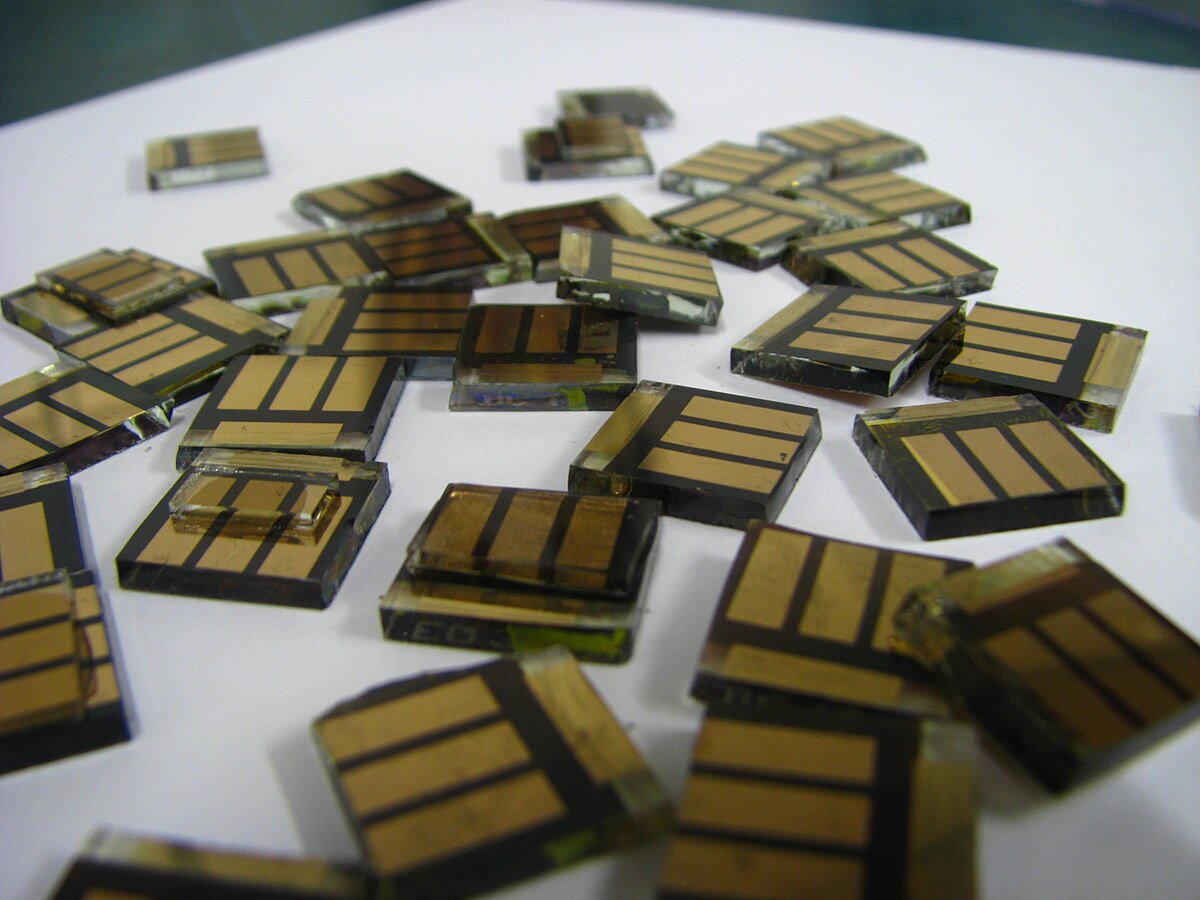
An international research team has developed an AI-powered robotic platform that autonomously designs, fabricates and optimizes perovskite solar cells, completing the entire experimental workflow in a closed system. Using the platform, researchers fabricated and tested more than 50,000 devices, achieving efficiencies of up to 27%.
An international research team has developed an AI-powered robotic platform capable of autonomously designing, manufacturing and optimizing perovskite solar cells.
“The core of the research is the idea that robot experiments should do more than automate repetitive actions,” the researchers said in a statement. “Formulas and parameters are encoded into machine-readable recipes, translated into robot-executable commands, and then returned as structured feedback after fabrication and characterization. In this way, the system establishes a closed-loop workflow that connects recommendation, execution, validation, and model improvement.”
Using the system, the researchers manufactured and tested 50,764 devices. It is powered by a recipe language model (RLM) that encodes information from approximately 60,000 perovskite solar cell-related publications released over the past decades, as well as data generated by the platform during device manufacturing. This input is processed through a seven-layer AI architecture, consisting of recipe learning, recipe generation, dataset building (RecipeQA), refinement, reasoning, evaluation and optimization.
Automated manufacturing is started after the reasoning phase, where new experimental recipes are proposed. Eleven robotic boxes then perform synthesis, device fabrication and characterization tasks, while simultaneously generating a digital twin of the process. The setup includes 101 functional units, more than 1,500 components and more than 4,300 controllable parameters.
Boxes 1–3 handle chemical storage, solid sampling, and liquid dosing. Boxes 4–11 are used for spin coating, antisolvent application, thermal annealing, laser processing, device transfer, vacuum exchange, and thin film deposition. These latter units are also equipped with cameras, sensors and actuators for in situ characterization, feeding data back into the model’s evolution loop.
Overall, the researchers describe the robotic system’s workflow as progressing through four phases: an initial phase of broad, largely unguided exploration of perovskite formulations; a second phase in which additives and self-assembling monolayers (SAMs) are introduced to improve crystallization and interfacial properties; a third phase that incorporates surface passivation to reduce defects and improve performance; and a final phase combining SAM-based hole transport layers with targeted additive and passivation strategies.
“In Phase I, without interface or additive engineering, energy conversion efficiency ranges from 0% to 17.4%. The integration of SAMs and additives in Phase II narrows the distribution and increases efficiency to approximately 23%,” the results showed. “In Phase III, post-treatment interfacial passivation leads to further improvement, up to 25.6%. The final configuration in Phase IV yields an efficiency of 27.0% (certified at 26.5%).”
The researchers stated that the main innovation of their research lies in combining three advantages within one closed AI robotics system. They described it as enabling the controlled robotic fabrication of complete perovskite solar cell devices, in addition to robotic characterization that converts high-throughput experimental results into structured evidence regarding underlying mechanisms. They further noted the inclusion of a domain-specific RLM that is continuously trained to improve recipe recommendations, mechanistic understanding, and subsequent robot execution.
The system was described in “Agentic robot boxes for perovskite solar cell fabrication with recipe language model”, published in Engineering. Scientists from Hong Kong Polytechnic University, Swiss Federal Institute of Technology Lausanne, China’s Wenzhou Institute of Technology, University of Nottingham Ningbo China, Shenzhen University of Advanced Technology, North China Electric Power University, Zhejiang University, Peking University and the University of Oxford in the United Kingdom contributed to the research.
This content is copyrighted and may not be reused. If you would like to collaborate with us and reuse some of our content, please contact: editors@pv-magazine.com.
