

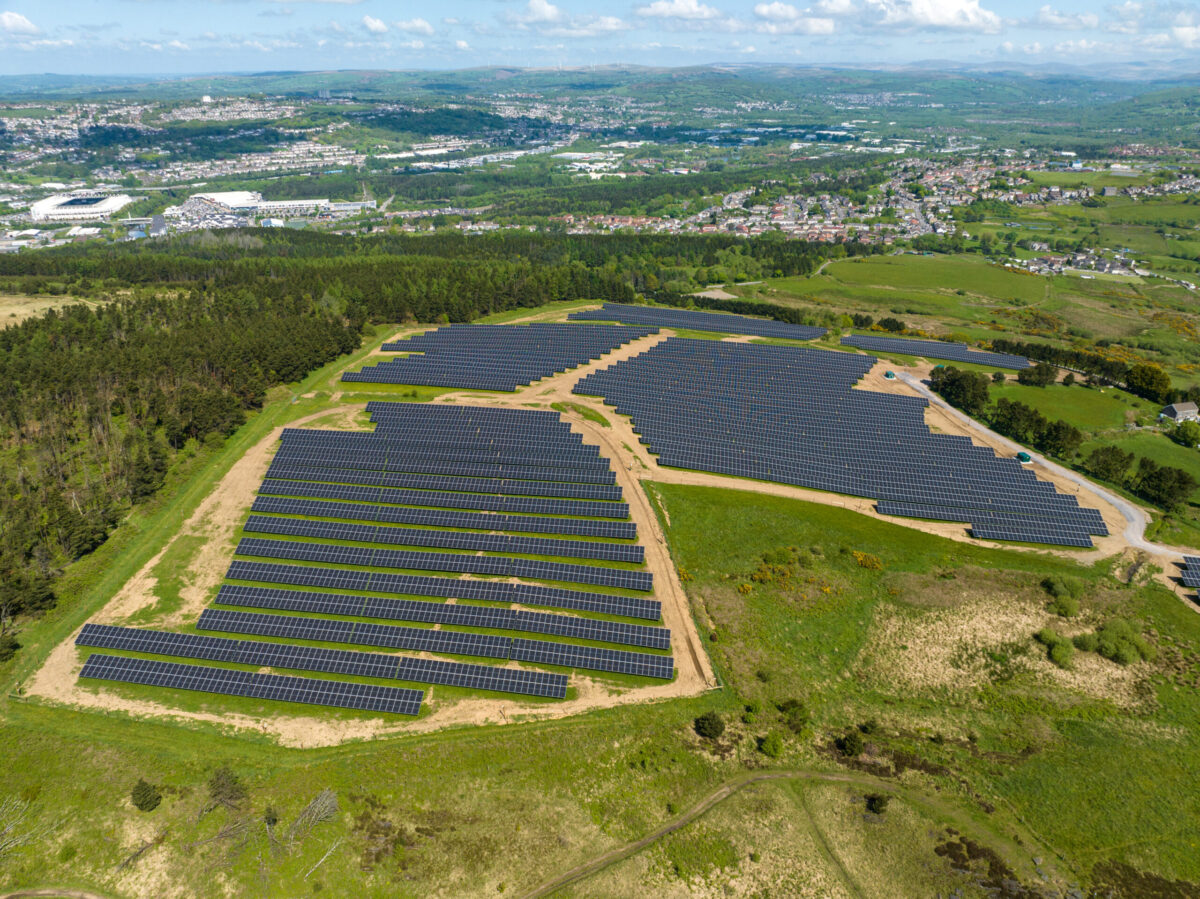
Solar power set a new generation record on Britain’s electricity grid during a week when carbon-free supply also hit a record high. The new records come as the grid operator expands demand-side flexibility markets in anticipation of lower summer demand due to strong solar radiation.
According to data from the National Energy System Operator (NESO), UK solar power generation exceeded 15 GW for the first time on April 23.
Historical generation data available through NESO’s GB Generation mix dashboard shows that 15,147 MW of solar energy was generated as of 11:30 am on April 23. It was the first time 15 GW had been exceeded in the data series recording generation at half-hourly intervals, which dates back to 2009. Solar production then peaked around midday with 15,158 MW recorded, representing 42% of the total generation mix of 36.4 GW.
The new record for solar power generation was one of the highlights in a strong week for the UK’s renewables, which also saw the UK’s electricity grid set a new zero-carbon record. NESO managed the transmission network with a record high of 98.8% zero carbon originating between 3:30 PM and 4:00 PM on April 22, surpassing the previous record set on April 1. Generation from gas-fired power stations reached an all-time low and represented only 1.2% of the energy mix at transmission and distribution level, the grid operator said.
Solar’s April record comes as NESO prepares for a summer of low electricity demand, driven in part by increased deployment of solar energy. Periods of excess electricity are becoming increasingly common on the UK electricity grid, a phenomenon that NESO says is increasingly determined by weather patterns. According to the grid operator’s recent Summer Outlook report, solar radiation is the main driver, overtaking low consumer use and wind energy generation.
In response, NESO announced it will update its Demand Flexibility Service, which rewards consumers and businesses for increasing electricity use during periods of oversupply.
NESO’s Demand Flexibility Service works as a merit-based auction used to secure additional electricity during times of high demand. Before the summer of 2026, the grid operator will turn this into a bidirectional service by introducing the option to increase demand. Further changes to service design include lowering capacity thresholds and other rules, allowing smaller producers and renewable assets to participate.
Households and companies can participate in the flexibility market via energy suppliers and third-party apps. The grid operator said it expects its expanded demand-side options to complement its existing balancing services, such as the Balancing Mechanism market.
Matt Parry, head of energy demand and energy at British sustainable association REA, welcomed the new records. However, the Renewable Energy Industry Association also called on the UK government to do more. The REA wants further deployment to be supported through a salary sacrifice scheme for energy upgrades for households, similar to the support for electric vehicles.
The UK Electric Vehicle Salary Sacrifice Scheme allows employees to lease a new electric car through their gross salary, reducing income tax contributions.
Parry said the REA also encourages additional flexibility on the demand side and called on the government to ensure its upcoming eighth-round contracts-for-difference auction is “strongly supplied” with rapidly available renewables, such as commercial solar. “By strengthening Britain’s focus on additional renewable capacity, Britain could permanently break the link between international gas prices and electricity,” Parry said.
This content is copyrighted and may not be reused. If you would like to collaborate with us and reuse some of our content, please contact: editors@pv-magazine.com.
Popular content

