

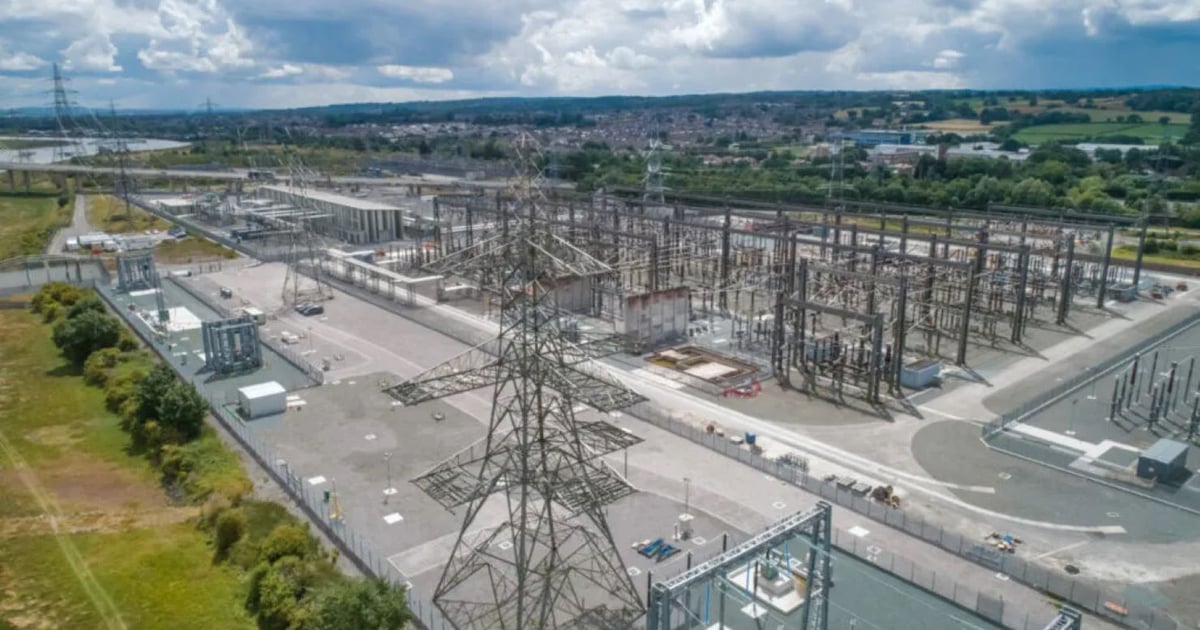
Everyone is focused on the administration around grid connection queue rescheduling and delays, but the real problem lies in NGET’s limited resources, a BESS operator said. Solar energy portal.
“I think the market has focused on the administrative queue, and I don’t think it understands that the problem now is going to be the physical and operational implementation of that queue, the physical build-out of that infrastructure. And my sense is that it’s going to get worse before it gets better,” our source said, off the record.
Regulator Ofgem and the National Energy System Operator (NESO) are reshuffling the grid connection queue in Britain from first come, first served to prioritizing projects that are ‘ready and needed’.
NESO announced in December that it would offer network connections through 2030 for 132 GW of renewable energy and storage projects, and a further 151 GW through 2035, on a backlog of 722 GW of projects. But there have been delays in obtaining final connection dates for the next two years. Battery energy storage systems (BESS) pose a particular challenge, with a huge oversupply.
“I think National Grid Electricity Transmission (NGET) is hitting a wall and is completely overwhelmed, and no one understands this,” said our source, who has operational BESS projects.
“The connections for 2026/27 will not be built in 2026/27 because NGET has not started them yet. Let alone the connections for 2028/29. People will not receive the documents until the end of this year.”
“The problem is that everyone is focused on the administration, the queue, the paperwork, the legal agreements. Nobody is focused on the fact that NGET itself does not have more technical teams than a year ago. It is not physically able to deliver that queue. It doesn’t matter what the documents say and the equipment lead times etc.”
Essentially, no project will be delivered on time, our source concluded. They added that the problem is not as bad in Scotland, where SSEN Transmission and SP Transmission are the country’s transmission system operators (TSOs).
Reprioritizing the grid connection queue is seen as key to achieving the necessary renewable generation and energy storage capacity for the UK’s Clean Power 2030 energy decarbonisation targets. Our publisher Solar Media will host the Clean Power 2030 Summit in London on June 30 and July 1.
