The result was certified by Japan’s National Institute of Advanced Industrial Science and Technology (AIST).
Researchers from Tokyo City University in Japan claim to have achieved a world record energy conversion efficiency for a tandem solar cell based on a perovskite device at the top and a bottom cell based on copper, indium, gallium and selenium (CIGS).
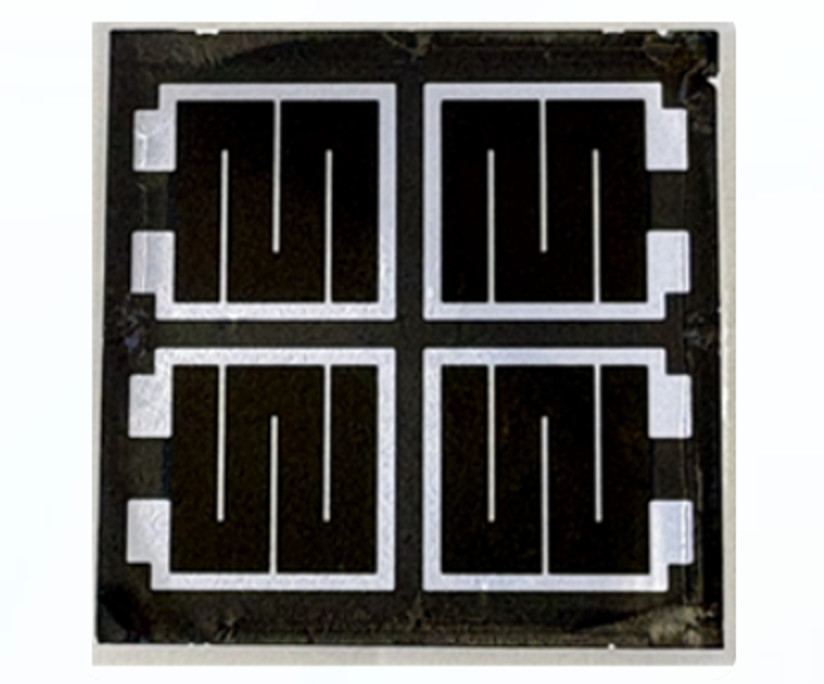
The tandem device has a two-terminal (2T) configuration, an active area of 1 cm2 and a certified efficiency of 25.14%. The result was verified by Japan’s National Institute of Advanced Industrial Science and Technology (AIST).
The previous world record of 24.6% was achieved in February 2025 by the German research institute HZB. “Since then, improvement research has been done around the world, but the 25% barrier had not been broken,” the Japanese team said.
The scientists explained that the cell is based on a CIGS device on the bottom, developed by AIST itself, and a perovskite cell on the top with an improved perovskite absorber with higher crystallinity, which was achieved via a new barrier layer placed between the two cells.
The layer promotes better crystallinity of the perovskite film by providing a more suitable growth surface. At the same time, it reduces interfacial recombination losses that would otherwise reduce device efficiency. It also prevents unwanted chemical reactions between the CIGS layer and perovskite precursors.
Image: Tokyo City University
The top cell is built with a substrate made of indium tin oxide (ITO), a self-assembling monolayer (SAM) known as MeO-2PACz, the perovskite absorber, an electron transport layer (ETL) relying on buckminsterfullerene (C60) and a tin dioxide layer deposited via atomic layer deposition (ALD-SnO2), another ITO layer, an anti-reflective coating made of magnesium fluoride (MgF2) and silver metal contact.
The CIGS cell is made with soda-lime glass (SLG) substrate, a molybdenum (Mo) back contact, a CIGS absorber, a cadmium sulfide (CdS) buffer layer and a zinc oxide (ZnO) window layer.
Tested under standard lighting conditions, the tandem cell achieved an efficiency of 25.14%, an open-circuit voltage of 1.845 V, a short-circuit current density of 16.25 mA/cm2 and a fill factor of 83.5%.
The researchers said further efficiency improvements can be expected by optimizing the cell configuration to improve short-circuit current. Furthermore, they want to accelerate research and development towards practical application through improvements in additives and passivation technology, without revealing further technical details of the new cell design.
This content is copyrighted and may not be reused. If you would like to collaborate with us and reuse some of our content, please contact: editors@pv-magazine.com.
Popular content